
[ad_1]
Image Source: American Statesman
Everything this nation once stood for is being turned on its head.
We are being asked—no, told—to believe that the greatest threat to America today is not government overreach, endless war, corruption, surveillance, or the steady erosion of constitutional rights.
No, the real threat, it seems, is speech.
Dangerous speech. Hateful speech. Critical speech. Speech that dares to challenge power.
In the wake of the reported assassination attempt on President Trump, the Trump administration has wasted no time advancing a dangerous narrative: that criticism of the president—especially criticism labeling him authoritarian or fascist—is not just wrong, but responsible for violence.
The implication is as chilling as it is unconstitutional: if you criticize the government too harshly, you may be to blame for what happens next.
Taken to its logical conclusion, the government’s argument is this: criticism fuels anger, and anger leads to violence against the Trump administration.
Which means the solution, in the government’s eyes, is simple: silence the criticism—but only when it is leveled at the Trump administration.
When White House officials suggest that calling a president a fascist may constitute libel or slander, they are not merely defending reputations—they are laying the groundwork for criminalizing dissent.
This is how it begins.
This is how republics become regimes.
First, criticism is labeled dangerous. Then it is labeled harmful. Then it is labeled illegal. And before long, it is gone.
Beware of those who want to monitor, muzzle, catalogue and censor speech—especially when the justification is “safety.” Because every time the government claims it must limit freedom to protect the public, what it is really doing is expanding its own power.
The irony is almost too glaring to ignore.
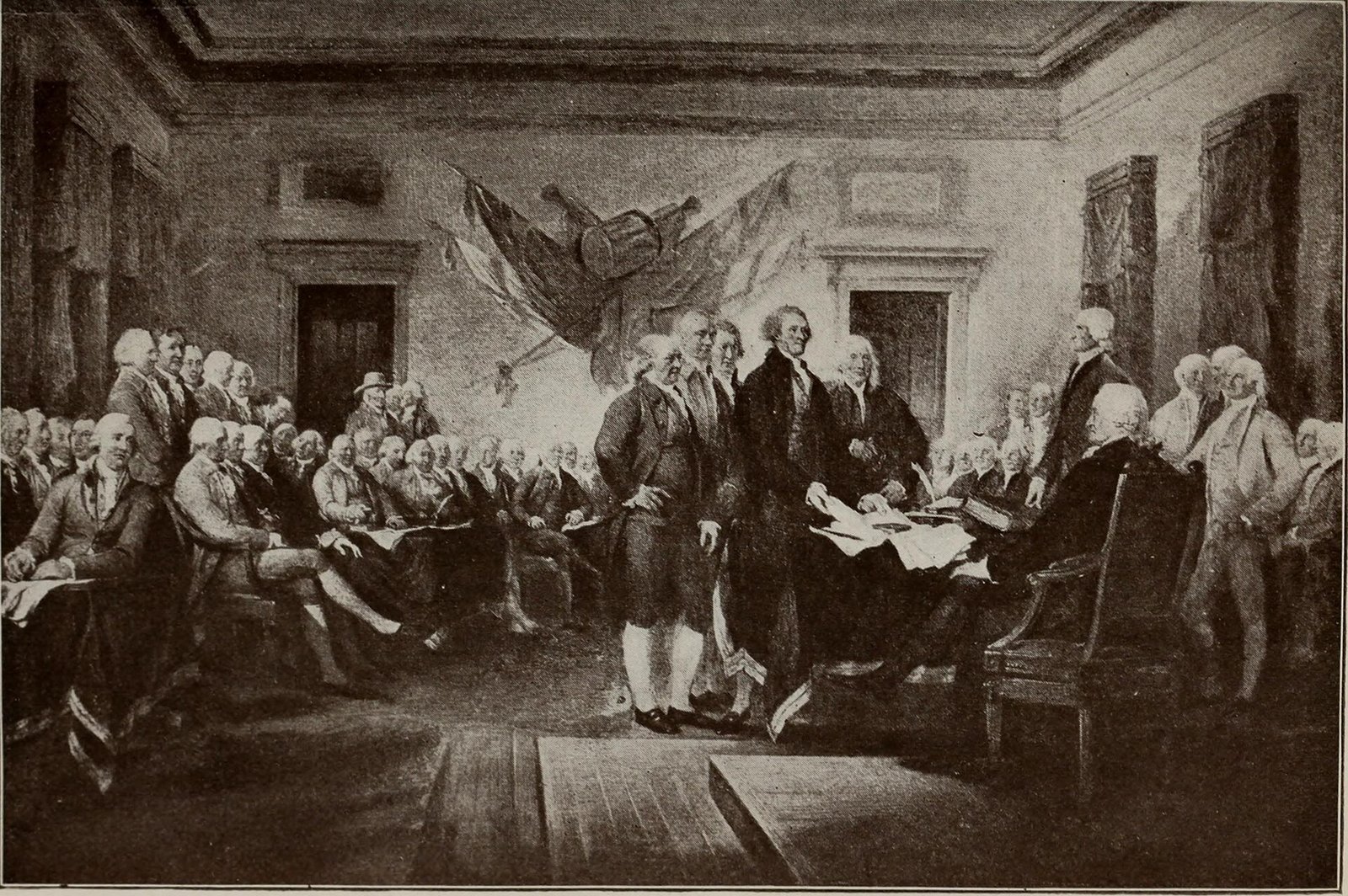
By the standards now being floated by those in power, America’s founders themselves would be considered extremists.
Seditionists. Radicals. Domestic threats.
Thomas Jefferson, Thomas Paine, Marquis De Lafayette, and John Adams would certainly have been placed on an anti-government watch list for suggesting that Americans should not only take up arms but be prepared to protect their liberties and defend themselves against the government should it violate their rights.
“What country can preserve its liberties if their rulers are not warned from time to time that their people preserve the spirit of resistance. Let them take arms,” declared Jefferson. He also concluded that “the tree of liberty must be refreshed from time to time with the blood of patriots and tyrants.”
“It is the duty of the patriot to protect his country from its government,” insisted Paine.
And who could forget Patrick Henry with his ultimatum: “Give me liberty or give me death!”
By today’s standards, these are not the words of patriots.
They are the words of people who would be surveilled, flagged, censored—and likely arrested.
Had the government of their day succeeded in suppressing their “dangerous speech,” there would have been no Revolution. No Declaration of Independence. No Constitution. No Bill of Rights.
You see, the right to criticize the government is not a side issue.
It is the foundation of a free society. And yet, that foundation is already cracking.
More and more, any speech that challenges authority—exposes corruption, questions policy, or calls out abuses of power—is being recast as dangerous, extremist, or even violent.
The categories keep expanding: Hate speech. Misinformation. Disinformation. Conspiratorial speech. Radical speech. Anti-government speech.
Different labels, same goal: control the narrative.
What has changed is not the tactic—it’s the target.
Under the previous administration, “dangerous speech” meant election denial, COVID dissent, and those who challenged official narratives about public health and national security.
Now, under the Trump administration, “dangerous speech” means media outlets that report unfavorably on the government, comedians who mock those in power, and citizens who dare to call authoritarianism by its name.
The script keeps flipping depending on who is in power, but the ending never changes: censorship.
The message is unmistakable: criticize the wrong people, and your livelihood may be next—not because you committed a crime, but because your words were treated as one.
The latest example: the Trump administration is once again targeting former FBI director James Comey—this time for posting a photo of seashells spelling out “8647,” a slang expression of opposition to Trump, the nation’s 47th president.
A social media post. Treated like a threat.
This is how dissent is being redefined—not as a constitutional right but as a threat.
Yet while the government wrings its hands over so-called dangerous rhetoric, it continues to wield—and expand—its own machinery of violence.
Criticism is being treated as a threat to public safety, while the police state openly embraces more brutal forms of punishment, soon in the form of execution by firing squads.
History makes one thing clear: governments do not fear violence nearly as much as they fear dissent. That is why the first target of any regime drifting toward authoritarianism is not the gun. It is the voice.
As George Orwell warned, “In a time of deceit telling the truth is a revolutionary act.”
If we allow the government to decide which words are too dangerous to be spoken, it won’t be long before we discover that the most dangerous words of all are the ones that speak truth to power.
We are further down that road than most Americans realize.
This is the part of the story Americans should recognize.
First, the government tells you certain speech is dangerous. Then it tells you those who engage in it are dangerous. Then it tells you those people must be monitored, silenced, and, eventually, punished. And all the while, it wraps these measures in the language of safety, unity, and national security.
This is not new. It is as old as tyranny itself.
As we warned in Battlefield America: The War on the American People and its fictional counterpart The Erik Blair Diaries, the road to authoritarianism is paved with small compromises—especially when it comes to speech, dissent, and the willingness of the citizenry to push back.
This is how freedom rises or falls.
For those who still believe in exercising their First Amendment rights, the risks are becoming harder to ignore.
With every passing day, the line between a free society and a controlled one is being erased—replaced by a system where speech is monitored, dissent is punished, and truth itself is treated as a threat.
And once that happens, freedom doesn’t just fade—it dies, one silenced voice at a time.
[ad_2]
Source link
