
Last month, as part of its 2027 budget, the D.C. Council approved a 20-cent fee on carrier-for-hire delivery services. While the fee applies to the delivery of a broad array of household goods, it has been primarily billed as a tax on food delivery, which provides a lucrative source of potential revenue for the District.
D.C.’s new delivery tax is merely the latest example of governments targeting food with stealth tax increases in an effort to enhance government coffers. While the strategy may be tempting as a revenue grab, the losers are everyday Americans who are simply looking for a politician that actually can deliver on an affordability agenda.
D.C.’s delivery tax is expected to raise $9 million annually in revenue, according to Brianne Nadeau, the councilmember pushing the tax. Nadeau argued that the tax would not be passed on to consumers but would rather be paid by the large delivery companies themselves. “These are multimillion, billion-dollar companies that can absorb 20 cents,” Nadeau told DC News Now. “What we need is for them to actually get it together to create a system where you don’t need to be wealthy to order food delivery.”
This level of cognitive dissonance is not restricted to Washington, D.C. In fact, food-related taxes are rising in popularity as a backdoor way to raise revenue, despite government officials on the left and right promising to make food affordable again. These taxes not only hurt restaurants and customers by making food more expensive, but they may even fail as a revenue-raising tool.
So-called “meal taxes” are becoming more prominent across America. Most states tax prepared-food orders from restaurants as part of the general sales tax. As more Americans have taken to eating out in recent years, this already has created an unexpected government windfall. But 13 of the 50 largest cities in the U.S. also impose additional meal taxes on diners, according to a 2024 analysis from the Tax Foundation.
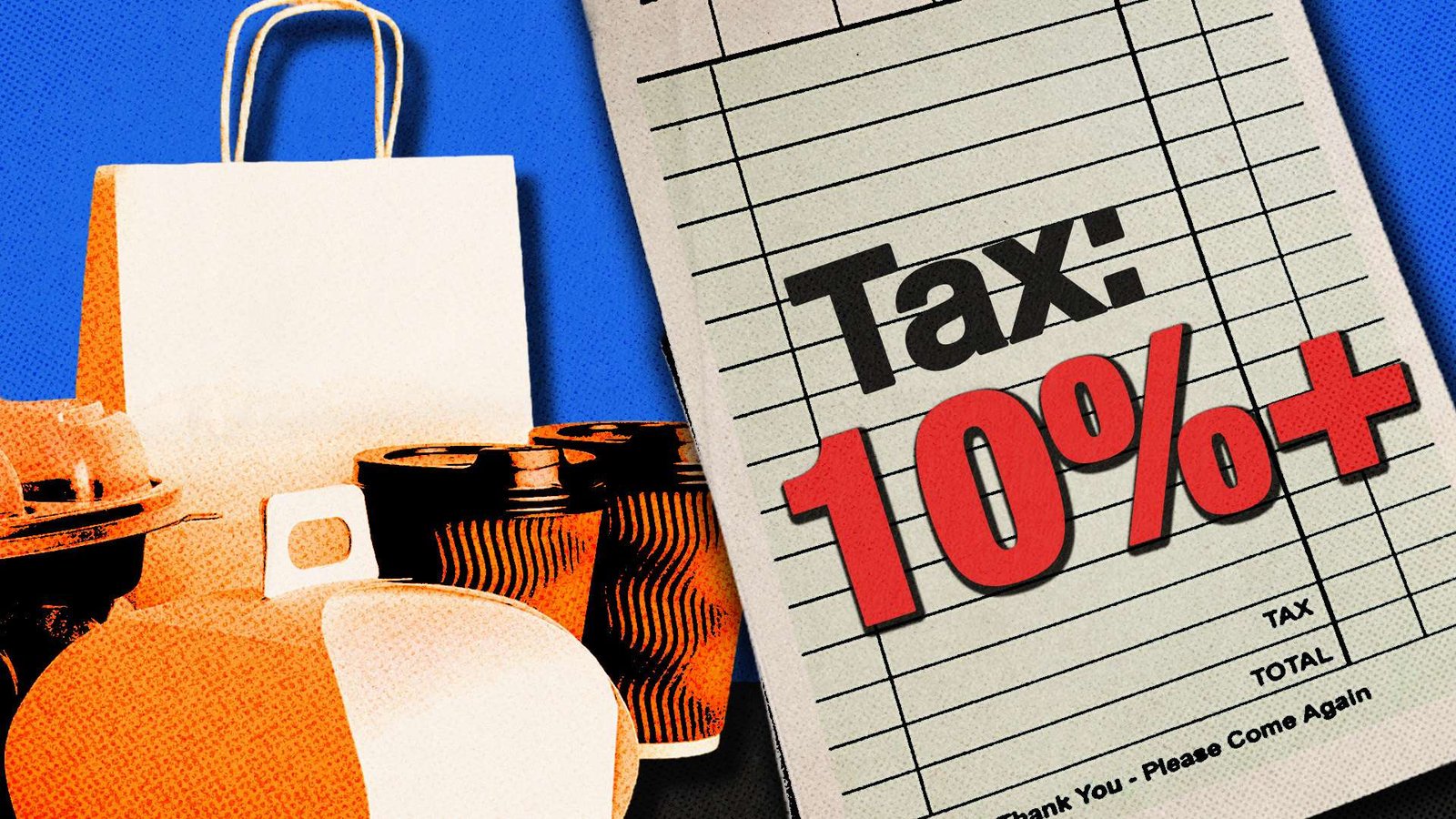
When one combines general sales-tax and meal-tax rates, the combined tax rate on food can range well over 10 percent in many jurisdictions, with Minneapolis (12.03 percent), Chicago (11.75 percent), and Virginia Beach (11.5 percent) among the most egregious offenders, the Tax Foundation found. Worse yet, the organization noted that food taxes are becoming more prevalent, with 29 out of the top 50 cities increasing their taxes on meals (either via sales tax or meal tax increases) over the past decade. Only two cities saw a decrease in food taxes during that time.
Meal taxes are becoming more common in small and medium-sized cities, too. In Virginia, not only does Virginia Beach have a meal tax, but Williamsburg, Richmond, and Petersburg all now have meal taxes. Even a locale as small as Mathews, Virginia has a 4 percent meal tax. According to the Virginia Restaurant, Lodging, and Travel Association, 43 percent of Virginia localities have raised either their meal tax or their transient occupancy tax—a hotel-specific tax that serves a similar purpose as the meal tax—since 2016.
As the experience in D.C. attests, food-related taxes are no longer confined to brick-and-mortar dining. Both Minnesota and Colorado have enacted delivery fees in recent years; Colorado’s fee, which consists of six different sub-fees, has now risen to 31 cents and keeps increasing with inflation every year. At least a half dozen other states have considered imposing similar delivery taxes, while at the municipal level, Seattle has also added a fee onto food delivery.
For politicians, restaurant and delivery taxes appear to be a win-win. It’s far less likely that a concerned citizen will grumble about a 10-cent delivery fee here or a 4 percent meal tax there, compared to a top-line income tax increase. An added bonus is that meals consumed in restaurants are often ordered by tourists or other visitors to a city, providing a handy way to export the tax base to non-residents who lack voting power within the jurisdiction.
But these taxes have a real impact. What’s more, there’s evidence they may have the potential to backfire even when it comes to raising revenue. After Williamsburg, VA, recently increased its meal tax by 30 percent, restaurant sales dropped. While revenue from the heightened meal tax grew by 6.7 percent, overall tax revenue from restaurants saw a 1.5 percent year-to-date decline once the new tax was accounted for (presumably on account of declining restaurant sales leading to a reduction in general sales tax collections from restaurants that offset the meal tax increase).
Let’s put some numbers behind that. A $74 restaurant tab in Williamsburg now comes out to just under $84 by the time Virginia sales tax and the Williamsburg meal tax is factored in. A small increase in a meal tax or a relatively modest delivery fee may not impact some diners, but it has a tangible impact for others. In Colorado, 35 percent of voters said that the delivery fee would make them less likely to order food delivery; in Minnesota, 29 percent of voters said the same.
The reality is that food is increasingly being targeted for taxation in America. Government officials are promising us more affordable eats at the same time they’re making food more expensive than ever.
