
[ad_1]
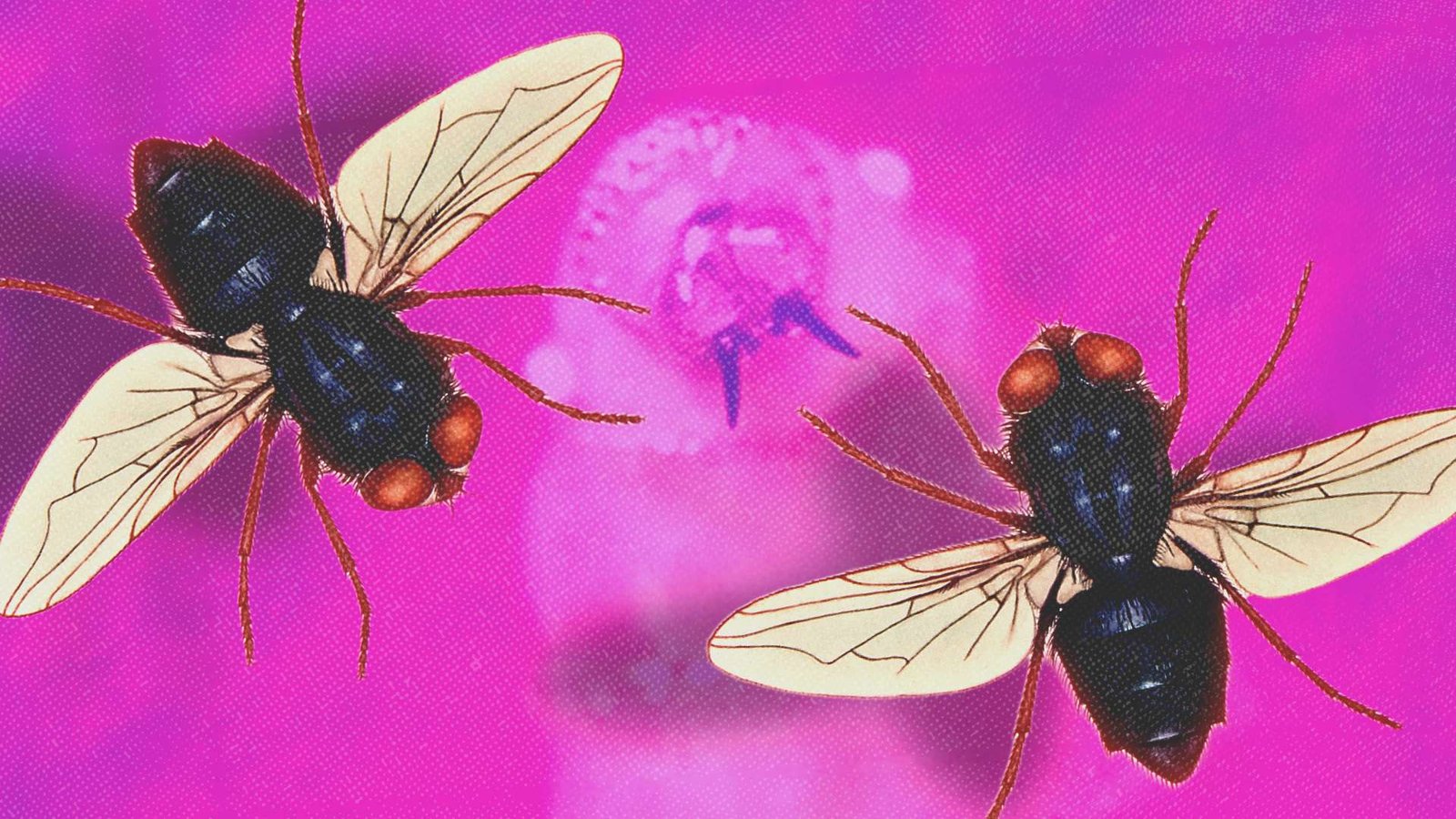
Screwworms are back and spreading in Texas. The pests were successfully eradicated from the United States in 1966. How? Using the sterile insect technique whereby 20 billion irradiated screwworm flies were raised in U.S. Department of Agriculture (USDA) labs and released over Texas, Arizona, and California via aircraft to breed with wild female flies. These sterile matings eventually eliminated the native populations. The flying vermin, however, remain endemic south of our border.
Screwworm flies lay their eggs in the wounds and body openings of warm-blooded hosts including cows, goats, sheep, deer, and even humans. The larvae hatch and start eating their hosts’ live flesh. The USDA estimates that the current outbreak could cost livestock producers more than $700 million per year and the Texas economy $1.8 billion. The USDA is opening sterile fly production facilities in Panama, Mexico, and Texas.
In traditional sterile insect technique (SIT), both female and male flies are produced and released. The sterile females are superfluous, since only the sterile males breed with the fertile wild females. To address this problem, the USDA is using the new NovoFly technique to breed only male flies while it awaits Environmental Protection Agency approval. NovoFly uses genetic engineering to produce proteins and traits that are lethal to female screwworm embryos so that only males survive. This doubles the production of sterile male flies. Pending approval by Panamanian authorities, the first field trials of the genetically engineered NovoFly males could take place later this year.
NovoFly is a welcome pest control advance, but deploying gene drives would be an even more effective, and possibly permanent, solution by using CRISPR genome editing to force specific traits, e.g., female death or infertility, to spread faster than through normal inheritance. For example, scientists have released in the Florida Keys modified male mosquitoes with drives passing on genes that kill off larval female mosquitoes. The spread of gene drives is a rapid and precise way to cause the extinction of invasive species or disease-carrying insects.
Maxwell Scott, the North Carolina State University entomologist who headed up the NovoFly research, notes in an interview that it would take releasing 40 times fewer males carrying lethal gene drives to eradicate screwworm flies than does traditional SIT.
Despite objections by some activist groups, it is ethical to drive at least some pest species to extinction. In a May 2025 policy forum on the ethics of deploying gene drives in Science, a team of entomologists and bioethicists concluded:
The broad support for use of SIT to achieve a series of local extinctions of screwworm suggests that the argument in favor of fully eradicating screwworm is likely to be compelling for many people—especially in light of a recent resurgence of screwworm in Central America, because the resurgence suggests that a permanent solution may be possible only with complete eradication.
Similarly compelling cases can be made for deploying gene drives sooner rather than later to cause the extinction of all sorts of pests, including disease-carrying mosquitoes, agricultural pests, and invasive rodents.
[ad_2]
Source link
