
[ad_1]
As a nation, we increasingly want our politics the way we want our news, the way we want our Sunday barbeque conversations with neighbors – and the way we want our marriages. We want to marry people who have the same political affiliation.
In the early 1970s, a little over half of American couples shared a political affiliation. Now well above 70% do. Judging from the polarized fare on cable news, the clustering of people in like-minded communities, and the inability of Congress to even speak across the aisle, let alone get things done, we are headed in the wrong direction if we want a civil society.
One man with a long career in politics stands against this incessant divisiveness, and we would do well to listen to him.
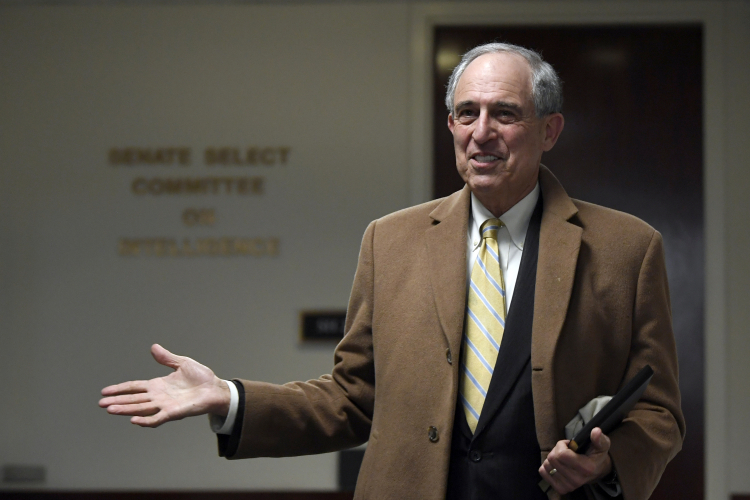
(AP Photo/Susan Walsh)
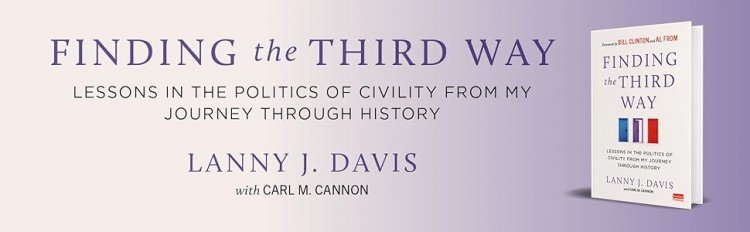
In his new book, “Finding the Third Way: Lessons in the Politics of Civility From My Journey Through History,” Lanny J. Davis recounts the lessons he learned by open-mindedness, willingness to listen, and focusing on solutions.
Davis is a Democrat. He helped defend President Bill Clinton during his impeachment. He also had a working friendship with Clinton’s successor in the White House, George W. Bush. Bush appointed him to the Privacy and Civil Liberties Oversight Board.
“You can strongly disagree in politics,” Bush once said to him, “but that doesn’t mean you can’t respect the other person and still be friends.”
Davis’ broad relationships began when he was an undergraduate and then a law student at his beloved Yale, which is a bright thread running through this book recounting his political odyssey.
Early in this memoir, Davis describes an imaginary walk on campus where as a young man he meets the many budding politicians who became his lifelong friends. Among them were “three future governors, three future senators, two future secretaries of state, and two future presidents of the United States.” Davis was Bush’s fraternity brother and came to know Clinton’s future wife Hillary Rodham at Yale. The university should use his book as a recruitment brochure for students who want to go into politics.
Davis planned to become a journalist. He headed the Yale Daily News, which has served as a launching pad for journalists and politicians as diverse as conservative William F. Buckley Jr. and cartoonist Garry Trudeau. As often happens for talented people like Davis, one thing (journalism) leads to another (politics). When Davis arrived at the paper, the chairman, as the top editor at the Yale Daily News is called, was Joseph Lieberman. Lieberman became a senator from Connecticut and the 2000 vice-presidential candidate on the Democratic Party ticket headed by Al Gore.
A defining moment for Davis came when he met liberal activist Allard K. Lowenstein. Lowenstein was on campus to recruit students to register southern black voters in the summer of 1964. Davis did not sign up, but he became a follower. He joined Lowenstein’s campaign against the Vietnam War and helped him get elected to Congress in 1968.
Lowenstein was a firebrand. But Davis celebrates him for opposing the violence advocated by the New Left in those days. (Tragically Lowenstein was murdered in his Manhattan law office in March 1980 by a mentally ill young man whom he had mentored.)
Lowenstein, writes Davis, gave his generation of young liberals a lesson: “If we wanted to end the war, to achieve social justice for our country, the best path was through politics, specifically the politics of persuasion, not bullying or demonization.”
How well have liberals learned that lesson? The left today demonizes the right as much as the other way around. Intolerance on one side begets intolerance on the other, not solutions.
President Joe Biden, Davis argues, should have stood up early in his term for dealing aggressively with border issues. Instead, he “capitulated completely to the Thought Police,” by which Davis means vocal advocacy groups that were out of touch with a large majority of Americans. Presidential candidate Kamala Harris was similarly tone-deaf to the wedge issue of treatment of transgender people.
Davis says Harris would have done herself and the country a lot of good to “educate conservatives about the pain” many young people suffer dealing with their sexual conflicts and the conflicts many good Americans feel over “their children going to a restroom alongside someone with the opposite sex’s physical attributes.” Harris might have said, Davis suggests, “Tolerance and mutual respect need to go both ways.”
This is not Davis’s first book. One of his earlier efforts was “Scandal: How ‘Gotcha’ Politics Is Destroying America.” He says this is his last. Let us hope one of his final recollections endures.
In the 2008 campaign cycle, Davis, a liberal Jewish Democrat, joined with Mark DeMoss, a conservative Christian Republican, to draft a “civility pledge.” It read thus:
-
I will be civil in my public discourse and behavior.
-
I will be respectful of others whether or not I agree with them.
-
I will stand against incivility when I see it.
[ad_2]
Source link
