
[ad_1]

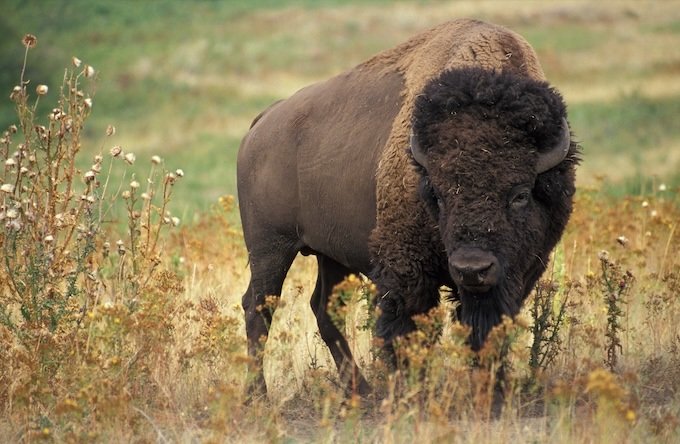
American Bison. Photo: Jack Dykinga, Agricultural Research Service, US Department of Agriculture. Public Domain.
The federal district court in Montana denied the federal government’s request to press pause on a lawsuit challenging the way that the federal government is managing the American Bison (the National Mammal) in Yellowstone National Park on July 21st. The lawsuit, filed by conservation groups Alliance for the Wild Rockies and Council on Wildlife and Fish, challenges the government’s failure to use the best available science in wildlife management of the National Mammal.
In response to the lawsuit, the federal government asked the court to indefinitely pause the lawsuit while the government conducts additional analysis. However, the court rejected the request to pause the case, finding in part that the government had not made any commitment to address the problems raised in the lawsuit. Additionally, pausing the lawsuit would harm the public interest because wild bison would continue to be managed under a plan that does not apply the best available science, whereas if the case continues on time then the court could issue an order that would require better management.
This court decision is a great step in the right direction — we need to base the management of our National Mammal on sound science. This is the purpose of this lawsuit, and we are happy to report that the lawsuit will continue as planned. We already filed our first brief on July 1, and our arguments are strong for our wild, free-roaming bison.
For context, tens of millions of wild bison once roamed across western North America. Today, wild bison occupy less than one percent of their former range. Despite their small population, every year, the federal government rounds up and slaughters wild roaming bison that try to migrate outside Yellowstone National Park. The original reason for this wildlife management action was a fear that wild bison would transmit a disease called brucellosis to domestic cattle that might be grazing outside the National Park. In the 1990s, little was known regarding brucellosis transmission to cattle, and so the original government management plan for brucellosis, issued in 2000, focused solely on wild bison — keeping them separate from cattle and slaughtering bison that tested positive for brucellosis antibodies.
However, after 20 years of management under the prior bison management plan, the federal government commissioned the National Academies of Science, Medicine, and Engineering to undertake an exhaustive study to determine if brucellosis management was working in the Yellowstone region. Contrary to the original assumptions in the 2000 plan, the National Academies found that over the past 20 years, wild elk — not wild bison — transmitted brucellosis to livestock 27 times. Wild bison were not responsible for a single transmission.
Then, in 2024, the federal government prepared and approved a new management plan for wild bison. Yet, like an ostrich with its head stuck in the sand, the government completely ignored the National Academies’ recommendations to switch focus from wild bison to wild elk for brucellosis management in the Greater Yellowstone Area. Not a single alternative in the new plan’s EIS addresses the true source of brucellosis infections — elk.
Therefore we had to sue because no one else would hold the federal government’s feet to the fire. There is no scientific dispute here, the bison management plan is based on outdated assumptions that thousands of bison need to be slaughtered to stop brucellosis infections in cattle. This is no longer accepted science and the government needs to change its management practices to keep up and base its decisions on the best available science.
Additionally, the government failed to show the public where (if at all) wild bison might actually overlap with active cattle grazing allotments during a time of year when cattle are present and brucellosis is a risk. Without this basic information, it’s impossible to know where cattle might interact with brucellosis-infected fetal tissue from wild bison, and so we don’t know where or if these aggressive management practices are needed at all to keep cattle separate from wild bison. Over the past three decades, cattle grazing has diminished in this area, and so things just aren’t the same now as they were in the 1990’s when the original plan was created.
Furthermore, after 21 years of implementation, the most aggressive and controversial tool in the management plan — ‘capture and slaughter’ — has failed to reduce the percentage of Yellowstone bison that annually test positive for brucellosis antibodies. The Bison Management Plan’s Environmental Impact Statement provides no rational reason to continue this aggressive and controversial tool when it has proven to be ineffective at its sole purpose: reducing brucellosis.
To be clear, when they test bison, they are testing bison to see if they have been exposed to brucellosis. They are not testing to see if bison have been infected with brucellosis or not.
[ad_2]
Source link
