
[ad_1]
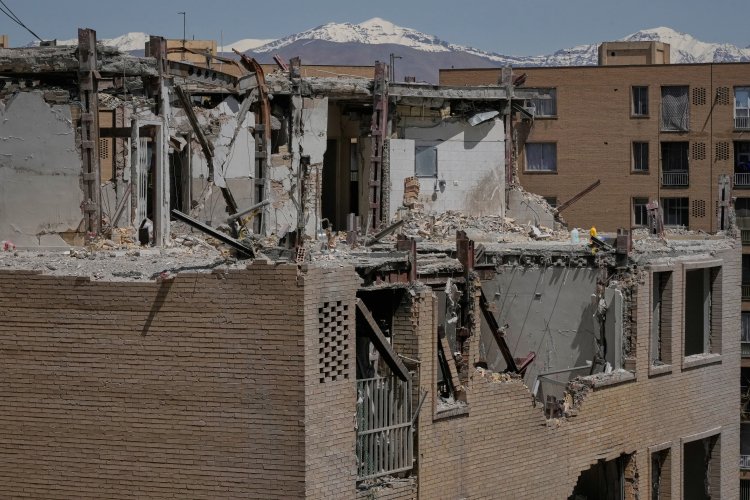
Trump’s war with Iran is not popular – and that’s no surprise. Critics of the war are correct about one very important thing: It is messy.
The Strait of Hormuz remains dangerous. Oil markets are volatile. The risk of escalation has not disappeared. Even after weeks of air strikes – and now a U.S.-led blockade aimed at restoring control of the Strait – Iran retains the ability to disrupt shipping and rattle the global economy.
All of that is true. But what critics have yet to show is that there was a better alternative.
For years, American policy toward Iran rested on a simple hope – that confrontation could be avoided long enough for the problem to solve itself. That hope took different forms depending on the administration. Sometimes it meant sanctions. Sometimes it meant negotiation. Sometimes it meant outright financial concessions in exchange for temporary cooperation.
But underneath those differences was a common assumption: that delay was safer than decisive action.
It was that assumption President Trump questioned, and appropriately so. The evidence was plain that with each passing year Iran was becoming more menacing. Its leadership spent decades building a network of militant proxies, expanding its missile capabilities, and positioning itself to threaten one of the most critical economic chokepoints in the world. It did not need to close the Strait of Hormuz to exert influence. It only needed to make clear that it could.
And there was no reason to believe that Iran would not fulfill its nuclear ambitions, very possibly sooner than later. Our repeated warnings and negotiations only served to make us look weaker as Tehran dodged and maneuvered and got closer and closer to a nuclear weapon. By the time the current conflict began, Iran’s power rested more on its ability to evade consequences than on actual military prowess.
The United States could respond to that reality in one of two ways: Accept it or challenge it.
Challenging it was never going to be neat.
The sheer difficulty of military action against a dispersed, partially hidden and deeply entrenched adversary in a nation of 90 million people and the size of Alaska scared off every previous president. Iran’s strategy, after all, has always been built around survivability – mobile launchers, proxy forces, underground facilities, and the ability to impose costs without exposing itself to decisive retaliation.
And survive they have done. So even though Trump is right by every normal military metric to say that the United States is winning the war, it doesn’t feel that way. Beyond the continued persistence of the autocratic regime in foxholes and bunkers, there is Iran’s ability to destabilize global markets because of its control of the Strait of Hormuz. Chaos is easier to create than eliminate. Once uncertainty enters the system, it tends to linger.
But acknowledging that reality is not the same as accepting it as inevitable. Which is why I believe Trump’s war will ultimately be seen as the necessary countermeasure to the Iranian regime’s intimidation tactics.
We do not have to imagine what happens when a growing threat is left unchallenged. We can look to North Korea. Decades of delay, negotiation, and half-measures produced a regime that now possesses nuclear weapons and the means to deliver them. Only last week, North Korea showcased its latest nightmares: a cluster-bomb warhead on a ballistic missile, carbon fiber bombs, and a new electromagnetic anti-aircraft weapon.
Whatever options once existed have largely vanished. Military action is no longer a tool of prevention; it is a trigger for catastrophe.
Iran was not yet North Korea. But that is precisely the point.
However imperfect the present course may be, it reflects a recognition that the window for meaningful action could not have remained open indefinitely. In the Middle East, unlike on the Korean Peninsula, the United States still had both the capability and a more permissive regional environment in which to act.
That does not make the current strategy risk-free. It does not guarantee success. Nor does it mean that the consequences will be easy to manage in the short term.
It does mean that the choice was not between war and peace.
It was between action and a steady drift toward a more dangerous equilibrium – one in which Iran’s leverage over global energy markets became a permanent feature of the international system.
President Trump has chosen action.
His critics see escalation. They see instability. They see the potential for a wider conflict that could draw in other powers and impose real costs on the American public.
They are not wrong to see those risks. But risk alone is not an argument. It is a condition of every serious decision in foreign policy. The more relevant question is whether the risks of action outweigh the risks of inaction.
If Iran’s strategy is to exploit its position near the Strait of Hormuz to shape global markets and constrain the choices of its adversaries, then doing nothing does not preserve stability. It concedes leverage.
If its long-term ambition includes the development of nuclear capability, then delay does not eliminate the threat. It narrows the range of viable responses.
And if history is any guide, waiting until a threat becomes undeniable often means waiting until it is far more dangerous and far more costly to confront.
None of this guarantees that the current course will succeed. It does suggest that it was necessary.
There is a tendency in American politics to judge foreign policy decisions in isolation – to look at the immediate consequences and declare success or failure based on what can be seen in the moment. By that standard, the war with Iran must appear unsettled for the short term. The Strait will remain perilous. Markets will remain sensitive. The outcome will remain uncertain.
Even Iran’s announcement that the Strait is open does little to change the underlying reality. The ability to disrupt it – and the global economy – remains intact.
Responding to that kind of challenge requires a willingness to act before the situation becomes irreversible – and to accept that the results will be imperfect.
Bottom line: Decisive action took courage – and may have been necessary. It was never going to be clean. And Trump was the only one prepared to act.
[ad_2]
Source link
