
[ad_1]
On Monday, the Supreme Court heard oral arguments in Monsanto Company v. Durnell, a case that will determine the balance of power between states and the federal government over cancer warnings on pesticide labels.
In 2019, the defendant, John Durnell, filed a lawsuit against Monsanto Co., arguing that he had developed non-Hodgkin’s lymphoma due to exposure to glyphosate, an active ingredient in the company’s weed killer Roundup. In 2023, a jury sided with Durnell, awarding him $1.25 million after it found Monsanto liable for failing to warn of the alleged cancer risk from glyphosate, even though the Environmental Protection Agency (and several other studies) have not found a link between glyphosate and higher cancer rates.
Monsanto appealed the decision, arguing that since the EPA has not found a cancer link with the pesticide, it cannot legally add warning labels to the product under the Federal Insecticide, Fungicide, and Rodenticide Act (FIFRA). As a result, the company argues, Durnell’s lawsuit and the thousands like it in state courts should not be allowed to move forward.
Some Justices seemed skeptical of this argument, reports The New York Times. Chief Justice John Roberts appeared leery that, if new scientific information arises and the EPA still had not required a warning, states would be unable to take action, such as allowing failure-to-warn claims to proceed. “The states cannot do anything?” he asked.
Similarly, Justice Ketanji Brown Jackson pressed on how the law would handle emerging science, suggesting that new evidence could cast “doubt on the efficacy or the safety of this product,” resulting in “a product that is misbranded,” despite initially being registered and labeled correctly.
Other Justices, however, raised the opposite concern: that companies could be held liable for failing to include warnings they were not permitted to add. Justice Brett Kavanaugh warned that such a system could create a “due process problem…where the agency says you have to do this and then sues you for doing what they told you to do.”
Sarah Harris, a deputy solicitor general for the Justice Department (which filed an amicus brief in December), retorted that it would be problematic to have each state “jumping the gun” and arriving at its own conclusions about whether a product can directly cause cancer.
Durnell’s lawyer argued that the EPA had overreached its regulatory power. To fix this problem, the lawyer argued, courts—especially state courts—should be given a stronger role in regulating health and environmental safety. Several justices were skeptical of this argument, reports the Times, and asked whether this could lead to a new patchwork of regulations throughout the United States. This concern was also raised in the Justice Department’s brief. It argued that the uniformity requirement in FIFRA “vests EPA with responsibility” over what warnings are necessary. “If States can compel petitioner to add a cancer warning—contrary to EPA’s scientific judgments—States could drown EPA’s approved warnings in a sea of local health and environmental concerns.”
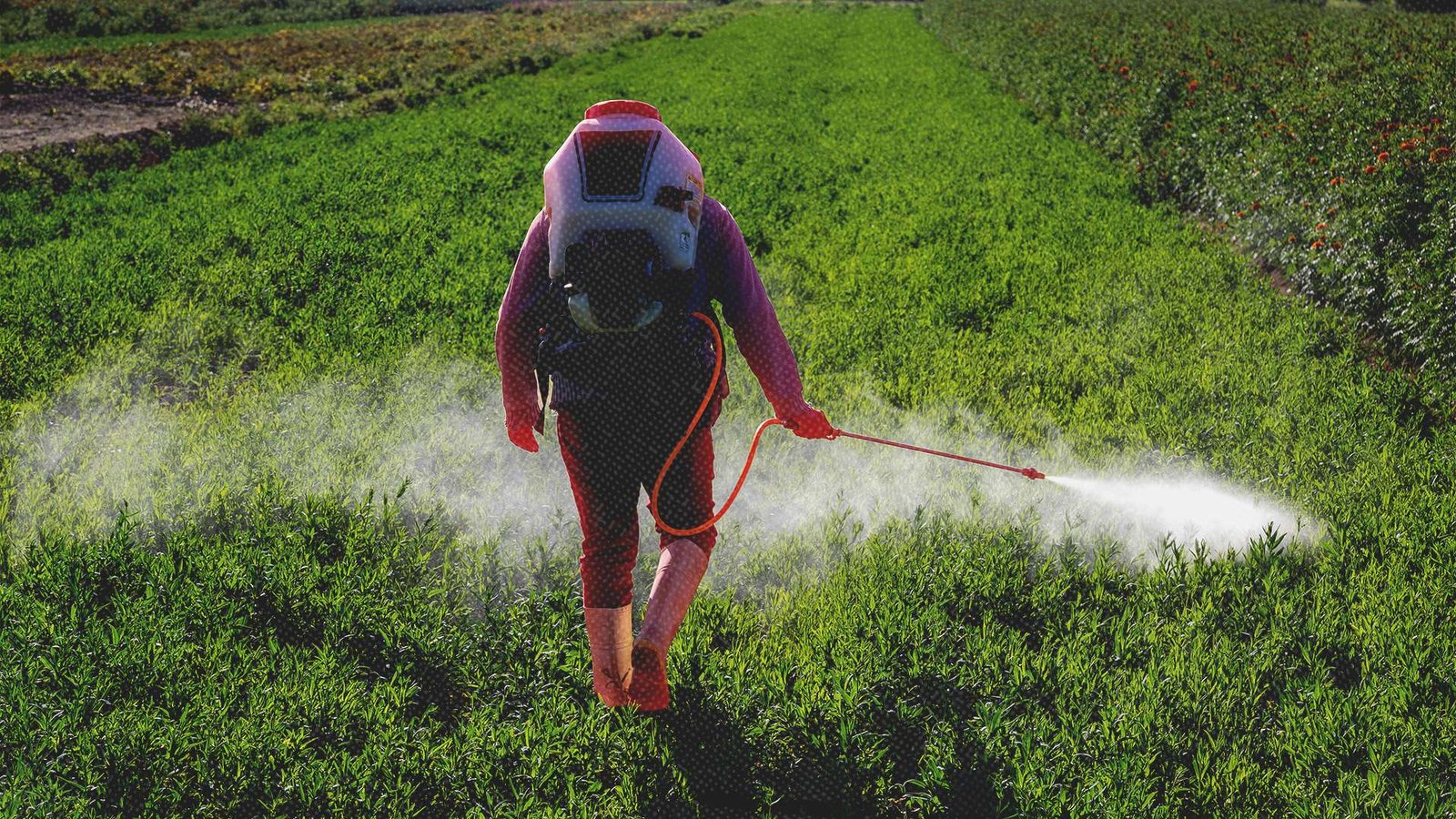
The decision, which will be announced later this year, is sure to have wide-ranging impacts on the American food system. If the Court rules against Monsanto, it could pave the way for further lawsuits and damages, leading to higher costs across the industry. It would also challenge the notion that if a company follows federal law, they are safe from legal liability. It could also discourage the use of glyphosate, which has been critical in boosting food production, replacing other harmful pesticides, and saving farmers $21 billion annually, according to Graham Matthews, a pesticide expert.
Beyond the implications on food production, the decision is also likely to have political ramifications. After playing a key role in getting President Donald Trump reelected, the Make America Healthy Again (MAHA) movement—which wants to ban pesticides like glyphosate—is beginning to sour on the administration.
In February, Trump issued an executive order to promote glyphosate production, calling its continued production critical to America’s food supply and national security and stating that “lack of access to glyphosate-based herbicides would critically jeopardize agricultural productivity.”
This order, along with a lack of progress on other issues, has left MAHA unhappy. On Monday, a group of the movement’s supporters gathered outside the Supreme Court for what they called the “People vs. Poison Rally.” Holding placards stating “No liability protection from pesticides” and “pesticides are a national security threat,” activists hoped to display their dismay at the Trump administration.
Speaking at the rally, Rep. Thomas Massie (R–Ky.) said “Americans are under attack” and that these companies “want get-out-of-court free cards.”
“Was the EPA established to protect the environment and the people, or was it established to protect foreign corporations when they harm the environment and the people?” Massie continued.
“Shielding pharmaceutical companies from accountability with lawsuit immunity for pesticides is wrong,” Charity Williamson, who attended the rally, tells Reason. “As a libertarian, I believe that the government has a responsibility to its people to protect life, liberty, and property. If a company has a product that causes cancer, we should be able to hold that company accountable in a court of law.”
The Supreme Court is set to make a decision this summer. Siding against Monsanto could hurt farmers and discourage innovation, ultimately leaving people worse off.
[ad_2]
Source link
