
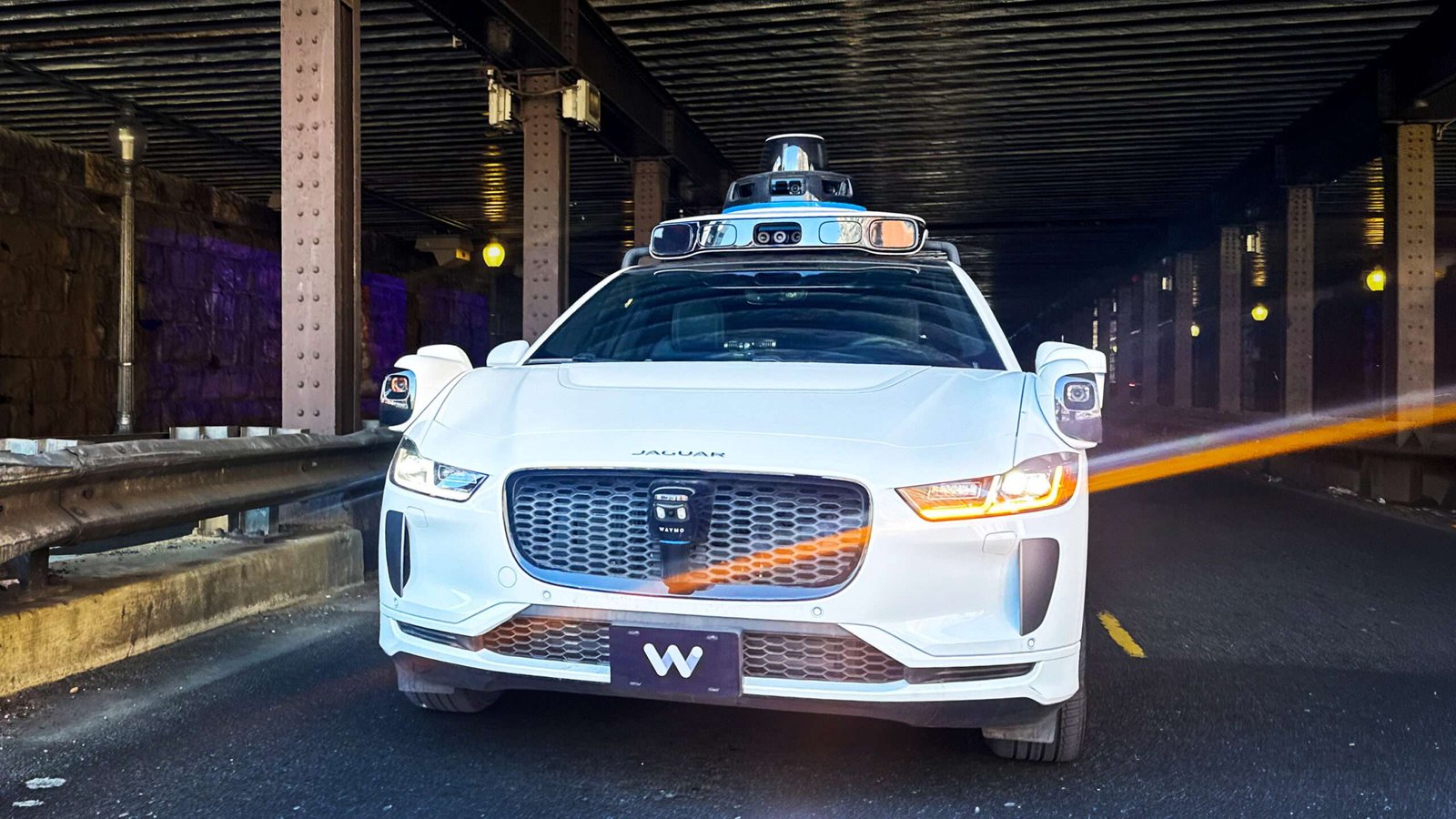
The District of Columbia is considering a bill that would permit the commercial use of autonomous vehicles (A.V.s), such as Waymo, so long as operators pay a multimillion-dollar fee.
The Autonomous Vehicle Deployment Authorization Amendment Act of 2026, introduced in May by Democratic Councilmember Charles Allen, would create the first legal pathway for companies to operate driverless taxis and delivery vehicles in the district. “People want AVs as an option to get around, and I want DC to be a city that embraces innovation,” Allen said in a press release.
Legalizing these vehicles would be a positive not only for D.C.’s residents but also for safety. Where autonomous vehicles have been allowed, initial evidence suggests that they are far better than human drivers at avoiding crashes that result in injuries. According to Waymo’s analysis of over 220 million driverless miles, A.V.s were involved in 94 percent fewer serious-injury crashes, 93 percent fewer pedestrian crashes with injuries, and 84 percent fewer cyclist crashes with injuries than human drivers covering comparable roads.
The proposed bill would, however, introduce a tight and costly regulatory framework that will cause the city to forgo some of the crashes, injuries, and deaths A.V.s could prevent. Some of the restrictions include the requirement for operators to complete 250,000 miles of testing, pay $6 million for a three-year permit, carry $5 million in insurance, accept an initial 200-vehicle cap, file extensive reports, and pay an additional 15-cent tax on every mile driven. The multimillion-dollar fees would partly fund training programs for ride-share drivers deemed vulnerable to automation.
However, this extraordinarily expensive framework is not enough for union campaigners. Before a hearing on the bill on Monday, protesters and members of the Teamsters Union, 32BJ SEIU, the Amalgamated Transit Union (ATU), and the International Association of Machinists and Aerospace Workers gathered outside as the D.C. Council heard testimony, arguing that legalizing A.V.s would cost jobs.
“We support innovation 100% when it strengthens public services and creates good union jobs,” Jaime Contreras, executive vice president of 32BJ SEIU, the nation’s largest property service union, tells Reason. “As it stands now, the bill would funnel money to Waymo executives in Silicon Valley that could otherwise go into the pockets of DC residents and [the] economy.”
Perhaps some drivers will be displaced by the introduction of autonomous vehicles, but protecting jobs today should surely not be the basis on which we create laws for the future. If it were, farming machinery would have been outlawed because it would result in fewer farmers, ATMs would have been rejected on the basis that they would result in fewer bank tellers, and the car itself would have been opposed on the basis that it would displace horse-drawn carriage drivers.
Indeed, this was the argument made by Marissa Tuell, senior manager of autonomous vehicle policy at Lyft. At the hearing on Monday, Tool argued that “the disruption drivers feel from automation isn’t new,” and that “ATMs” and “self-checkouts” did not “eliminate tellers and cashiers,” but “gave customers more ways to bank and shop, with both options continuing to operate side by side.” Tuell said that she expected the same to be the case with automated vehicles, resulting in “A.V.s and human drivers coexisting and complementing each other to meet more rider needs than either could alone.”
Union representatives did not share Tuell’s optimism. Brian Wivell of Amalgamated Transit Union Local 689 argued before the council that adopting A.V.s would push people to live farther from their workplaces by allowing them to work from these vehicles. He seemed to suggest that the convenience afforded by Waymos and other A.V.s is something that should be fought: “As we consider allowing a technology that will allow someone to do a 30- to 45- minute drive without having to talk to a single human being and they can work the entire time, we are going to watch sprawl on a level we have never seen before.”
“One of the things that stood out to me the most was how many people seemed to say that delivery or driving jobs required a human touch,” Lucas Pombo, a research fellow at the Foundation for American Innovation who testified in person at the hearing, tells Reason. “One witness claimed that part of being an Uber driver is talking to people who weren’t being talked to at other points in the day,” effectively serving as “a kind of mental health/person-to-talk-to service in addition to being drivers,” which Pombo calls “plainly ridiculous.” He adds that one union representative “went so far as to say that having drivers in delivery trucks led to more efficient routing,” which Pombo says is “just a factually incorrect statement about how delivery routes get planned.”
Pombo argues that in the future, as A.V.s become more affordable, the opportunities to increase convenience are endless: “Kids could visit their friends’ houses without dragging their parents along, Amazon could dispatch a car with just your package directly from the warehouse when you order it,” and “you could order food from a far away restaurant you really like.”
The opportunities are truly endless. Unfortunately, across all levels of government, there exists a pervasive idea that technological change, which may affect jobs, must be treated with disdain. While it is unclear how the bill will fare in the D.C. Council, the stringent regulations and steep costs tied to potential A.V. legalization are likely to prevent D.C. from realizing the full potential of self-driving vehicles.
The post D.C. Wants To Charge Robotaxis $6 Million. Unions Still Say No. appeared first on Reason.com.
