
[ad_1]
The sudden death of Sen. Lindsey Graham and the extended hospitalization of Sen. Mitch McConnell have renewed questions about the advanced age of America’s political leaders. Graham was seeking another term that would have ended at age 77, while McConnell, 84, had been out of public view for weeks amid speculation about his health.
The concerns extend far beyond two senators. In the House, the Democratic leadership triumvirate of Nancy Pelosi, Jim Clyburn, and Steny Hoyer served well into their eighties before relinquishing power a couple of years ago (while remaining in office). The current Congress is the third-oldest in American history, continuing a decades-long rise in the median age of federal lawmakers.
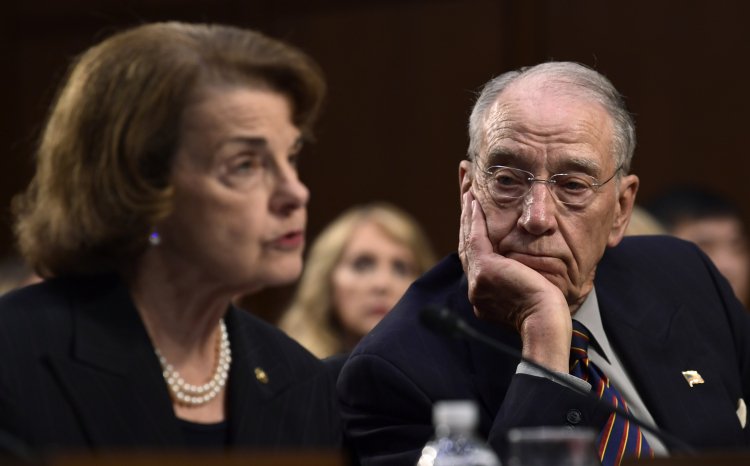
At the beginning of the year, 24 members of Congress were at least 80 years old, 13 of whom were seeking reelection. And they aren’t all back-benchers. Sen. Bernie Sanders of Vermont will turn 85 by summer’s end. Senate Judiciary Committee Chairman Chuck Grassley, an Iowa Republican, is 92 – and hasn’t yet ruled out running again in 2028.
Age has also become an increasingly prominent issue in presidential politics. Former President Joe Biden ended his 2024 reelection campaign amid concerns about his ability to serve another term, leaving office at age 82. President Trump will also be 82 when his second term ends in January 2029.
Statistically Speaking
At the beginning of the 119th Congress in 2025, the median age of senators was 64. For the House, it was 57. The ages of Congress members ranged from 37 to 91 in the Senate and 27 to 87 in the House.
The plurality of Senators were in their 60s, and the plurality of House members were in their 50s. Most of the Senate is made up of baby boomers, and a plurality of the House is Generation X.
It wasn’t always like this. The median age of members of Congress was on the decline from 1919 to around 1981, when the numbers reached lows of 51 in the Senate and 48 in the House. Since then, the age of congressional representatives has shot almost 10 years higher than it was in 1919 – going from 56 to 65 in the Senate and 49 to 57 in the House in 2023.
Experienced or Tired?
In gerontology, it’s an article of faith that human beings age differently based on factors ranging from heredity to physical fitness. The difference between chronological age and “biological” age explains why some octogenarians are in nursing homes and others are running marathons. And while it’s true that their detractors made much of Biden’s fall off a bicycle and Trump tripping on the Air Force One stairs, Sen. Grassley is – for the 46th consecutive year – visiting all 99 Iowa counties in 2026.
On the other hand, California Sen. Dianne Feinstein remained in office long after it became clear to her colleagues and her staff that she’d suffered serious cognitive decline. But it can be intimidating for colleagues to speak up about the effects of age on a venerable career. Concern for her health was only raised by multiple members of Congress who did so under the condition of anonymity.
The voters have noticed. Notwithstanding Grassley’s easy 2024 win, today 82% of Republicans and 76% of Democrats polled said they would support an age restriction for federal elected officials.
Although there are no age limits in American politics, the concept is widely practiced in other professions. Commercial airline pilots in the United States cannot fly after age 65. Many hospitals and medical facilities require surgeons to turn in their scalpels at age 70. In some places, there are age limits on who can serve in elected offices as well. In Canada, for example, senators cannot be older than 75.
In 2023, Professor Daniel Stockemer, from the University of Ottawa, said that around the world, representatives are almost always older than voters. While the average age of representatives sits around 50 globally, the U.S. is a “relatively extreme case” as “one of the oldest democracies.”
Furthermore, elections are getting more expensive, meaning the networking and financing required for running a successful campaign are less accessible to younger politicians, who also face age limits.
In 2025, the median age of Congress was just under 59. The median age in the U.S. is around 39. As Aimee Allison, representing political organization She the People, said, “We do need a new generation of leadership that looks like who lives in California, in the country. And that’s going to require people in their eighties to make space.”
However, a significant loss is recognized when Congress loses some of its most senior members. In the case of Lindsey Graham, many paid tribute across partisan lines to his life of service to the country.
In the words of former President George W. Bush, “He was a kind and funny man who loved our country and loved serving it. South Carolina was fortunate to have such a committed public servant in its corner. And I was fortunate to have known Lindsey Graham.”
[ad_2]
Source link
