
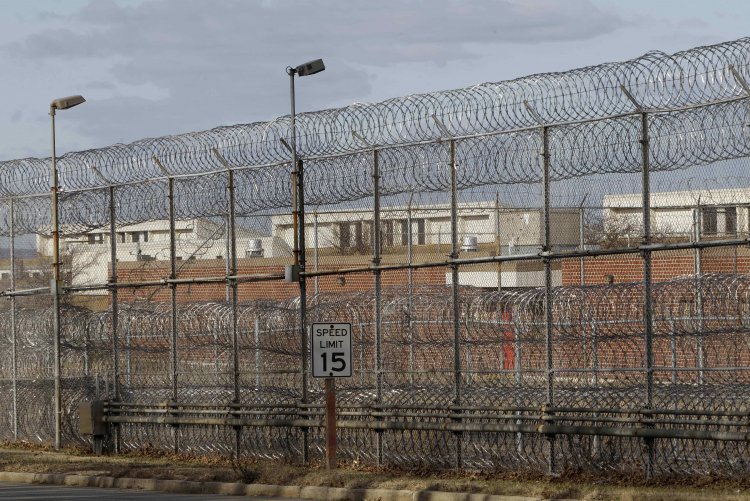
For decades, the War on Drugs, mandatory minimum sentences, and other dynamics kept our nation’s federal prisons packed to the rafters, with many facilities operating well beyond their design capacity. But now the Trump administration is poised to do what once seemed unthinkable: Close prisons.
This welcome occasion is not a matter of luck. It reflects falling crime, fewer people sentenced for drug offenses. and prisoners earning time off their sentences by completing programs and staying out of trouble. It all adds up to a shrinking inmate population, prompting the Bureau of Prisons to announce plans to shutter six of its lockups. This will spare taxpayers the cost of running half-empty facilities and free up savings to reinvest in measures that reduce reoffending.
Not everyone agrees. The union representing federal prison workers is urging Congress to freeze the plan, and the fight is moving into appropriations, where a single line could keep prisons open that the country no longer needs.
Closing these facilities is the fiscally conservative move, and the real prize is not just the savings. It is what those savings can buy: stronger staffing and better programming at the prisons that remain.
The system now holds about 153,500 people, down nearly a third from the 219,298 at its 2013 peak and more than 5,000 below the fiscal 2024 close. One force behind the decline is the First Step Act, the sentencing and reentry law President Trump signed in 2018. The Council on Criminal Justice found that people released under its credit-earning provisions served about 82% of their sentences, against 90% for those the law did not reach.
Some may wonder how the population can shrink while the administration detains so many immigrants, more than 70% of whom have no criminal conviction. But those detainees are not held by the BOP; they sit in a separate system run by Homeland Security.
The closure list itself makes the case. A low-security men’s unit in Taft, California, has sat unused since 2020. Three of the five occupied units slated for closure are at least 91 years old; a fourth has been open nearly half a century. Keeping the facilities open would mean sinking capital into failing plants, deepening a maintenance backlog that already tops $4 billion.
The BOP hasn’t estimated the savings, but they are likely significant. When Maryland closed a facility and transferred about 700 people last year, it booked $21 million in annual savings.
Every dollar not spent maintaining an empty 90-year-old prison is a dollar available to recruit and retain officers, while thousands of correctional posts sit vacant, and to expand the programs that can’t accommodate all prisoners striving to earn credits toward release. Those vacancies carry real costs. To cover shifts, the bureau routinely assigns nurses, teachers, and counselors to guard duty and mandates overtime, a pattern federal watchdogs link to burnout, higher attrition, and thinner programming.
The case for reinvestment rests on evidence, not hope. Access to programs is still the bottleneck. The BOP has expanded First Step Act offerings since 2022, but the Justice Department’s inspector general found this year that institutions run far fewer classes than planned, hamstrung by staff shortages, scarce instructional space, and lockdowns that keep prisoners away. About a quarter of those released early under the law had not completed a single program.
Even before that programming is fully rolled out, the recidivism trends are encouraging. A Council on Criminal Justice analysis found that people released under the act had recidivism rates roughly 55% lower than similarly situated people released before it took effect. The study did not set out to isolate any one program’s effect, so the gap is not proof that programming alone did the work, but it’s fair to call it a factor.
Reentry support is the other half of the case. Research consistently points to reentry strategies that connect people with work, family, and housing after release – and money freed from empty prisons can expand them.
Closing unneeded old prisons with major capital needs is sound corrections policy. But in many communities, prisons are also key employers, and that’s where the controversy arises. The American Federation of Government Employees has objected to the closures, which affect about 500 employees across six sites. Many will keep their jobs: Staff at Beaumont, Texas, Lexington, Kentucky, and Petersburg, Virginia, can move to nearby units and stay with the bureau. But those at Big Spring and La Tuna in Texas face a reduction in force, the government’s term for layoffs, because no nearby facility can absorb them.
Workers hit by the reduction in force still have options. They can apply for the agency’s 2,393 vacant correctional officer positions and other openings, from nursing to plumbing, though most lie far from home. Helping them transition is laudable. But freezing the closures to save specific jobs trades a solvable problem for a permanent waste.
Closures do unsettle the small towns where prisons sit. But a shuttered prison can find a second life. New York’s Arthur Kill Correctional Facility is now a film and television studio. Virginia’s former Lorton Reformatory is a mixed-use complex with housing and retail. Utah is turning a 600-acre former prison into homes and research space. Incarceration was never sound economic development, and research confirms it never worked as one.
What about the risk that inmate numbers climb again? Possible, but unlikely. Prison populations are falling both because the country is aging and because younger people are committing fewer crimes, as Stanford’s Keith Humphreys and SUNY-Albany’s Shawn Bushway note. Even if more capacity were needed later, nursing decrepit units along is the wrong way to hold it in reserve.
We should keep as many prisons as public safety demands, and not one more. Today that means six fewer, and a chance to spend what we save on the staffing and programs that truly make communities safer. Not many people had Trump closing prisons on their bingo card for his second term, but it is a winning hand.
