
[ad_1]

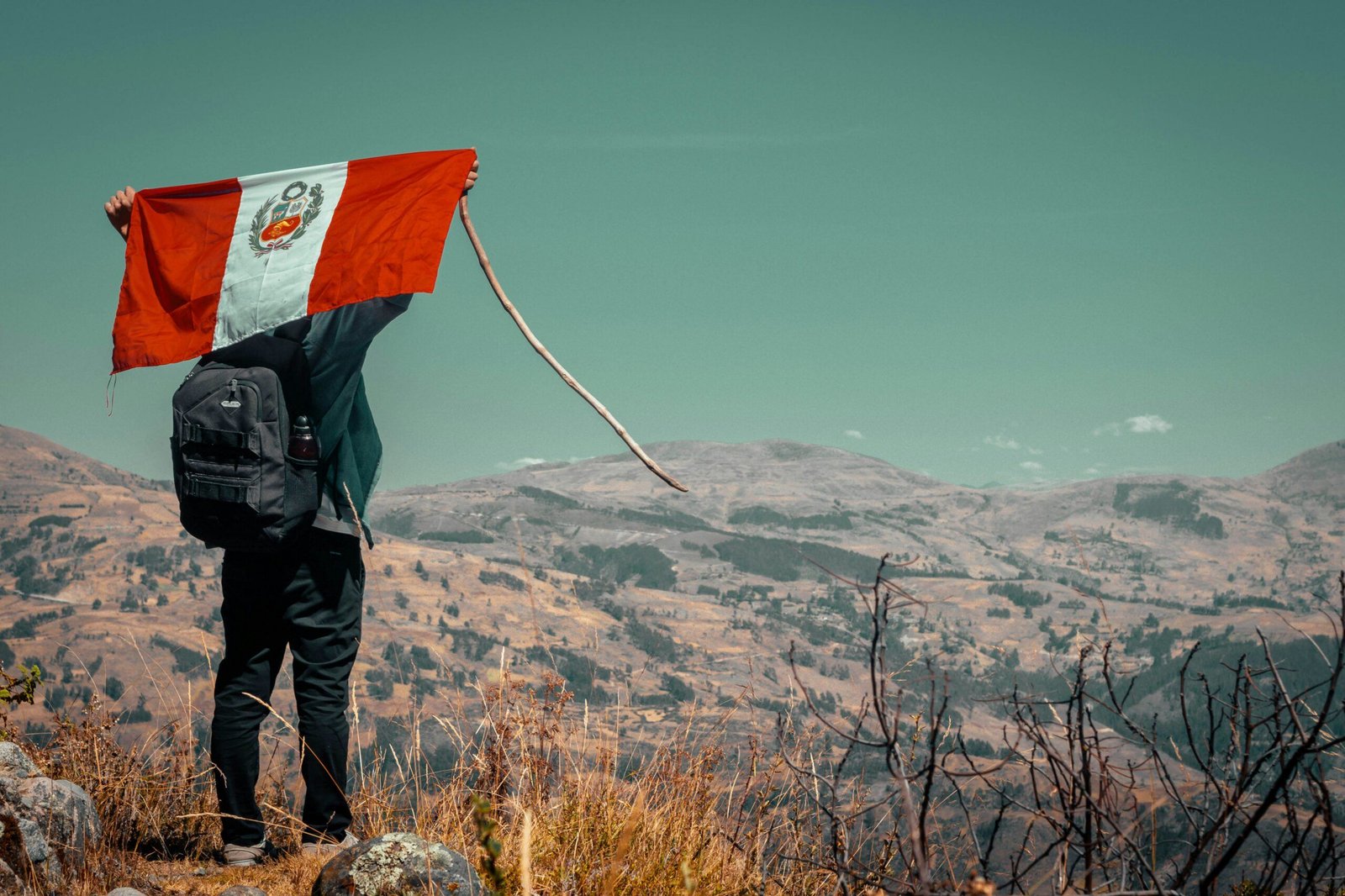
Image, Unsplash.
As the second round of presidential voting in Peru approaches on June 7, the progressive Roberto Sánchez of the United for Justice Party is confronting Keiko Fujimori, the right-wing candidate who has finished second in Peru’s last three presidential elections.
First-round voting for 30 candidates took place on April 12 and extended into the next day. Vote counting finished five weeks later, on May 17. Election authorities announced Sanchez has12.0% of the vote; Fujimori, 17.2%; and reactionary candidate and former Lima mayor Rafael López Aliaga, 11.9%. Only 21,000 votes separate the latter two. Flawed management by the National Office of Electoral Processes is widely regarded as scandalous.
Psychologist Roberto Sánchez won election to Peru’s Congress in 2021 and serves there now. He had been the social development manager in Huaral municipality, where he had run for mayor. Newly elected President Pedro Castillo in 2021 appointed Sánchez as Minister of Foreign Trade and Tourism. Campaigning now, Sánchez calls for a constituent assembly, support for local economies, full access to education, reform of Peru’s large informal economy, and community-based tourism.
Keiko Fujimori, leader of her Popular Force party, served in Peru’s Congress (2006-2011). She is the daughter of dictatorial president Alberto Fujimori (1990-2000), who died in 2024. She promises “to confront the security crisis with an iron fist.” Degrees obtained from Boston University and Columbia University testify to her U.S. ties.
Fujimori gained clearance for another presidential campaign only after judicial authorities suspended her lengthy trial in January 2025 on charges of money laundering and illegally taking funds from Brazil’s giant Odebrecht construction company. She had spent months intermittently in pre-trial detention.
Asking for trouble
Roberto Sánchez’s situation is precarious. No progressive political movement has achieved national political power in Peru via elections, with one exception. Pedro Castillo won the election to the presidency in 2021. Sánchez follows in his path.
Castillo’s enemies in Congress removed him from office in 2022. A “vacancy vote” in Peru’s Congress led to Castillo’s dismissal and his current 11-year prison term. Since 2016, no Peruvian president has completed a full five-year term of office. Castillo’s enemies used legal pretexts, so-called lawfare, to remove him. Lawfare has recently found common use throughout Latin America.
Sánchez provokes serious opposition. The public prosecutor on May 12 announced charges against him centering on false financial declarations relating to campaign contributions from 2018-2020. The prosecutor is seeking Sánchez’s imprisonment for five years, four months.
A mining-industry news outlet sounds the alarm: “Sánchez … has pledged to redistribute wealth to rural communities, review mining tax agreements, rewrite Peru’s constitution and phase out open-pit mining.” Mining accounts for 60% of Peru’s export income
A recent opinion poll projects Sánchez and Keiko Fujimori as winning 32% and 31%, respectively, of the votes on June 7. Some 44% of rural Peruvians, 34% of urban voters, and 22% of Lima residents back Sánchez. Almost one-third of all Peruvians live in Lima.
When Castillo – the former elementary school teacher, small farmer, and teacher’s union leader – became president in 2021 by defeating candidate Keiko Fujimori, he was only the second president of Peru since 1956 not to have originated from metropolitan Lima.
Class against class
Sánchez promises to release Castillo from prison if he is elected president. Receiving him on a visit, the imprisoned Castillo gave Sánchez the iconic peasant’s sombrero he had worn as candidate and president. Sánchez, like Castillio, receives most of his backing from “deep Peru,” from the marginalized, agrarian, and mostly mestizo or indigenous inhabitants of the country’s central highlands.
According to one Peruvian observer, “Since the origins of the Republic, the state has been conceived largely as an opportunity for plunder.” Politics in Peru, until recently, has belonged overwhelmingly to wealthy urban-based powerbrokers oriented to neoliberalism; export income, mainly mining; and tight U.S. relations.
Highland Peruvians in early 2024 mounted big protests against the parliamentary coup that removed Castillo. Protests emerged both in Lima and in southern Peru, where military repression took dozens of lives, mostly in the southeastern Puno Region. This historically excluded population sector is solidly on Sánchez’s side.
Political struggle in Peru turns on social class disparities. Economic inequalities are rampant. No other country matches Peru’s pattern of 0.1% of its population absorbing 22% of all income generated in the country. Plus, 45% of the country’s wealth belongs to 1% of the population. Lima may be the country’s financial and industrial center, but one fourth of Lima residents live in extreme poverty.
In Peru now, political messaging that links class-based oppression with human suffering is winning votes. In one department where voting favored Castillo in 2021, life expectancy was seven years shorter than in Lima. In another department where he prevailed, the infant mortality rate was three times higher than in Lima.
Push comes to shove
A president of Peru intent upon decent lives for the despised and excluded underclass, like Sánchez and Castillo, is inviting major push-back – anticommunism, to begin with.
An exchange involving Enrique Ghersi – lawyer, author, politician, and associate of Washington’s Cato Institute – may be representative of the thinking of Ghersi’s Lima-based powerbroker peers. He was being interviewed by a prominent newspaper. Ghersi responds to a question containing the phrase, “a communist project like that of Roberto Sánchez.” He states that “communism is incompatible with liberal Democracy.” He declares that Sanchez “has announced repeatedly that he seeks to reverse the economic model that allowed for the country’s growth over decades.”
Corrective action may be on the agenda, as suggested by recent remarks from retired General Roger Zevallos Rodríguez. A media report appearing on May 4 alludes to a TV interview with the general. There, he “proposed what he calls a ‘democratic military coup’ or ‘transitional coup’ if Roberto Sánchez wins the 2026 presidential election.”
U.S. soulmates are on alert. Some have material interests determining attitudes toward Peru. Lockheed Martin Corporation, for example, will be selling 24 new-version F-16 fighter jets to Peru’s Air Force. Peruvian President Dina Boluarte, Castillo’s successor, announced the deal in 2024, along with plans for financing its $3.5 billion cost. Delivery of 12 F-16s takes place in 2029-2030, with 12 more being provided later on.
In late April, 2026, José María Balcázar, president since February, held up the sale, citing his lack of legitimacy as a temporary president. Peru’s defense minister and foreign minister resigned in protest. Defense Ministry officials, Lockheed Martin and the U.S. Ambassador ignored the president. The deal was on.
Peru’s down-and-out majority population would have benefited from $3.5 billion spent on their behalf. That amount in the hands of Lockheed Martin profiteers presumably brightened their day. Booty like that appeals to U.S. capitalists bent on extracting wealth from Peru and elsewhere. The U.S. government, on their behalf, is ready to lend a hand in warding off social revolution. The first step is a military presence.
U.S.-Peru agreements, from mid-2023 on, opened the door to annual U.S. military deployments in Peru for months at a time; 600 U.S. troops served in Peru in 2025. An agreement reached in December 2025 enabled varying detachments to spend the entire year in Peru. President Trump recently declared Peru to be a “major non-NATO ally.”
In 2025, the two countries determined to “to build the region’s largest spaceport” at Peru’s Talara Air Base, aided by an initial $260 million U.S. investment. In January 2026, the U.S. government appropriated $1.5 billion to “upgrade the Peruvian Navy’s main base” at Callao, the intention reportedly being that of confronting the new Chinese port at Chancay, 50 miles away. For 50 years, the U.S. Navy has maintained a biomedical research laboratory in Lima and a smaller one in Iquitos.
The June 7 election has implications for Peru and the U.S. alike. Gustavo Espinoza M., writer for the Marxist-oriented Nuestra Bandera newspaper, provides a concluding perspective:
“[T]he local fascists … [were] certain they would win decisively in the April 12 election. …. Things didn’t go their way, and so life has pitted them against a showdown—the one on June 7—that looks set to deliver yet another defeat. Those who today call for a coup d’état are playing with fire. … Roberto Sánchez and his colleagues offer … a popular, democratic, and progressive government. Perhaps even an anti-imperialist one, insofar as they will have to defend … the independence and sovereignty of the Peruvian state, which is also under attack from the insatiable greed of the United States.”
[ad_2]
Source link
