

[ad_1]
“By facts, I mean what Senator Daniel Patrick Moynihan meant: “Everyone is entitled to his own opinion but not to his own facts.” By reality, I mean what the science fiction novelist Philip Dick meant: “Reality is that which, when you stop believing in it, doesn’t go away.” —Charles Murray, Facing Reality
The lifelong agnostic Charles Murray has found God, and he would like to walk us through his journey from agnosticism to belief in his latest book, Taking Religion Seriously.
Since I take religion seriously I was curious to see if I would read a work of apologetics that has become customary among a contingent of modern theists: multiple C.S. Lewis citations, gestures towards Intelligent Design by way of discussion of the infinitesimally small improbability of our universe to foster multicellular life, and the inability of contemporary science to provide an adequate explanation for the existence of consciousness and morality. And I was right—they’re all there! For this review I’ve selected six clusters of arguments: (1) The Origin of the Universe and Intelligent Design, (2) Consciousness and Terminal Lucidity, (3) Near-Death Experiences, (4) C.S. Lewis and the Moral Sentiments, (5) the Historicity of the Gospels, and (6) the Shroud of Turin.
The Origin of the Universe and Intelligent Design
One of the common strategies of Christian Apologists is to provide readers with a bevy of numbers, both unimaginably large and small, in an attempt to overwhelm us with data on the impossibility of the existence of the universe sans a creator God or Intelligent Designer. It admittedly is quite unbelievable. There are all sorts of natural facts about our universe—the strength of the force of gravity, the amount of energy converted from hydrogen in stars from the process of fusion, the number of particles and anti-particles in the early stages of the universe, etc., such that if they were a fraction of a fraction different it would mean there would be no higher orders of life in it. But life exists, ergo …
Murray goes on to grant that science has suggested a possible answer to this conundrum of how our universe came to be with such an infinitesimally small likelihood of it being composed precisely how it is: the multiverse. We are one universe among many, and so it isn’t surprising that we found ourselves in one of the lucky universes. Given enough rolls of the dice, it was bound to happen eventually. There has been no confirmed, empirical evidence of the multiverse theory, but some physicists are attracted to it because it aligns with certain existing physical theories that do have an empirical basis (and not because they are atheists). This is a dead-end for Murray, not because he thinks the theory is wrong on its own terms, but simply because “he is not competent enough to describe the hypotheses.”
In a very bewildering turn, Murray raises Samuel Johnson’s bon mot that he used to discard George Berkeley’s philosophical idealism: proclaiming “I refute it thus,” and then Johnson stomps onto a rock. The brilliance in Johnson’s remark was his refuting Berkeley’s idea that objects do not exist in material reality by blatantly revealing what our intuitions presuppose—they do. Murray’s sloppy usage of this remark is that he “refutes the multiverse thus” by staring into the nighttime sky to see it littered with stars. The multiverse theory does not say the night sky does not exist; it is saying that there are more universes than the one we inhabit. Ours, through improbable odds, already exists. Is it that far-fetched an idea to think there may be others out there? A lot of cosmologists think not and, again, they suspect as much not out of an animus for theism.
Throughout his book, Murray routinely cherry picks evidence and then shoehorns God and Soul into the gap for things for which we do not yet have adequate explanations.
What Murray displays in this section, as he displays throughout the whole book, is a failure of imagination. Scientists did not have a consensus on the existence of other galaxies until a century ago, and our only real limitation to discovering that was a technological limitation of telescopes. Homo sapiens has existed for at least 300,000 years on a planet that is thought to be 4.5 billion years old, in a universe that is estimated to be 13.8 billion years old. We are extraordinarily new at trying to trace universal origins. Murray repeatedly takes this gap for things we can’t yet explain and slots God into it.

Consciousness and Terminal Lucidity
Murray tells us that one of his reasons for doubting the materialist view of the universe is the inability of materialism to explain the reality of consciousness. Very strangely, he begins this section by telling us that “[a]s an adult, I thought that evidence for some kinds of psychic phenomena, including telepathy and distance seeing, was strong.” This is one of the more bizarre claims I’ve seen in a book purporting to be written by a person using evidence-based reason. The evidence for telekinesis is nonexistent. The evidence for distance seeing (what is usually called remote viewing) is a bit more nuanced, but only by a bit. The CIA conducted studies for years trying to demonstrate the reality of remote viewing for intelligence gathering purposes. An internal retrospective review claimed a small, statistically significant possibility of remote viewing being a real phenomenon, but the results were far from conclusive, no useful intelligence was gathered, and the program was cancelled. Later analysis has shown that the CIA’s work was riddled with errors, which corroborates with later studies showing no evidence for remote viewing.
I think it is rather obvious that these views are crankish, but Murray is right that after all these years science has not found an adequate explanation for human consciousness. He uses a lot of space to elucidate the alleged phenomenon of terminal lucidity—people with significant brain issues of some kind having moments of substantial clarity shortly before their death. It would be rather remarkable for someone with severe Alzheimer’s to suddenly have recall of past events or people that they haven’t recognized or known in years. The science in this area is nascent, yet the anecdotal data from hospice workers seem to point to it being a possibly real occurrence, whatever “real” means in this context (something may be happening but we don’t know what it is yet).
Murray takes this and uses it to jump to the conclusion that the materialist explanation for consciousness cannot explain the existence of terminal lucidity. Never mind there have been no neuroscientific studies trying to evaluate the phenomenon as it happens, or that there are possibly natural explanations for such events. Why is Murray in such a rush for explanations for terminal lucidity when research in this area is still in its infancy?
Steven Pinker, in an extended quote from a piece on this website, has coyly called this the “Soul of the Gaps,” a reappropriation of the famous God of the Gaps. Murray is looking for the existence of the soul to explain events that probably have a natural explanation. The brain is the most complex thing in the universe. We still don’t have a consensus explanation of why humans dream, and yet we do. Do we think that a soul is needed to explain the subjective experience of dreaming? Obviously not. Yet, throughout his book, Murray routinely cherry picks evidence and then shoehorns God and Soul into the gap for things for which we do not yet have adequate explanations.
Near-Death Experiences
For Murray, one of the key components of demonstrating truths in Christianity is showing the inadequacy of non-transcendent explanations for the existence of subjective consciousness. Murray thinks that the phenomenon of Near-Death Experiences (NDEs)—wherein people experience bright, white lights, passing through a tunnel or passage way, sensing the presence of deceased loved ones, and feelings of euphoria during near-death events—shows that there must be something beyond our mere material experience of reality. For this, Murray writes that there have been case studies where experiencers of NDEs “remembered details of the procedures employed in resuscitating them that they should not have been able to describe.”
The much more plausible explanation than these being real, transcendent experiences is that NDEs are formed from chemical reactions in your brain preparing you for death.
Throughout the book, Murray provides a plethora of reading recommendations, and for this, he suggests the work of Sam Parnia, whose recent book Lucid Dying: The New Science Revolutionizing How We Understand Life and Deathexplores the science of NDEs. Parnia has been a researcher in this area for years at the Human Consciousness Project, where he serves as the director. In a review of Lucid Dying for The New York Review of Books, physician Nitin Ahuja tells us about Parnia’s work from a 2014 study that attempted to test scientifically whether people being resuscitated were able to recall details they shouldn’t have been able to. To test this, Parnia and his researchers placed visual and auditory stimuli to see if the patients being resuscitated would be able to recall these details to researchers in the event they survived. As is routine for when paranormal phenomena are examined under the scientific eye, the results were not encouraging. Out of a test sample of over 100, “only one patient had verifiable sensory recollections of the arrest itself, and none remembered any of the visual stimuli planted by the study team.” So much for empirical evidence for NDEs as a gateway to the next realm.
Ahuja goes on in his review to suggest that these NDEs could have a material origin of psychedelic neurochemicals being released in the brain. This seems plausible, as what people recollect experiencing during NDEs corresponds with the type of things people experience during psychedelic trips—feelings of euphoria and acceptance, the recognition of the connectedness of all things. Murray suggests this possibility as well but then asserts that this explanation can’t explain all cases of NDEs without elaborating further.
As someone whose body was preparing itself for death at one point (I didn’t eat prior to donating blood once, and it sent my body into a kind of shock) and felt those attending feelings of euphoria and acceptance, the materialist explanation doesn’t seem lacking in the way Murray tries to persuade us it is. The much more plausible explanation than these being real, transcendent experiences is that NDEs are formed from chemical reactions in your brain preparing you for death, and that the visions of a blissful paradise, which are not uniform in being blissful among NDE experiencers, are attributable to culturally encoded descriptions of an afterlife.
C.S. Lewis and the Moral Sentiments
C.S. Lewis features prominently in the mind of Christian apologists, and his classic defense of the faith, Mere Christianity, is mellifluous and conversational (it was based on BBC radio talks Lewis had given), melded with an academician’s skill for making lucid arguments. Murray is no exception and says that it was a crucial step in his journey to Christianity. Murray focuses on two arguments from the book: the moral sense and Lewis’s famous Trilemma.
Lewis describes the moral sense that lives within us, which most of us (with the possible exception of some psychopaths) have felt from time to time, such as the internal twinge of emotion we feel when we see a crying child or a tragedy on TV. There is some evidence that cultures seem to converge on a similar set of values, but Lewis then suggests that this moral sense is only intelligible when viewed as being bestowed upon us by the Christian God, for how could blind evolution alone give us this moral sense? And why would it?
There are, in fact, credible reasons to ascribe the existence of a moral sense from millions of years of human evolution and sociability. The moral sense itself is incredibly faulty; something you would expect from abstract values being derived from humans doing the messy work of living in a shared world. My moral sense tells me we have a pressing obligation to help the poor, for example, and we should broadly tax relatively wealthier people to help attenuate poverty. Murray’s moral sense does not lead him there.
Cultures have condoned the most heinous of acts—torture, slavery, genocide—even weaponizing that moral sense to justify them! If God implanted this moral sense within us, why did he make it so … flawed? Sociopaths recognize this and abide by the gushy moral sentiments they see others express out of a rational expediency for living in a lawful civilization. In our own culture, we react with moral certitude to animal abuse yet tolerate the utter horror of factory farms. Unless an atrocity happens right in front of us, we tend to not mind very much (and even then, the moral sense can be very iffy).
What I also find odd about this argument from a Christian point of view is that it diminishes the significance of the life of Jesus, one fascinating aspect of which is how he inverted the morality of the Romans. Instead of promoting the virtues of strength, pride, and service to the state, Jesus taught that we must promote values of humility and compassion, and disregard the morals of the state. It was the meek who should hold our concern and not the strong. Based on contemporary Roman accounts, this was antithetical to the dominant morality of the time.
If Jesus offered an inversion of the dominant morality of his time—one that also justified slavery and wars of conquest—then where was this universal moral sense? That seems to be one of the things that made Jesus’s teachings so urgent. It is also what made his life and death so necessary. What he was saying wasn’t, by the standards of the time, a “natural” sentiment, but it was compelling. And since then, his call for the fundamental universal value of human life became embedded in Western moral thought—at least discursively, if very imperfectly applied in the world. That itself seems to be evidence (and there is plenty of other evidence), this innate moral sense which dwells within us can be influenced as much by culture as it can by biology.
The stakes for Murray’s revisionist dating of the Gospels seem a lot lower than he makes them out to be.
As for the Trilemma, I have always found it facile. Briefly, Lewis tells us we must select among three options on the life of Jesus: he was a liar, a lunatic, or the Lord. There’s an evident fourth option here: the Gospels are not a reliable narrative of the life of Jesus. Jesus never called himself Lord (or if he did, then we can just use the original Dilemma: he was a liar or lunatic) or performed the miracles attributed to him. If that is the case, then we have no way to rely on the original trilemma as a guiding principle. This fourth option seems to destroy the false choice of Lewis’s Trilemma.
The Historicity of the Gospels
Murray uses a significant portion of his book to try to show that the Gospels are a lot more reliable narratives than modern mainstream scholars have considered, who put the time the Gospels were written over 30 years after the death of Jesus. Murray mostly uses the work of Jonathan Bernier to redate the Gospels. In Bernier’s telling, the Gospel of Mark, the earliest written Gospel, was written around 42–45 CE, whereas non-revisionist period dating typically puts authorship around 70 CE. Bernier uses some interesting textual deep readings to estimate his dating. But even then, if we assume Bernier is correct, his dating still puts the Gospel of Mark about a decade after the death of Jesus. For an account of someone who was not an eyewitness during a time without readily available means for recording recollections or visual evidence, it really does not seem far-fetched to think that many things were lost, misinterpreted, exaggerated, confabulated, or just fabricated during that time span. We also know from the work of scholars such as Bart Ehrman that these types of theological claims of Jesus as divine link up with Roman Imperial Cults of the time. The stakes for Murray’s revisionist dating of the Gospels seem a lot lower than he makes them out to be.
Murray also tries to defend the Miracles of Jesus by borrowing from his language of social science. It is important to mention that there is no corroborating evidence of Jesus’s miracles outside of the Gospels—there is not one independent, contemporaneous source discussing Jesus’s miracle-making in any way. I found this section so tremendously on-the-nose for Murray giving a defense of Jesus’s miracles that I think it’s worth quoting in full. It reads as what ChatGPT would spit out for a prompt of “give a defense of the existence of Jesus’s miracles in The Gospels in the style of Charles Murray:”
A man who is 6’9″ or taller is four standard deviations above the American male mean, which translates into just one out of roughly thirty thousand American adult males. He is extremely tall but far from unique.
Now consider the healings that Jesus is said to have performed routinely throughout his ministry. There is an obvious and plausible explanation for his rapid growth in fame and attention. Then consider that some people are healers in ways that go beyond technical skills—a phenomenon that physicians themselves recognize in rare colleagues and that has been observed in many cultures for centuries. Some of these gifted people are the equivalent of 6’9″ as healers of both mental and physical ailments. Suppose Jesus was one of them. The accounts of Jesus’s healings could be largely true even if the miraculous nature of the healings was exaggerated in the retelling.
Continuing along this line, imagine that Jesus was also the equivalent of 6’9″ in wisdom, fortitude, empathy, sympathy, and charisma. Combine all these qualities, and you are faced with an extraordinary and compellingly magnetic figure, surely unique in all of human history. To paraphrase Arthur C. Clarke, a human that far above the mean in all those human characteristics would be indistinguishable from the Son of God—or, at the least, could easily be mistaken for the Son of God.
I don’t really see how one can exaggerate healing the blind of blindness or the deaf of deafness in Ancient Rome through natural processes; they either can see or hear, or they can’t. Jesus either raised the dead or he didn’t. Murray can’t delve too far into this since it’s important for his case to have us believe in the reliability of the Gospels. But no matter, we can’t let facts get in the way of a good story.
The Shroud of Turin
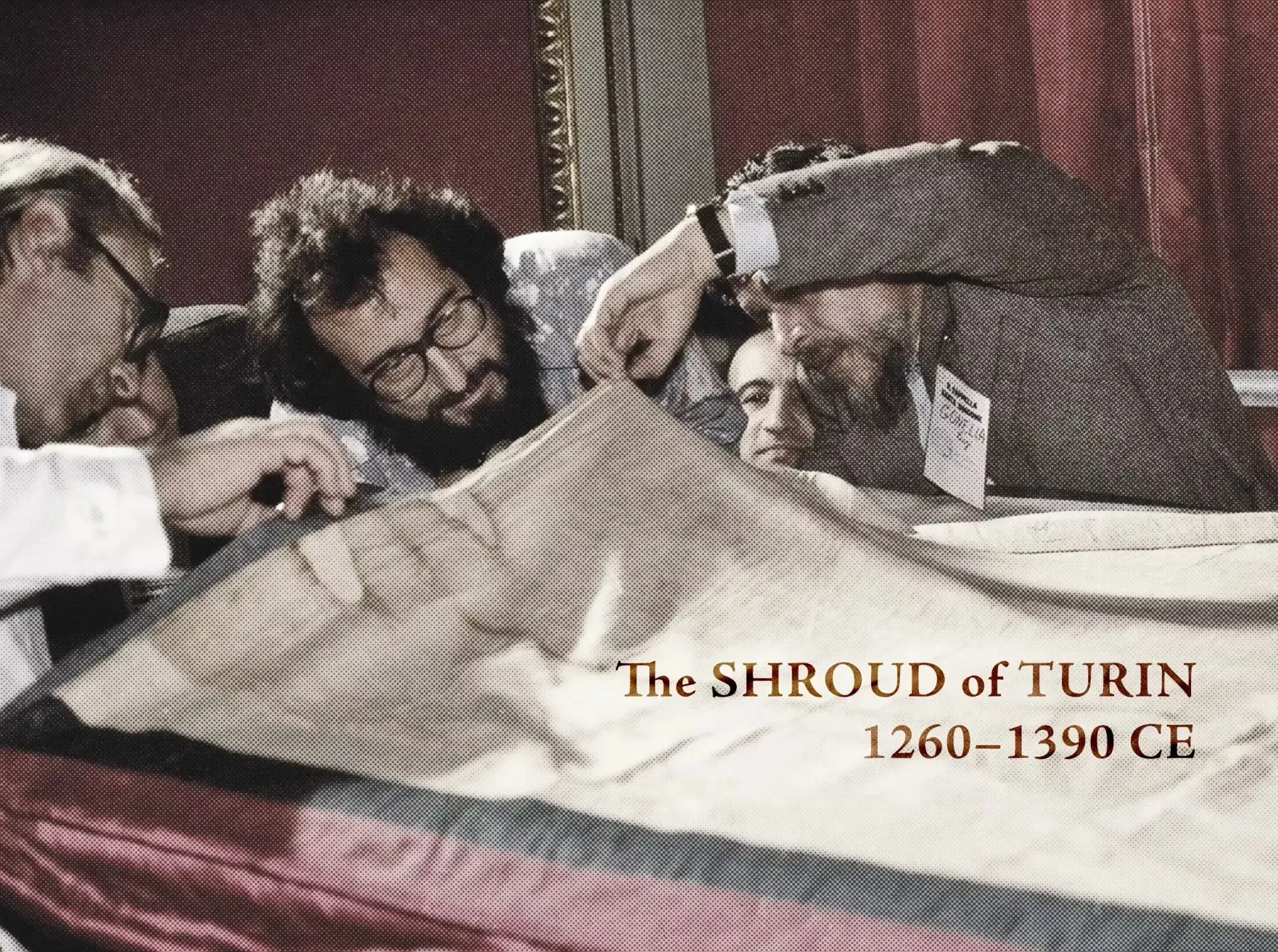
Skeptic readers are familiar with the Shroud of Turin—the alleged burial cloth of Jesus post-crucifixion in the 1st century—as being a medieval forgery. Murray asks us to consider otherwise, and he’s right when he avers that the Shroud is a rather remarkable historical item and that we still don’t have definitive knowledge of how it was created. He makes the case for it as a true artifact of the first century largely through the work of the Shroud of Turin Research Project (STURP), which was a collective of scientists in the 1970s and early 1980s that, through scientific analysis, concluded that the problems of deducing what the Shroud is “remain unsolved.” What they did find were various kinds of data that gesture towards it being of a human representation, not an artistic representation, and of Middle Eastern origin—these findings would later be refuted by subsequent studies. Murray also conveniently leaves out that the leaders of the group were concurrently part of the executive council of the Holy Shroud Guild, a religious organization interested in the Shroud being of divine origin.
A piece of the Shroud underwent carbon dating testing in 1988 by three different labs that dated its creation to about the 14th century. Approximately the same period as the historical record begins for the Shroud. Seems cut and dry; the Shroud is a medieval forgery. Not so fast, Murray informs us. Raymond Rogers, one of the STURP researchers, argues hat the piece of the Shroud used for testing was not part of the original cloth but came from a repair patch that was placed on the cloth after some kind of damage. Others see this Patch Theory as nonsense and don’t accord with the known material of the Shroud. But fine, Murray gives us some reasons to doubt the carbon dating.
Murray then presents a 2019 study that used a different kind of forensic dating method, which showed the Shroud to be dated to the 1st century. But in a stroke of irony, this method used a thread that was in proximity to where the carbon dating from 1988 was taken on the Shroud. Which is right? Is the Patch Theory true, and we can’t rely on that portion of the Shroud since it was a later add-on, or can we rely on that portion of the Shroud because a new, not widely accepted, method gives the Shroud some legitimacy? It can’t be both. Murray does not address this contradiction.
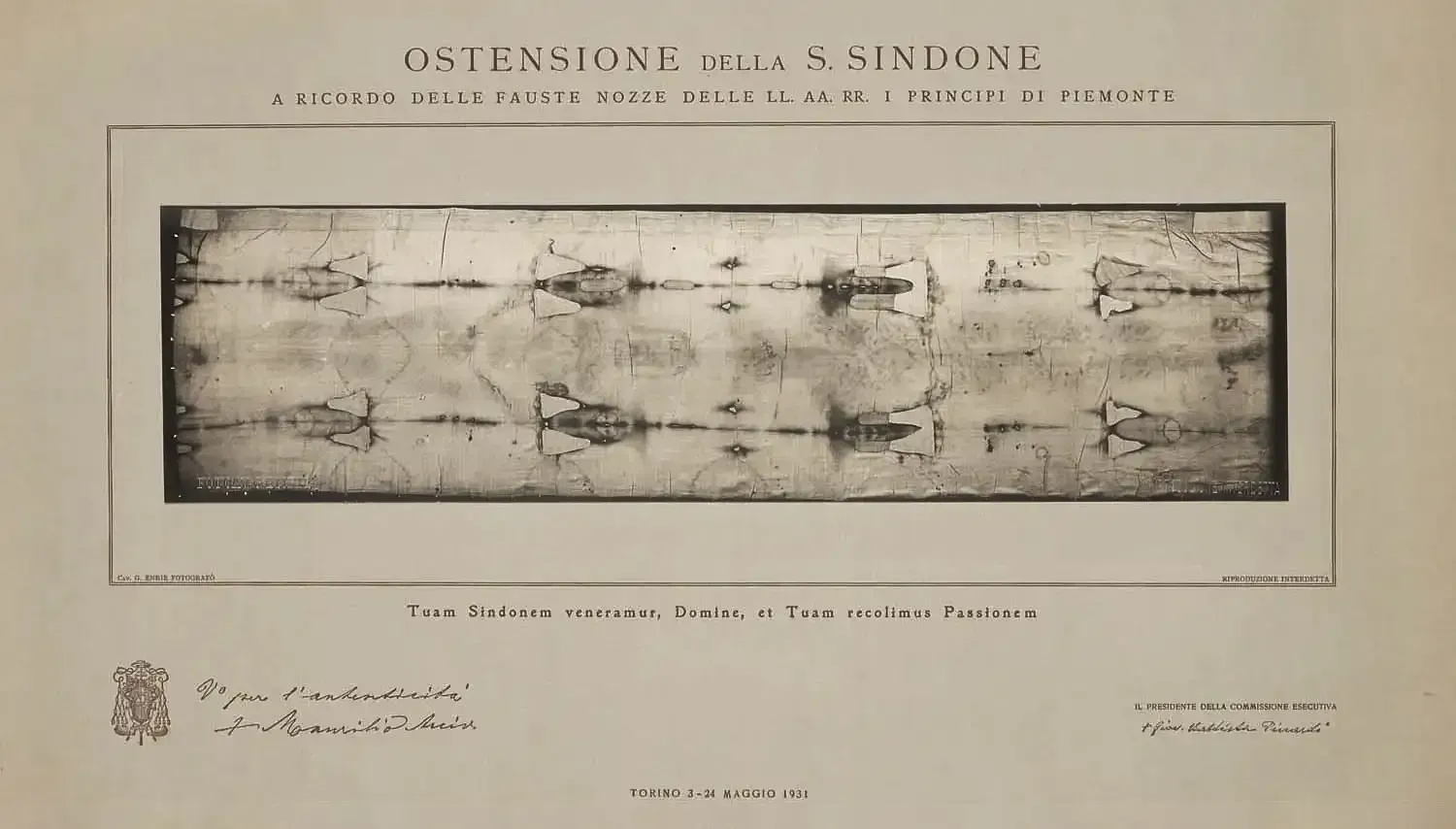
For the sake of charity, let’s say that scientifically dating the Shroud with the available evidence is a dead-end (even though we do not have strong reasons to discard the carbon dating). Murray also doesn’t tell us that the blood stains are inconsistent and “totally unrealistic” for a supine corpse; that we have no historical record of the Shroud prior to the 14th century; or of the issues of the presentation of body-geometry with how a 3D person would have been pressed on a 2D surface wherein, whomever created the Shroud, did it too well, and did not include distortions you would expect from a cloth being wrapped around a person; among many other pieces of counterevidence. Recently, there was the discovery of a document from the mid-14th century of a contemporaneous scholar also declaring the Shroud to be a forgery.
For a thorough review of the Shroud of Turin and why it is a Medieval forgery (one of thousands of such holy relics manufactured over the centuries), see Shroud expert Andrea Nicolotti’s “Unraveling the Myths Surrounding the Shroud of Turin”published in Skeptic in 2025.
Whither Murray
Murray talks at length in his book about how he has attended weekly Quaker Meetings for decades with his wife, Catherine Bly Cox, a believing Christian. He also discusses the importance of the conversations he had with his Christian friends, Nicholas Eberstadt and Peter Wehner. All of this, and more, hints at Murray’s motivated reasoning, more than sheer rational persuasion, to explain his usage of selective and sometimes even fringe evidence.
It is striking that Murray, who has stressed throughout his career that he always follows reason and evidence wherever they lead, has ignored a significant body of thought and evidence against the Christian worldview.
Apologists such as Murray often think that it’s merely enough to poke holes in philosophical materialism to show the truth in Christianity. The problem with this is that the story and metaphysics of Christianity do not seem to correspond with the universe we find ourselves in, which, of the little we’ve learned about it so far, seems altogether even stranger and more fantastical than the one which exists in the confines of the Christian imagination.
It is striking that Murray, who has stressed throughout his career that he always follows reason and evidence wherever they lead, has ignored a significant body of thought and evidence against the Christian worldview. Murray doesn’t grapple with issues such as why miracles suddenly stopped appearing in the age of mass video surveillance, or the lack of evidence for the external efficacy of prayer. Murray also fails to address the Problem of Evil—how can believers reconcile the existence of evil with an omnibenevolent and omnipotent God?
Why, for example, did God create a world in which millions of people would die from natural disasters? Why did God create a species in his own image in which for most of their history half of their offspring died in childhood? I often think if Jesus was the true Son of God, why did he knowingly proffer teachings which would later be used for completely contradictory causes—from slavery and conquest to liberation and pacifism—and not instead teach the humans of Ancient Rome about the germ theory of disease?
By the end of his book, it is clear that Murray has failed to meet his own criteria for “Facts” and “Reality.” He has finally found his myth.
[ad_2]
Source link
