
[ad_1]
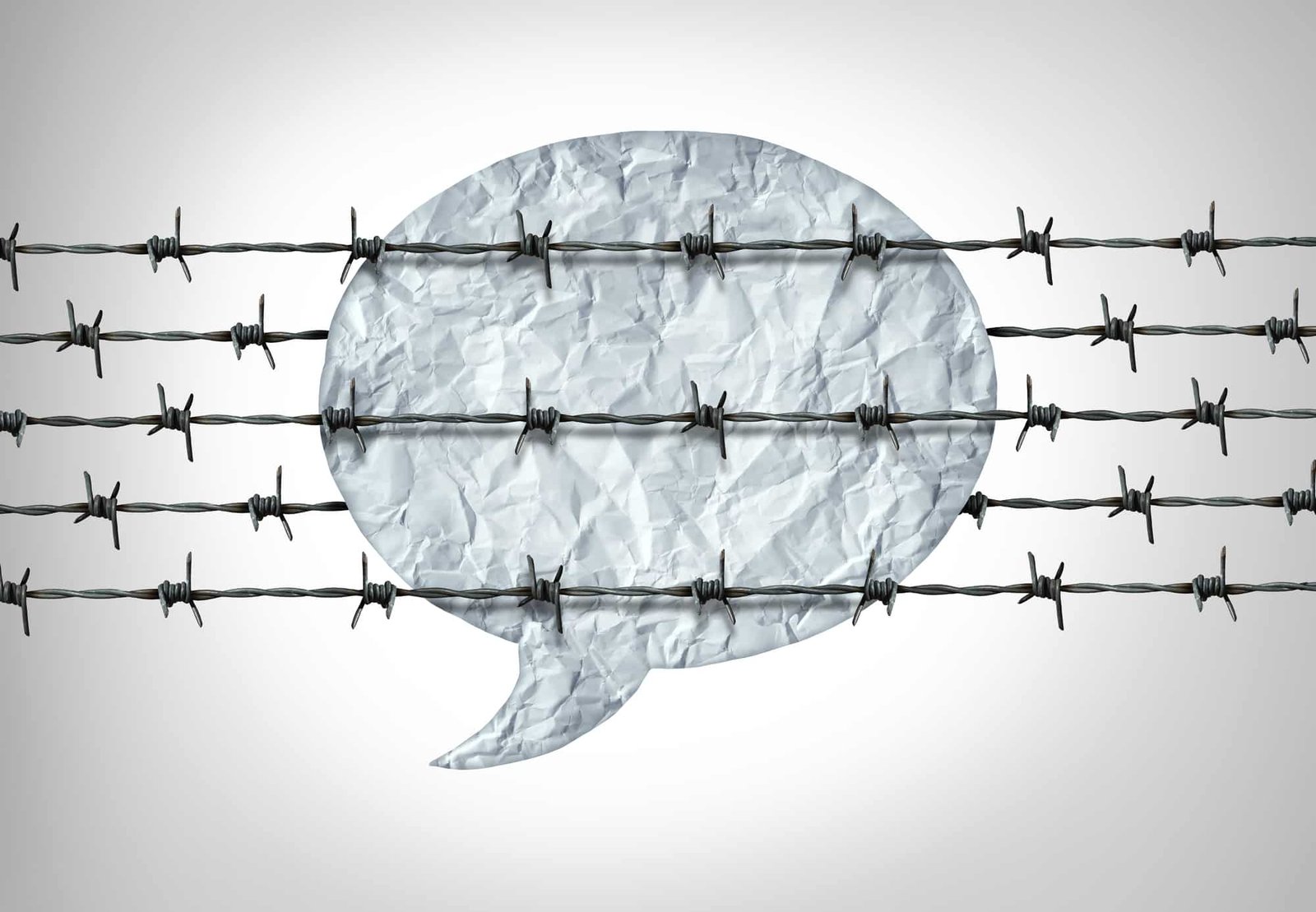
The desire to ban speech, in any form, is an example of insecurity inside society and government. Knowing that certain words or images may in some way draw revulsion and offense is a risk an individual must take. Not everyone will experience the same offense or revulsion, and some may even find arousal or delight in such words or images. It’s what makes the human experience unique and it is why free expression is a sacred thing.
Shiloh Hendrix, an American woman, has recently been found guilty on one count of disorderly conduct following a viral video clip of her calling an autistic black child a “nigger.” The circumstances leading to the viral moment suggest that the boy had been attempting to steal from or harass Hendrix. The father of the child began to film the end of the interaction when she said the racial slur. Her use of that particular word is, for most observers, distasteful to say the least. People in her life may share their disgruntled disagreement or even avoid her. Racists may also cheer her choice of language. That’s human discourse.
But to impose a legal standard against slurs means determining when and in what context a word—even that word—can be used. If a black or biracial person says “nigger,” whether in private conversation or as a song lyric, or even if a white actor says the word in a Quentin Tarantino film, that seems permissible. The word appears in this article; in the future, may a writer use the word under any circumstance? And who decides who may use it and under what utility? Is it only forbidden based on who said it, but also how they did so? Should the law be concerned with any of this?
“Nigger” has taken on a taboo that transcends the American experience. Even in places where there is no history of this word, there have been impositions and moral standards put in place which has made it a no-go. This has been done to placate the political correctness standards of modern America under which much of the world is now beholden, especially online. That universalization of American culture does not apply to all racial slurs, some of which are regionally specific or used by people outside Western dominance. Slurs against the Roma people and Indians persist in the open, for example.
The inclination to rectify historical wrongs and elevate previously marginalized and persecuted communities has led to hierarchies of modern “privilege,” whereby certain demographics and identifiers have more rights than others as a means of providing balance to correct past wrongs. This in turn has led to people proclaiming their heritage, or even pretending to be part of certain groups, in order to gain employment or access through gate kept nodes for personal benefits. These groups can range from sexual, gender, mental health, or religious, all of which have varying and fluid values according to politically correct expediences. Language has become highly delicate and how one is referred to, and what words may or may not be a trigger, can often depend on the speaker’s status in a pyramid of demographic “privilege.”
The word said by Shiloh Hendrix has been one forbidden for some time; it’s an extreme example of language being used with the intention of slurring another based on how they look. Beneath her word usage and the response lurks a less defined iceberg of other potential language and word violations, with an uncertain response to each one. The confusing and emotionally-based distinctions come courtesy of thought-leaders inside academia and government.
What religion is allowed to be insulted seems to vary according to the politically correct needs of government and elites. At present, anti-Islamic sentiments are not allowed, even by governments who are at present or have recently prosecuted wars against regions populated by Muslims, including targeting religious leaders as a means of policy. In the United Kingdom and Australia, it is becoming almost forbidden to fly the national flag since this may be seen as a sign of anti-migrant or pro-white sentiment.
In such an insecure and confused age, books are being redacted and removed from online stores. Kindle is making certain topics and themes unwelcome, while public libraries are being forced to remove what is considered problematic. This is not the usual war on pornography, given the popular rise of smutty romantasy fiction. Instead, it has been politically dissenting works and those that challenge modern orthodoxy. With social media platforms coming under further government scrutiny to protect children and to curb misinformation, the march towards omnipresent censorship is ever apparent, especially when “hate speech” laws are put in place.
Shiloh Hendrix is no champion of free speech or beacon of liberty; she is a flawed human being. That is precisely why her right to say and be exposed through her language and actions ought to be protected. In a world where children can be blown to pieces in a school—by the same people who are thanked for their service—the words spoken by a random woman are insignificant. But the deranged relationship we have with power and government itself ensure that her viral moment takes up more space in the collective mind. She has become a symbol for bigotry while strangers raise funds for her legal defense.
While the slur on the scale as spoken by Hendrix is understood to be pariah and forbidden to some but allowed by others, if she used it against and towards a child, this is a knock against her character. Shame is a powerful weapon among social creatures. But turning her into a martyr and prosecuting her exposes inconsistency and removes any self-reflection that she may have as a person. Instead, it can vindicate her before the eyes of others who see a two-tier system in play.
Charlie Kirk said words, and violence came from the barrel of his murderer’s rifle. Martin Luther King Jr. spoke words, with the same result. Words can be obscene, offensive, they can even break our hearts, but they are not violent. In fact, violence is when a person is denied their right to speak, when they are imprisoned, or in extreme cases killed for saying words or drawing a picture. To make speech, even racist speech, is ideologically reactionary. Do not fear the words of a bad person; fear the violence of a person who thinks they are doing good.
[ad_2]
Source link
