
A ceasefire to the Iran War entered its 20th day on Monday as AP, citing two regional officials, reported that Iran has offered to open the Strait of Hormuz if the U.S. lifts its blockade, postponing questions of nuclear enrichment for later discussions. AP and Axios reported that Iran would be willing to end the war in exchange for blockade relief.
Iran has said that it considers a ceasefire in Lebanon part of a broader deal for ending the war, and will not give up what it says is its nonnegotiable right to enrich uranium. Iran has said it would agree to dilute its enriched uranium under international supervision as part of a comprehensive settlement with the U.S.
President Donald Trump told Fox News on Sunday that Iran “can call” him if it wants to negotiate an end to the war.
A senior Iranian official told Drop Site News on Monday that Iran is establishing conditions for a new round of direct talks. “We feel continuing negotiations doesn’t make sense until the U.S. government lifts the maritime blockade,” said the official. “The scope of the conflict has expanded, and naturally the issue is no longer purely nuclear.”
On the prospect of future direct-talks, the official said that Iran does not trust U.S. envoy Steve Witkoff, and Jared Kushner is viewed with greater skepticism. The senior official told Drop Site that Iran prefers to negotiate with a figure like Vice President J.D. Vance present.
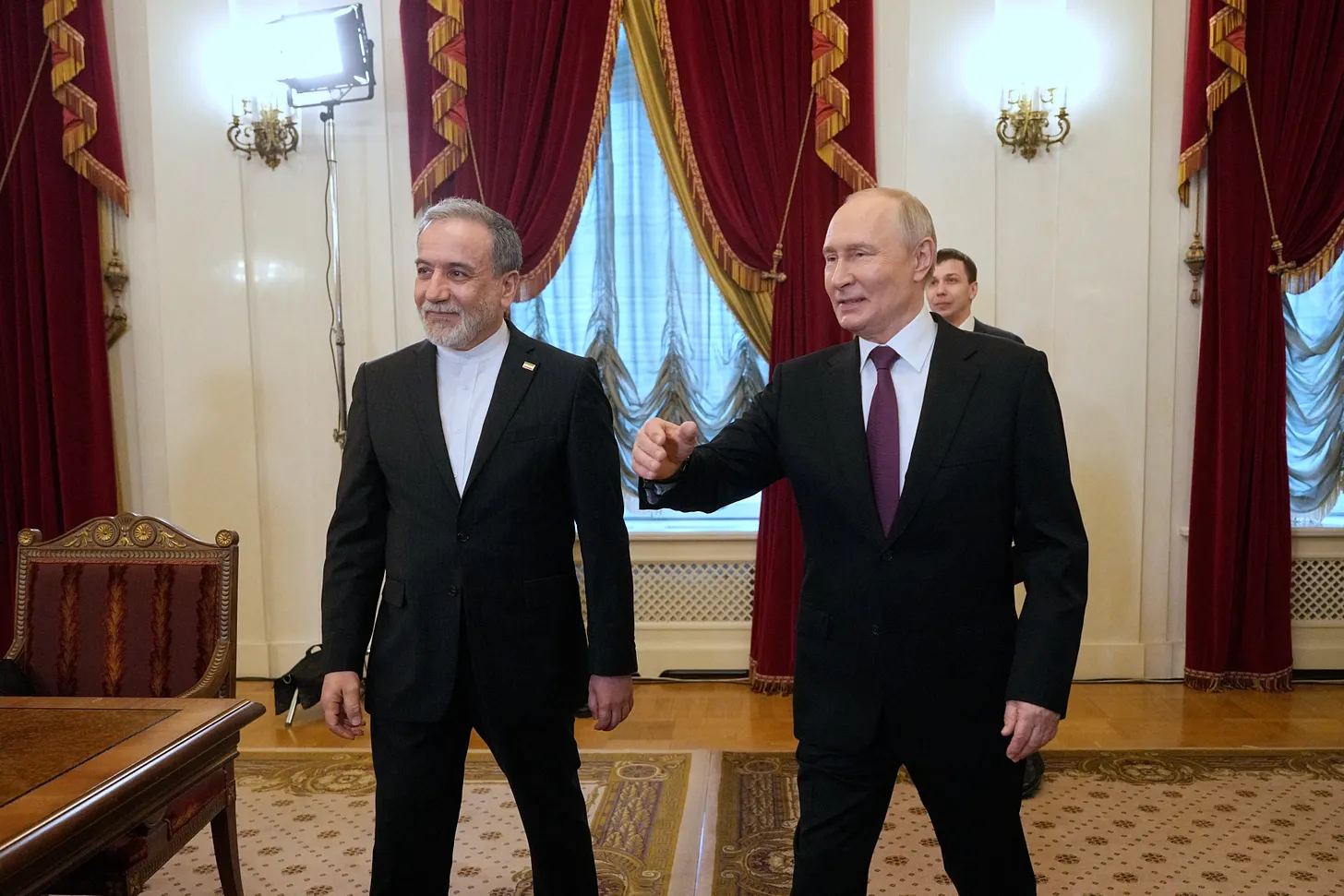
Iran’s foreign minister Abbas Araghchi met with Russian President Vladimir Putin Monday for what the foreign minister said were “continuous bilateral discussions on a wide range of issues, especially regional matters.”
The head of Iran’s parliament’s national security commission, Ebrahim Azizi, said Monday that, under a proposed law, Iran’s armed forces would be given authority to target what he called “hostile vessels” attempting to pass through the Strait of Hormuz. According to Azizi, ships would have to pay passage fees in Iran’s rial currency.
Subscribe Today
Get daily emails in your inbox
The Israeli Air Force announced on Monday that it had begun targeting infrastructure it said was used by Hezbollah in the Beqaa Valley and in several areas in southern Lebanon.
Lebanon’s Ministry of Health announced that 14 people were killed by Israeli airstrikes on Sunday. Lebanon says that since March 2, Israeli attacks have killed more than 2,500 people, while Israel says Hezbollah attacks have killed two civilians in Israel and 16 Israeli soldiers over that same period.
The price of Brent Crude oil rose above $108 Monday, and gas prices remained elevated. AAA reported the national average price of gas at $4.11.
