
[ad_1]
Perhaps no political figure of the modern era has done more to promote nationalism than President Donald Trump. Often he’s done so with remarkable candor. “You know what I am? I’m a nationalist, O.K.? I’m a nationalist,” Trump declared at a rally in 2018. “Use that word. Use that word.”
Trump’s promotion of nationalism strikes me as being, on the whole, a salutary development for the American right. A potent form of group cohesion, nationalism anchors genuine political consciousness and helps distinguish between the essential and accidental qualities of a people (to borrow a philosophical distinction). America is a particular people with a special history, united by bonds of culture and kinship, not by commercial relations, government documents, or shared devotion to LGBTQIA+ rights.
Thanks to Trump, many American right-wingers now think in terms of “the national question,” rather than obsessing over marginal tax rates and other wonky fixations, as the political commentator Scott Greer documents in a recently published book (which I reviewed).
But, it turns out, other nations have nationalism too. And Trump hasn’t just promoted nationalism in America, he’s also provoked nationalism abroad, including among adversaries of the United States. Clearly, he’s done so unwittingly and in ways that undermine his own objectives. That other nations hold latent nationalist sentiments which can activate in opposition to Trump’s America is a curious blindspot for our nationalist-in-chief.
Consider a couple of Trump’s recent failures: 1) his attempt to get a trade deal with Canada, and 2) his efforts to force Iran’s capitulation.
Last week, Trump wrote on Truth Social that the U.S. and Canada were on the verge of striking a trade agreement. But now, the two countries are instead on the verge of a trade war. So, what happened?
Long story short: Those Canadians, normally a gentle people, are feeling awfully nationalistic and united against America. Canada’s new groove owes entirely to Trump’s aggressive actions and rhetoric, including unseemly insults like referring to the Canadian prime minister as “governor” of America’s 51st state. These days, only a third of Canadians have a favorable opinion of America, down from 54 percent in 2024. “I’ve never seen Canadians—politically left, right, and center—so angry with the United States as right now,” observed Ian Bremmer, a geopolitical consultant.
Of course, Canadians have long harbored certain resentments toward their larger, less-than-couth neighbor, but those have recently taken on a decidedly harsher edge.
“Before all the 51st state rhetoric, anti-Americanness was expressed in an all-in-good-fun way, but this has turned into anger since Trump was re-inaugurated,” Theodore Shouse, a Montreal-based writer, told The American Conservative. “Canada is a divided country, but people are looking past their differences in the face of Trump’s aggression.” Just a few years ago, flying the Canadian flag was associated with working-class right-wingers, but no longer. “When visiting Toronto earlier this summer I noticed a striking number of Canadian flags in a heavily Liberal upper-middle-class area,” Shouse said.
In July, when Trump threatened massive tariffs if Canada didn’t agree to a deal within 30 days, he aimed to heighten pressure on Canada’s Prime Minister Mark Carney to make concessions. Instead, Carney came under domestic political pressure not to kowtow to a country that most Canadians have come to see as the greatest threat to their nation.
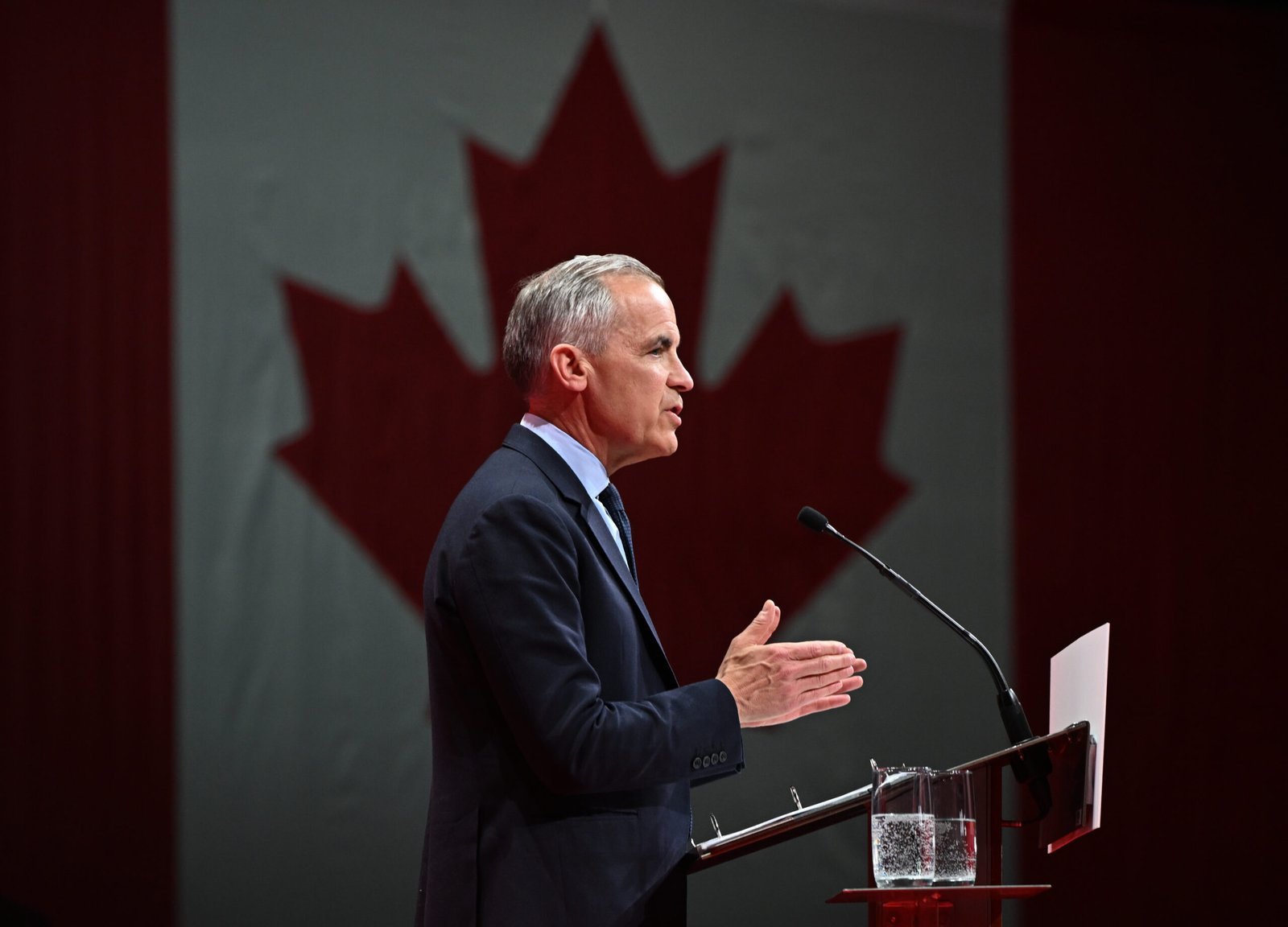
On Saturday, Carney gave an address explaining why he’d decided to slap reciprocal tariffs on America rather than make a deal. In Carney’s telling, the agreement Trump demands would infringe on Canadian sovereignty, restricting Ottawa’s ability to trade with other nations and undermining efforts to preserve French-Canadian culture through subsidies and other measures. Toward the end of his speech, Carney praised Canadians for their small, repeated acts of solidarity since Trump returned to the White House.
So, did Trump learn his lesson? Not quite. “Canada wants the benefits of being a State, without being one!!!” he wrote on social media following Carney’s speech.
Trump may think America, thanks to its larger population and economy, will easily prevail in a trade war with Canada. I’m not so sure. Economic anxieties will grow on both sides of the border, but America’s resolve may give way first. Seventy-six percent of Canadians support Carney’s decision, according to an online poll. By contrast, Trump is polling in the low 30s, and most Americans oppose his harsh treatment of Canada, a longtime ally.
Trump’s nationalism blindspot is even more concerning when it comes to a longtime adversary: Iran.
The Iran War has entered a new phase in recent weeks amid a pause in major military hostilities. Now that America has expended most of its best weapons, the Trump administration seeks to break Tehran’s will through economic warfare. Trump has called the strategy “economic D-Day,” and Treasury Secretary Scott Bessent elaborated the approach in an op-ed for the Financial Times.
The Iran War has become a pain-tolerance game. As with Canada, Trump seems confident that the U.S. will prevail, perhaps because the contest will prove much more painful for Iran. And as with Canada, I have my doubts.
Subscribe Today
Get daily emails in your inbox
This January, the Islamic Republic faced a political crisis when protests over economic conditions morphed into mass riots and civil unrest. Trump, sensing an opportunity, ordered a military buildup in the Middle East and, in late February, launched an attack that killed Iran’s leaders. As the war progressed, he threatened to annihilate Iranian civilization and maligned Tehran’s new leaders as “scum.”
The results speak for themselves: The Islamic Republic grew only more hardline, and the people rallied around the regime as their only defense against military aggression. A multiday funeral for the slain Supreme Leader Ali Khamenei drew tens of millions of Iranians. “Iran is an extremely nationalistic state,” observed Rosemary Kelanic of Defense Priorities during a recent podcast. Many if not most Iranians dislike the regime, Kelanic said, “but they understand that you go to war with the regime you have, not the regime you wish you had.”
It’s often said of Trump that he lacks “strategic empathy”—the ability to understand the perspectives and incentives of adversaries—but his nationalism blindspot seems like a failure of good old-fashioned emotional empathy. Trump struggles to intuit the sentiments of collective pride and parochial attachment that motivate other nations. Until that changes, he’ll struggle to secure the geopolitical interests of his own nation, whose nationalism he understands so well.
[ad_2]
Source link
