
[ad_1]
As Labour’s Prime Minister Keir Starmer fights for survival, Paul Rogers says Jeremy Corbyn’s decade-long grassroots strategy may yet have the last word.
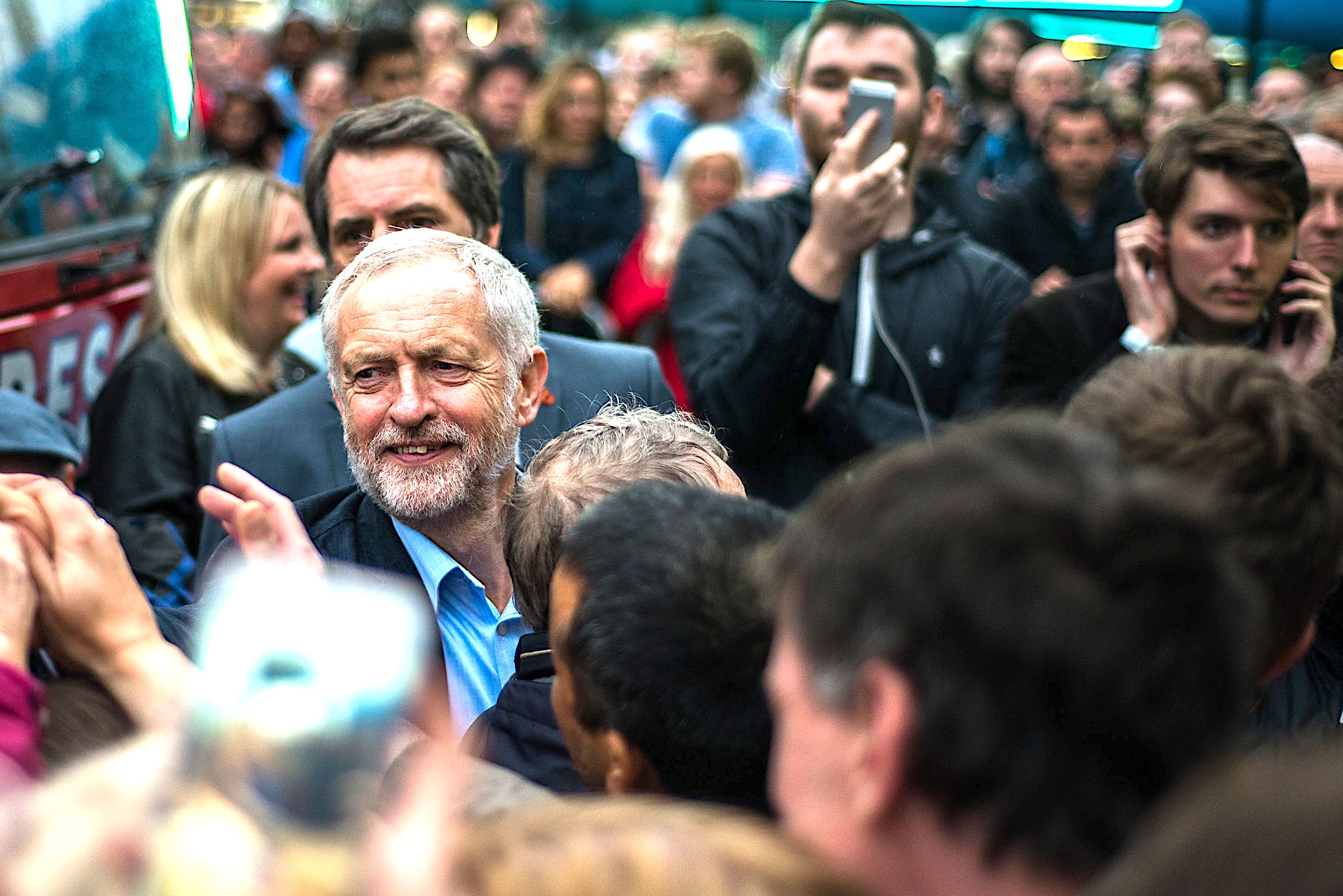
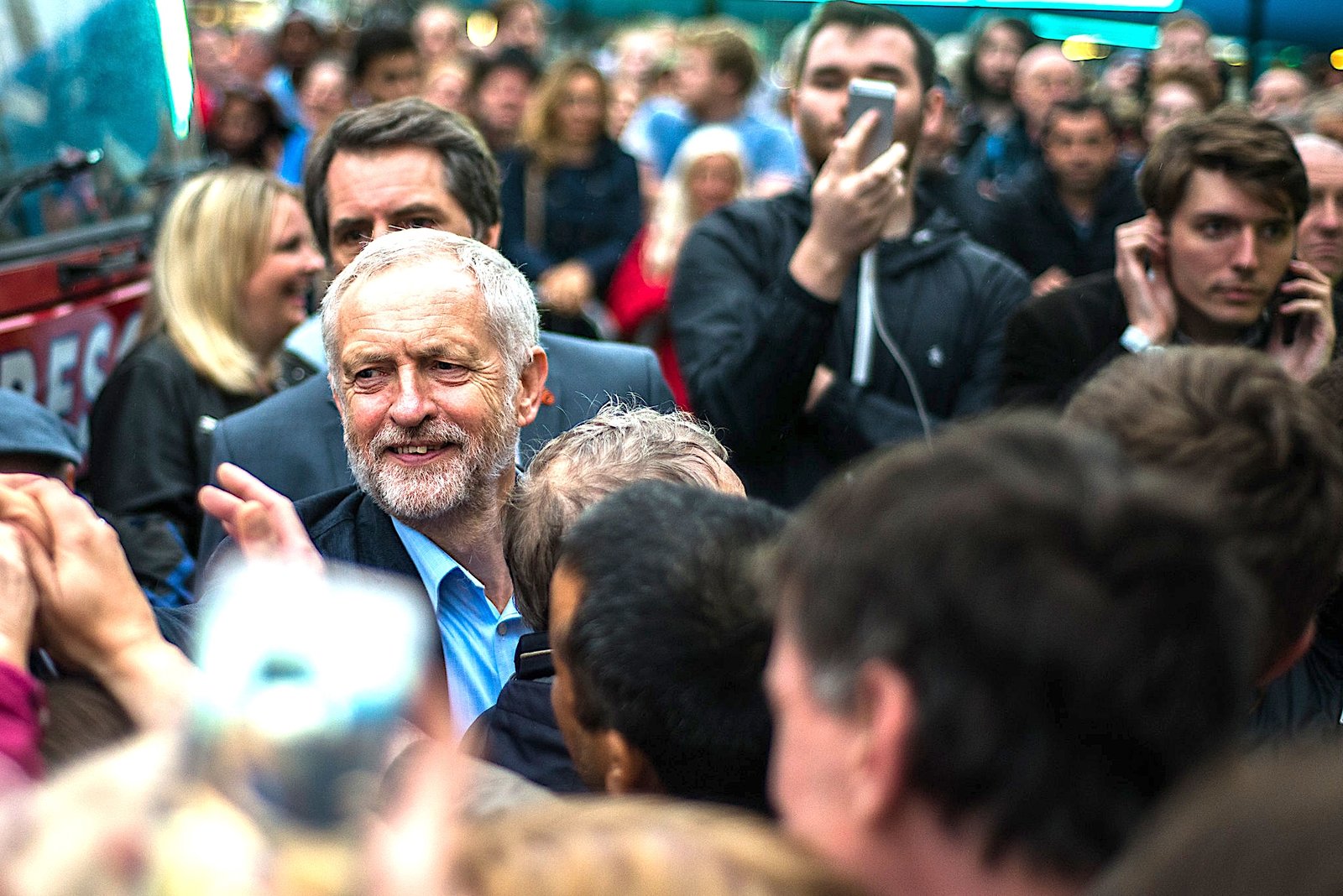
Jeremy Corbyn at a Liverpool rally in August 2016. (Francesco 65/Flickr/CC BY-NC-ND 2.0)
By Paul Rogers
OpenDemocracy
 Two weeks after the Scottish and Welsh national elections and the English local council votes on May 7, the political state of the U.K., as seen from Westminster, is one of near chaos, and a leadership challenge against Prime Minister Keir Starmer is now well-nigh certain.
In England, at least, it’s clear the party-political system has moved markedly to the right. While this is largely due to the Reform UK Party’s success in recent years, it is also down to the Labour Party vacating the left with the consequent lack, at least for now, of a socialist alternative.
Within the Labour Party, serious critiques of Britain’s current neoliberal economic model, and the era of runaway wealth it has created, [and Britain’s support for Israel] are mostly lacking, bar a few notable exceptions from some of the 30 or so left-wing Labour MPs who have survived the expulsions and candidate selections of the past few years. Clive Lewis, for example, wrote a striking analysis of some of the problems facing the UK on X.
Westminster may finally be about to have the argument it has spent 40 years avoiding.
If Andy Burnham returns to Parliament, the political class will know how to cover it. A leadership drama. Who is up, who is down, whether Keir Starmer can survive, whether Labour is once again…
— Clive Lewis MP (@labourlewis) May 10, 2026
A part of that political spectrum is being filled by the surge in support for the Green Party, especially with [its leader] Zack Polanski emphasising some progressive policies. What is less clear, though, is whether that will be embedded in the party’s culture for the long term, given the internal divisions over some of the more radical policies.
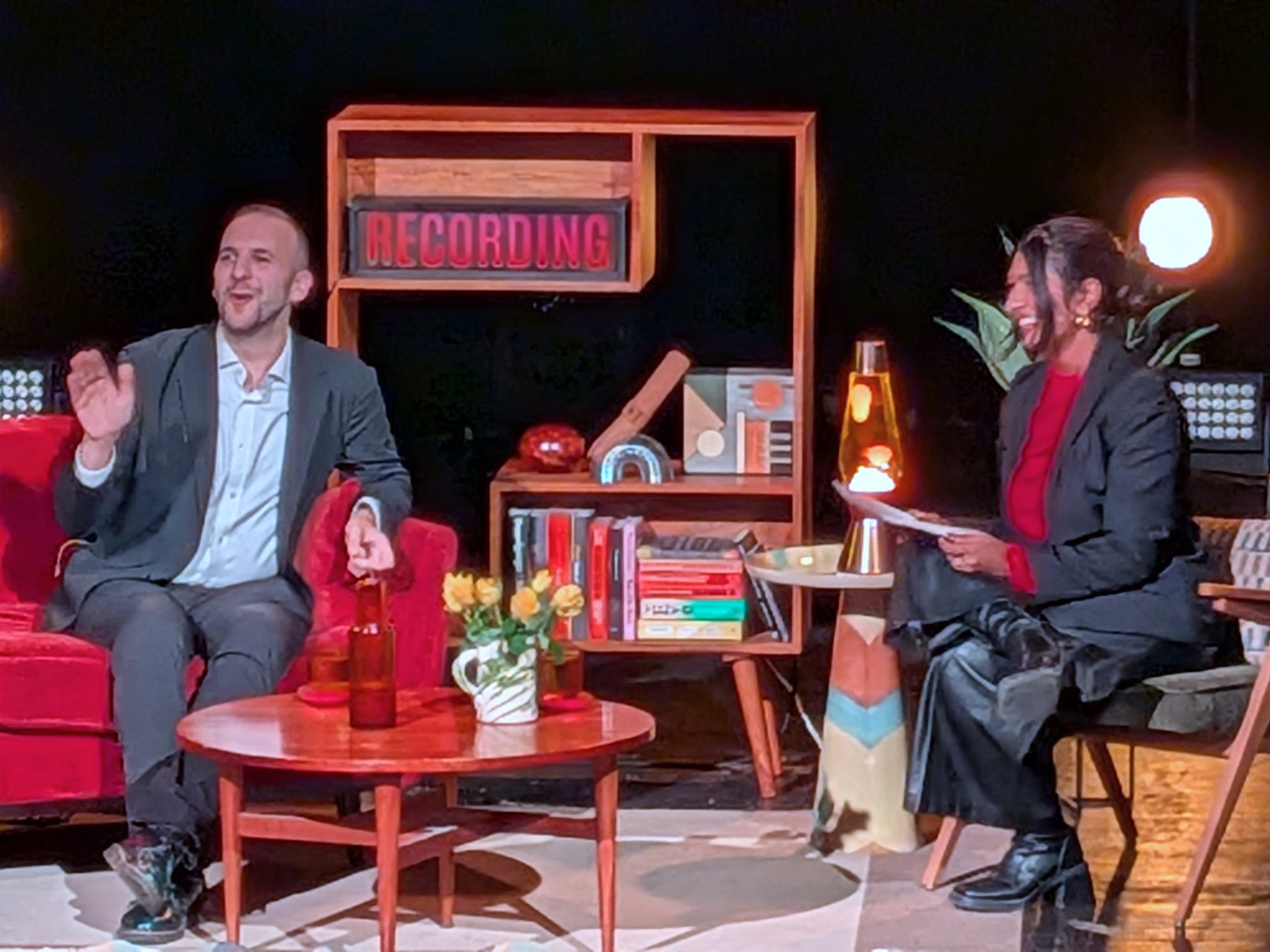
Polanski, left, at EartH theatre, an arts centre in Dalston, London, in 2025. (Cory Doctorow /Wikimedia Commons/CC BY-SA 4.0)
But beyond the traditional parties and the political mainstream, something is happening that is being missed, a phenomenon with interesting historical parallels.
In September 2015, when the left of the Labour Party had been overlooked for decades, Jeremy Corbyn seemingly came from nowhere to win the leadership against three mainstream candidates. He faced bitter opposition from his own MPs from the start, as well as a relentless smear campaign from the billionaire-owned media.
Within months, there was a fully-fledged parliamentary revolt, with many of Corbyn’s shadow cabinet resigning. He remained firm, replacing ministers and facing off a leadership challenge triggered in June 2016 when 172 Labour MPs voted against him in a no-confidence motion, while only 40 backed him.
Meanwhile, Corbyn Was Attracting Crowds
But outside of Parliament, Corbyn’s popularity was soaring. A reinvigorated and much enlarged party membership was voicing its support for his progressive politics, and interest was emerging in what he stood for from well beyond the membership.
I saw this firsthand during the leadership contest, when my wife, Claire, and I travelled to Derby to hear Corbyn speak for the first time at a campaign meeting that I wrote up for openDemocracy.
The meeting was scheduled for noon, in a green space about half a mile from the city centre. Half an hour before, only a handful of people had turned up. What happened next was eye-opening. As I wrote at the time:
“Rapidly, though, a small platform was assembled along with a public-address system, the media turned up as did sellers of various radical papers, and a crowd began to gather that swelled to several hundred in a matter of minutes. There was no evidence of crowds being bussed in, rather people simply came on foot, mostly from the city centre. The meeting was well organised, started almost on the hour and by the time Jeremy Corbyn started speaking, to a very warm welcome, around 1,000 people had arrived.
The meeting appeared to have been organised at quite short notice and publicised largely by social media. It did not have the style of an evening gathering of the faithful in a large hall but was simply an open-air opportunity to hear Corbyn. That he could gather so many people in the middle of a working day at the height of the holiday season is interesting in itself.
The crowd included plenty of young people, with many prams and push-chairs evident. I doubt that any other politician could have attracted such a crowd at the present time, nor for many years, at least in the English Midlands. The mood was positive, appreciative but not ‘over the top’. It was as far from a cult as you could imagine.”
Corbyn was duly re-elected by a substantial majority. The media campaign against him intensified, and Labour lagged persistently in the polls.
In 2017, Conservative Prime Minister Theresa May called an early general election, expecting to gain a huge majority and consign leftist Corbynism to the political dustbin of history.
Missing the Political Underground
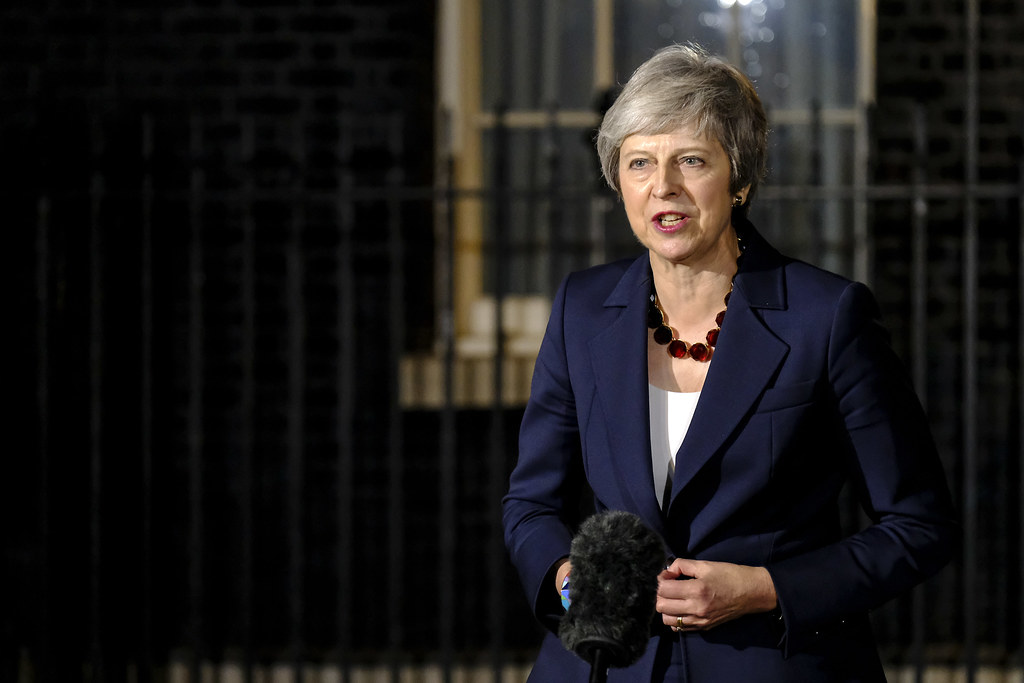
May in 2018. (No. 10, Flickr)
Once again, too many commentators failed to notice what was happening in the political underground. For the first couple of weeks of a five-week campaign, the Tories seemed on track for a landslide victory, albeit with a lacklustre campaign laced with avoidable errors. But into the third week, astute observers began to report that, against the odds, Jeremy Corbyn’s Labour Party was breaking through.
This was down to three factors: the BBC’s election-time neutrality obligations, which meant viewers and listeners got more detailed coverage of what Corbyn was fighting for; Corbyn’s manifesto, which could be summarised in six words, “For the Many, Not the Few”; and his dedicated personal following.
Across the country, venues would overflow as crowds turned up to hear Corbyn talk. One such lunchtime gathering in Leeds attracted thousands, with roads hastily closed off and people on rooftops and climbing trees to get a view. Writing about the event for openDemocracy, I concluded: “Jeremy Corbyn may be with us for quite a long time yet.”
It was unsurprising, then, that less than a month later, voters deprived May of her expected parliamentary majority. [The Conservatives won 318 seats and secured 42.4 percent of the popular vote, while Labour won 262 seats and 40 percent of the vote.] Within two years, she announced her resignation, with Boris Johnson replacing her as prime minister.
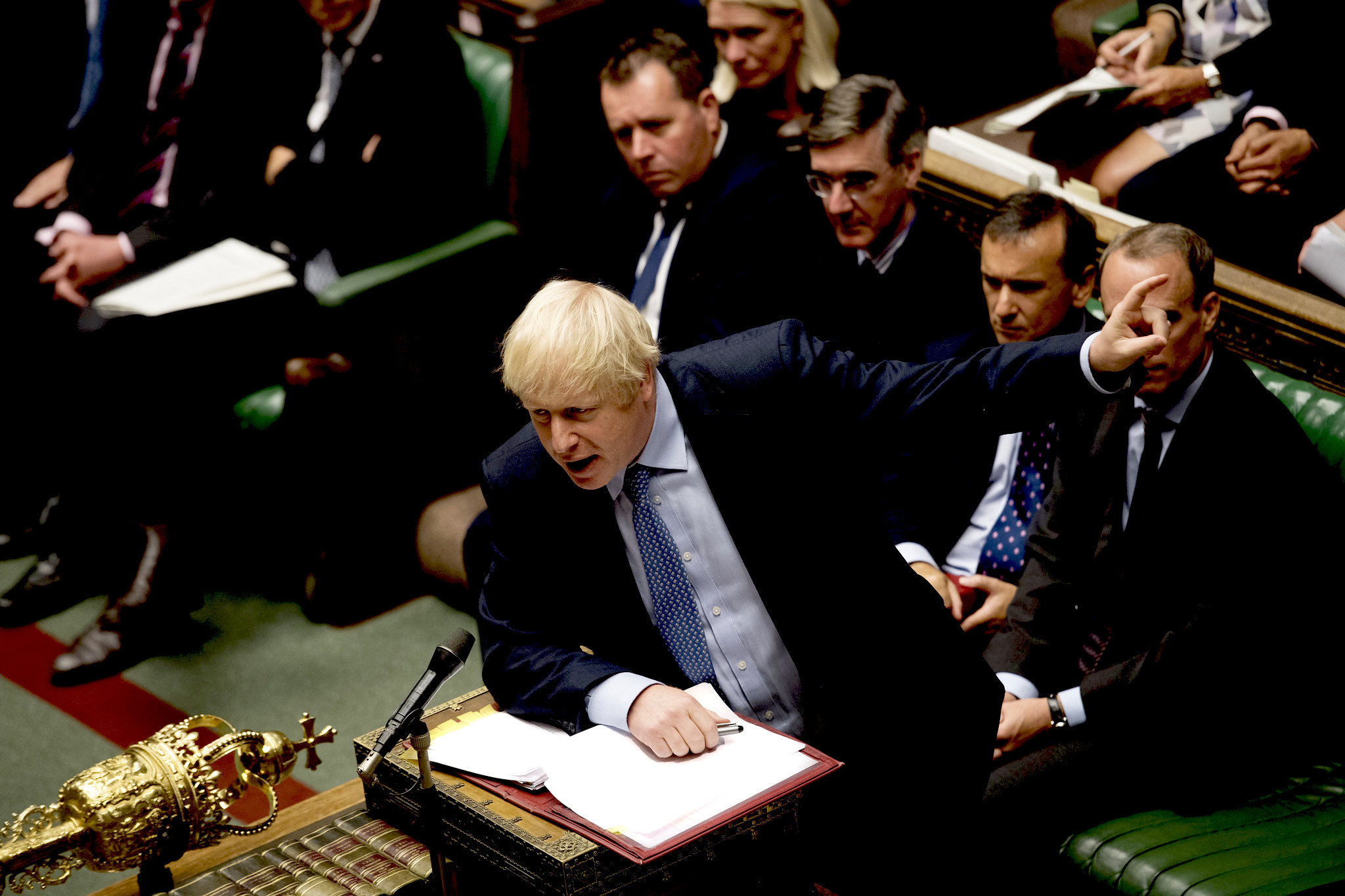
House of Commons Chamber as Johnson took his first prime minister’s questions, Sept. 4, 2019. (UK Parliament, Flickr, CC BY-NC 2.0)
Meanwhile, Corbyn went through years of constant criticism and challenge. Accusations of antisemitism were plentiful, although some analysts argued that it was being weaponised for political purposes. Within the party itself, there evolved a well-funded group, Labour Together, determined to derail Corbyn, a process analysed in detail by investigative journalist Paul Holden last year in The Fraud: Keir Starmer, Morgan McSweeney and the Crisis of British Democracy.
Corbyn’s Labour responded to these challenges by developing a far more grassroots approach to politics, encouraging members to strengthen their community organising skills. But that initiative had had little time to take effect before Johnson called the 2019 election. Labour lost, Corbyn resigned, and Keir Starmer took over, initially promising to keep to Corbyn’s policies, but quickly ditching most along with the community organising programmes, as he shifted Labour firmly to the right.
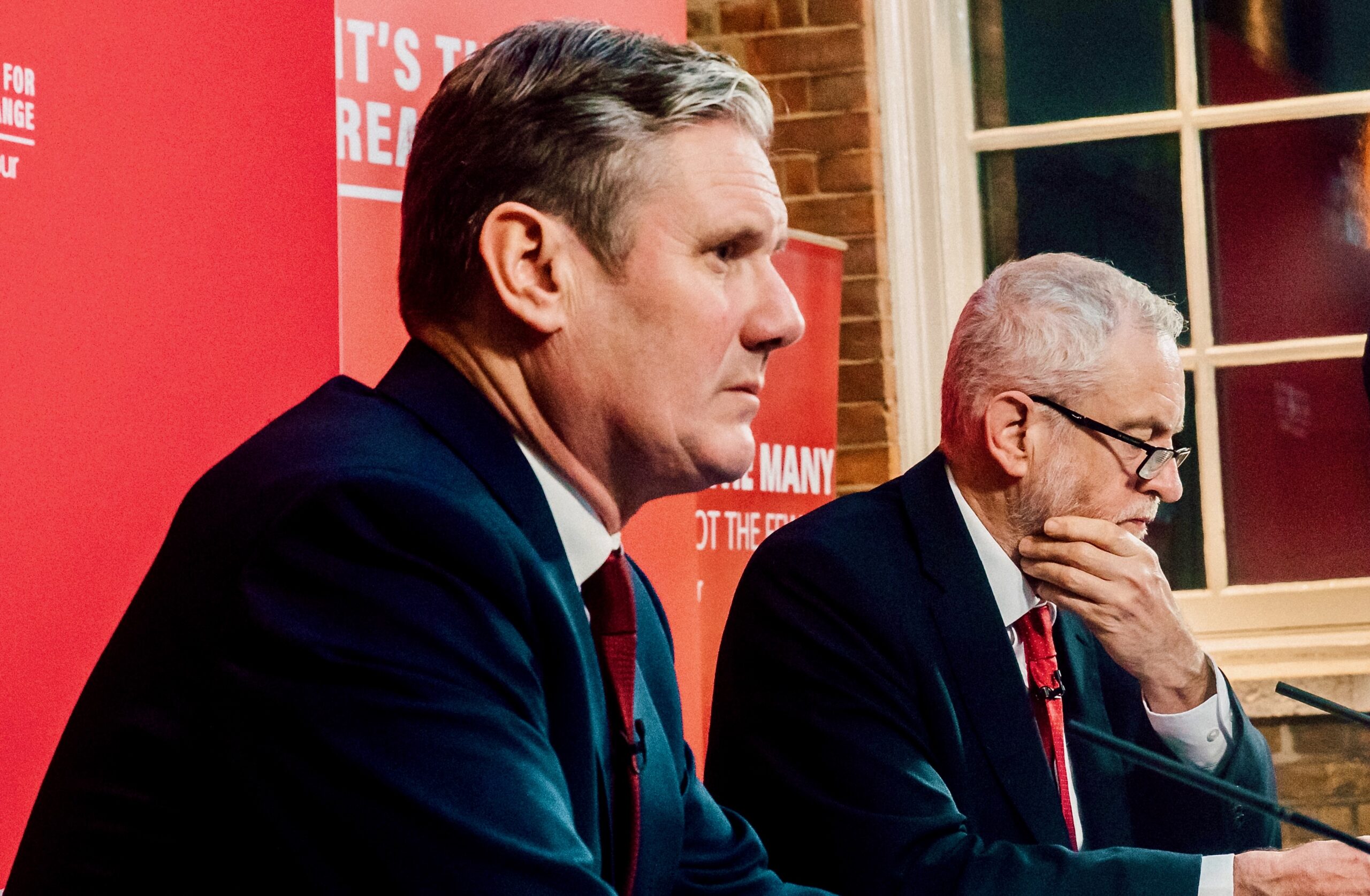
Starmer, left, and Corbyn, then leader of the U.K. Labour Party, at right, at a 2019 press conference on BREXIT. (Jeremy Corbyn/ Wikimedia Commons/ CC BY 2.0)
When the Tories speed-skated through prime ministers, Starmer won the 2024 election with a substantial majority but ran into problems within weeks as voters who had demanded change struggled to differentiate his politics from that of his Tory predecessors. With Labour slumping in the polls and haemorrhaging support, pressure mounted for a new left party.
That culminated in the founding of Your Party, with Corbyn and former Labour MP Zarah Sultana at the helm, last year. Amid early arguments over the direction of travel, the party was not organised to fight the May 5 English council elections, although a substantial number of independent candidates, many of whom were elected, expressed their support. As of now, the party is slowly establishing itself and seeking to build unity.
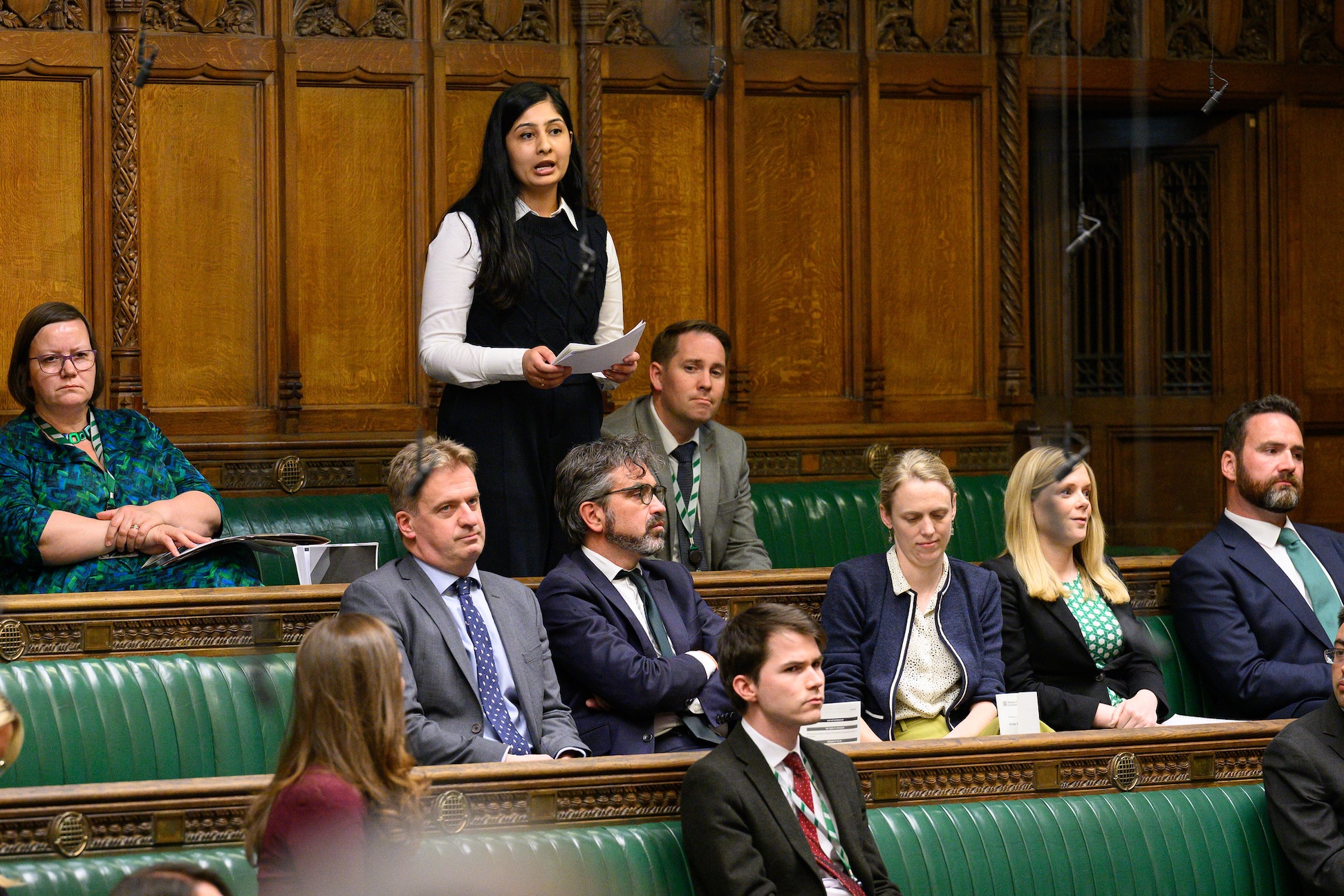
Sultana, from Coventry South, Independent, speaking in the House of Commons in June 2025. (House of Commons/ Flickr/ CC BY-NC-ND 2.0)
A flavour of what may be its future was seen in a Your Party meeting I attended in Dewsbury, in West Yorkshire, three weeks ago. As Your Party–leaning candidates reported on their experience and intentions, one theme emerged clearly: the centrality of community-level organising and support, like that Corbyn’s community-skills programme advocated for seven years ago.
Jeremy Corbyn MP slams Labour:
‘Chances of Labour returning to socialism non existent’
‘Membership expelled or left’
‘Policies are weak to put it mildly’
‘Activism is minuscule’‘The Labour Party’s ship has sailed’
Jeremy is spot on
Labour is finished. pic.twitter.com/Dmw5KmsVpH
— Howard Beckett (@BeckettUnite) May 15, 2026
Could this grow into something substantial? Ordinarily, maybe not, but there are three years to the next general election, and it is obvious that Your Party is playing it long. The Labour Party is unlikely to seriously challenge neoliberal economics [or support for Israel] within that time, but Your Party most certainly will.
[The poverty rate in Britain since 2017 has been stuck on 20-22 percent under the Tories and Starmer. According to a June 2025 YouGov poll 55 percent of Britons opposed Israel’s military campaign in Gaza with only 15–18 percent in support and among of those opposed 82 percent said it “amounts to genocide.” Sixty-eight percent of 2024 Labour voters opposed Israel’s actions and 87 percent saw them as genocide. These figures align with Corbyn’s position. Starmer’s Labour has supported genocide.]
In the past 11 years, David Cameron, Theresa May, Boris Johnson, Liz Truss and Rishi Sunak have come and gone through Downing Street, and Starmer may not long remain. In Dewsbury last month, Corbyn was welcomed with the usual enthusiasm.
[The question is whether that enthusiasm can in time overcome the Labour establishment, the billionaire media, Reform UK’s appeal to the working class and the Israel lobby to translate into votes. If Reform UK fails in the 1,453 local council seats it won on May 7 to improve workers’ lives and if pro-Israel Manchester Mayor Andy Burnham, who is the favorite to replace Starmer, also fails as Labour leader, a path could be opened for Corbyn’s return.]
Paul Rogers is emeritus professor of peace studies in the Department of Peace Studies and International Relations at Bradford University, and an honorary fellow at the Joint Service Command and Staff College. He is open Democracy’s international security correspondent. He is on Twitter at: @ProfPRogers.
This article is from OpenDemocracy.
The views expressed in this article may or may not reflect those of Consortium News.
[ad_2]
Source link
