
[ad_1]
The collapse of both the ’90s tech bubble and the ’00s housing bubble had a devastating impact on the lives of tens of millions of workers. And with the collapse of the housing bubble, millions also lost their homes and their life savings.
When something causes so much damage, it would be nice to see the people responsible pay some price. In the case of the 1990s bubble, there were some instances of fraudulent accounting where the perps did get nailed. Enron and Worldcom are two that stand out, where the people most responsible did get prosecuted and face time in prison.
This was less the case with the housing bubble. Hundreds of billions of dollars of fraudulent mortgages were packaged into securities and sold around the world. There was little effort to determine criminal culpability, as the Obama Justice Department seemed to have decided not to look into the mess.
But apart from the people who might have literally committed crimes, both bubbles were driven by people who were criminally stupid. I’m thinking of the people who get paid very high salaries to manage pensions, endowments, or other large pots of money, who apparently thought that the record high price-to-earnings ratios of the dotcom era made sense. In the next decade, they weren’t bothered by the unprecedented departure of house sale prices from rents of the housing bubble.
It would be reasonable to think that people, some of whom were paid millions of dollars a year, would be able to see things that, certainly in retrospect, seemed very obvious. And to some of us, seemed very obvious even before the collapse. But very few of these people faced any consequence.
To be clear, I’m not talking about jail time; I just mean that their careers should have suffered. After all, those lower down the pay ladder are held responsible for the quality of their work. The dishwasher who breaks a lot of dishes or the custodian who leaves a dirty toilet gets fired. Shouldn’t the investment manager who loses 20, 30, or 40 percent of the value of their portfolio also be sent packing?
What kept most of these highly paid failures in their jobs was the “Who could have known?” defense. This just meant that all of them could point to peers who made equally stupid calls in their investment decisions. If everyone on Wall Street thought Pets.com was a $100 billion company, can you blame your investment manager for failing to recognize it was on the edge of bankruptcy?
This is where the Fed can play a useful role. Around 200 economists work for the Federal Reserve Board in Washington, and roughly 200 more work for the 12 district banks around the country. The new Fed chair, Kevin Warsh, could assign some of the Fed economists to assess whether the current valuation of the stock market is consistent with the Fed’s projections for the future growth of GDP and profits.
Unless their arithmetic is very different than the stuff the rest of us use, they will have to conclude that stock valuations are not consistent, unless today’s crop of stockholders expect very low future returns. That seems unlikely, but that is the alternative to saying that the market is in a bubble.
This can be very useful in deflating the bubble because it will force every investment fund manager to deal with the argument. With the ’90s tech bubble and the ’00s housing bubble, the investment managers could get away with saying they didn’t pay attention to the small number of naysayers. They can’t get away with saying that they didn’t pay attention to the research that was being cited by the chair of the Federal Reserve Board.
If they have an answer to it, fine. Maybe they will claim that the Fed is hugely underestimating future growth. That’s always possible, but a rather strong claim. Alternatively, maybe they would say that the Fed is missing a massive shift from wages to profits, going far beyond what we have already seen. Again, this is possible, but they would be painting a very dark picture of the world that does not seem to be widely shared.
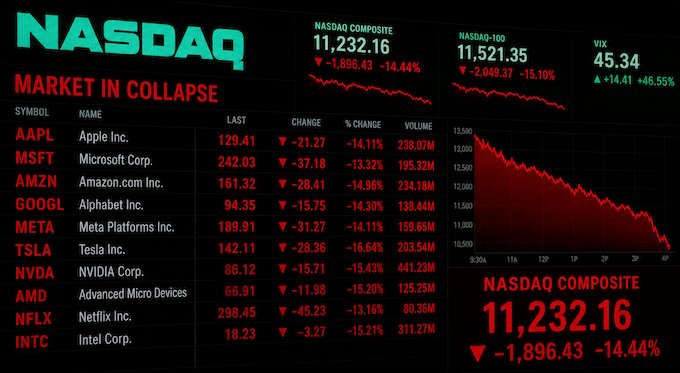
In any case, since the collapse of the AI bubble will have enormous consequences for financial markets and the economy, and these consequences will only become more severe as the bubble grows further, it should be the Fed’s responsibility to try to rein it in.
Unfortunately, since the new chair likely views his main responsibility as keeping Donald Trump happy, we shouldn’t anticipate that he would go this route. But this is one of the options that is on his table if he chooses to use it.
This first appeared on Dean Baker’s Beat the Press blog.
[ad_2]
Source link
