
[ad_1]
In one of the scariest moments in modern history, we're doing our best at ScheerPost to pierce the fog of lies that conceal it but we need some help to pay our writers and staff. Please consider a tax-deductible donation.
ScheerPost Staff
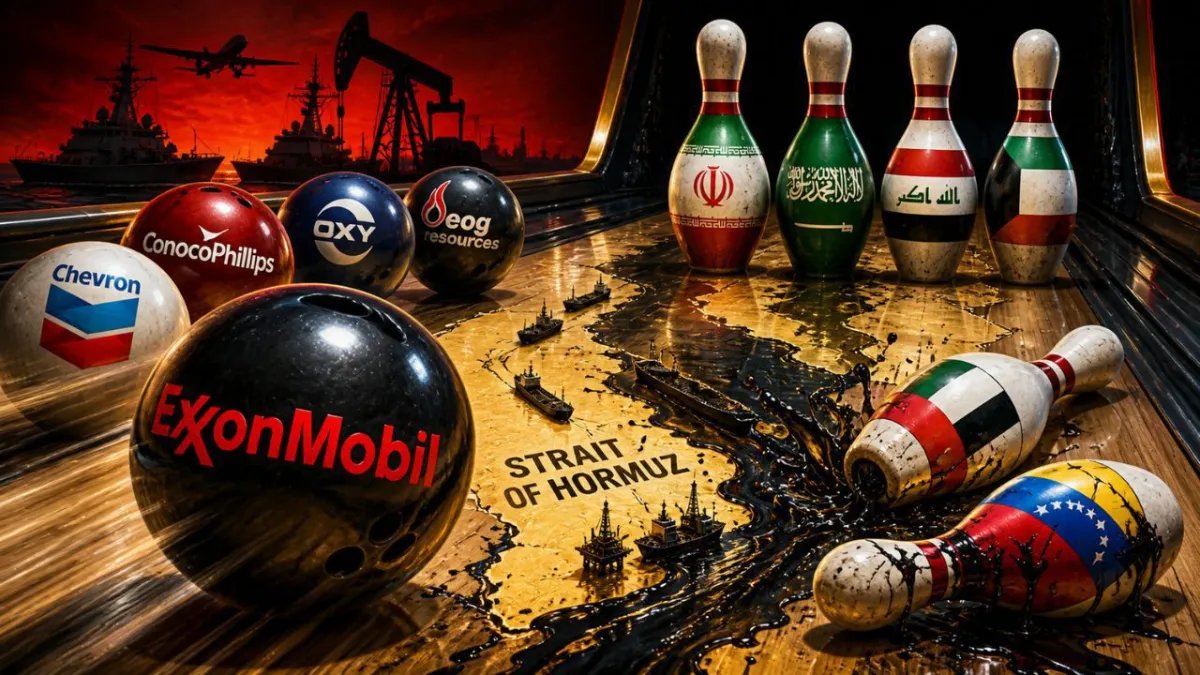
The war on Iran isn’t just redrawing battle lines—it’s ripping apart the architecture of global energy itself. In a stunning move, the United Arab Emirates has announced it will exit OPEC, a decision that lands like a geopolitical shockwave at the center of an already fractured oil market. Coming amid the chaos of a conflict that has choked Gulf exports and pushed the Strait of Hormuz to the brink, the timing is no accident.
For decades, OPEC functioned—however imperfectly—as a counterweight: a way for oil-producing nations, many in the Global South, to collectively assert control over pricing and production. But that fragile unity is now cracking. The UAE’s departure strips the cartel of one of its most ambitious producers and exposes deeper fractures within the alliance, particularly with Saudi Arabia, whose grip over OPEC has grown increasingly centralized and unilateral.
As Ben Norton points out, the UAE’s break with OPEC reads less like a market decision and more like empire at work—eroding a Global South alliance in favor of U.S. power and Big Oil dominance.
Behind the scenes, the implications are far bigger than one country leaving a cartel. This is about power—who controls energy, who sets prices, and ultimately, who dictates the terms of the global economy. Analysts warn that the move could trigger a cascade, with other producers reconsidering their place in OPEC as the war destabilizes supply routes and undermines coordinated production strategies.
But the deeper story is geopolitical. The UAE’s alignment with Washington has long been clear, and its exit is already being framed by critics as a strategic victory for U.S. interests and Western oil giants—weakening the collective leverage of oil-producing nations while opening the door to a more fragmented, corporate-dominated energy order.
At the same time, the war continues to escalate. Israeli strikes in Lebanon persist despite ceasefire claims, while U.S. forces tighten control over regional shipping lanes. Diplomatic efforts inch forward—slowly, uncertainly—with Iran preparing a revised peace proposal after earlier talks collapsed under U.S. rejection.
What emerges is a system under strain on every level: military, economic, and political. Oil is no longer just a commodity—it is a weapon, a bargaining chip, and a fault line. And as alliances fracture and markets destabilize, the consequences will not be evenly distributed.
Because while governments maneuver and corporations calculate gains, it is ordinary people—facing rising energy costs, disrupted supply chains, and the slow bleed of economic instability—who will ultimately absorb the shock.
This isn’t just a shift in oil policy. It’s a glimpse of a world where the structures that once governed global energy are breaking down in real time—under the pressure of war, power politics, and the relentless pursuit of control.
Editor’s Note: At a moment when the once vaunted model of responsible journalism is overwhelmingly the play thing of self-serving billionaires and their corporate scribes, alternatives of integrity are desperately needed, and ScheerPost is one of them. Please support our independent journalism by contributing to our online donation platform, Network for Good, or send a check to our new PO Box. We can’t thank you enough, and promise to keep bringing you this kind of vital news.
You can also make a donation to our PayPal or subscribe to our Patreon.
Please share this story and help us grow our network!
[ad_2]
Source link
