
[ad_1]
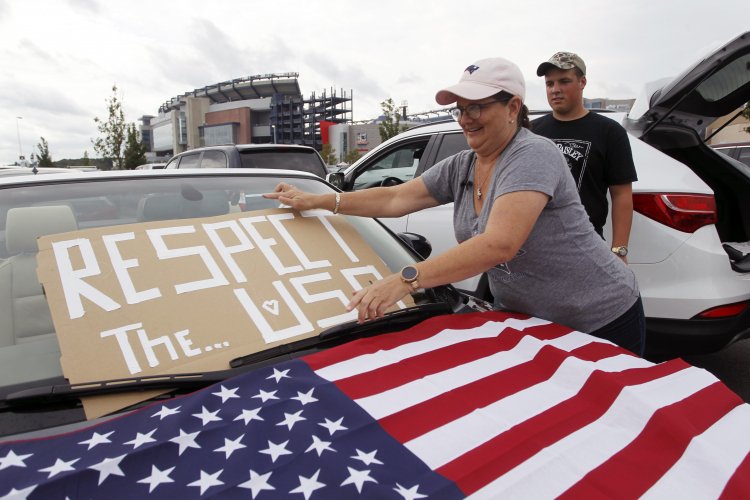
On the eve of America’s 250th anniversary, the country is confronting a troubling contradiction: A historic national celebration is approaching just as pride in being American has fallen to its lowest level on record.
According to the latest Gallup poll, only 33% of Americans say they are “extremely proud” to be American. This is the lowest share to say they are extremely proud since Gallup began asking the question in 2001, and far below the 70% peak recorded in 2003.
The decline has been driven almost entirely by Democrats and independents. In 2001, 54% of Democrats and 46% of independents said they were extremely proud to be American. In the latest poll, just 14% of Democrats and 28% of independents say the same. Republicans have been far more consistent: 64% said they were extremely proud in 2001, 58% did so at their low point during the Biden administration, and 70% say so today. Among Democrats, pride was higher during the Biden administration, reaching 34% in 2024.
This has coincided with a decline in trust in many American institutions. Since 2002, those who say they have a great deal or quite a lot of trust in the Supreme Court have fallen from 50% to 27%, in Congress from 29% to 10%, in the presidency from 58% to 30%, and in the military from 79% to 62%, Gallup also found.
The current decline in institutional and governmental trust echoes the public frustration with the American government during the Vietnam War. By 1971, 61% of Americans said it had been a mistake to send U.S. troops to Vietnam, similar to the 58.5% who now disapprove of military action against Iran. But that level of opposition has emerged just four months after the conflict began, compared with six years after U.S. sent its first ground combat troops to Vietnam.
From 1965 to 1975, the unpopular Vietnam War, presidential scandal, and inflation driven in part by soaring gas prices – any of this sound familiar? – fueled a sharp collapse in trust in government. In 1964, 77% of Americans said they trusted the government in Washington to do what was right most of the time, according to Pew Research polling. By 1980, that number had fallen to 27%. Today, it sits at just 17%.
That period coincided with a highly kinetic politics, much like today. In the mid-to-late 1960s, mass protests, riots, and assassinations became defining features of American political life. Distrust of government was matched by deep disapproval of the presidents leading it: Lyndon Johnson’s approval bottomed out at 35%, while Richard Nixon’s fell to 24% after Watergate. Today, President Trump’s approval rating sits at 40.6% in the RealClearPolitics Polling Average.
The upside is that while trust in government never returned to its pre-Vietnam levels, it did recover from its post-1960s lows. During the fall of communism in the later Ronald Reagan years, it climbed back to 43%. It rose again near the end of Bill Clinton’s tenure and surged after 9/11, reaching 54%.
That history suggests that a permanent decline in trust in government is not inevitable. Previous administrations have recovered some of the trust lost during periods of crisis, whether through Reagan’s confrontation with communism or the economic prosperity of Clinton’s later years.
Worrying economic situation
But rebuilding trust is harder when Americans no longer believe the country’s basic promise still works. That makes the economic mood surrounding America’s 250th anniversary especially concerning.
A recent AP-NORC poll found that only one-third of Americans say the American Dream – the belief that if you work hard, you will get ahead – still holds true today. When ABC News and The Washington Post asked a similar question in January 1985, 72.4% thought it held true.
The same economic pessimism shows up in how Americans view the future facing their children. When asked in the same 1985 ABC/Washington Post poll whether respondents believed their children would be better off financially than their parents, 61.9% said their children would be better off. Asked that same question by The Economist/YouGov in May 2026, only 13% said children will be better off, 16% said about the same, and 52% said worse off.
The roots of that pessimism can be seen most clearly in stagnant wages and rising housing costs. Since 1985, according to the Bureau of Labor Statistics, median inflation-adjusted earnings have gone up less than 20%, while over the same period the S&P 500 has gone up more than 4,100%. These stock market gains have benefited the 10% who own 87% of equities and mutual funds, while the vast majority of Americans have seen very little wage growth and do not see much of the upside of the rising stock market.
Over the same period, from 1985 to 2026, house prices have increased from about 3.6-5.1 times the median household income. Again, this is beneficial for those who were able to buy houses while they were cheaper relative to income, but it disadvantages the children and young adults today who will be looking to build a family and buy a house.
Two Wall Street Journal polls taken 25 years apart capture these issues clearly. In 1998, Americans were asked which values were extremely important to them. Seventy percent said patriotism, 62% said religion, 59% said having children, and just 31% said money.
Twenty-five years later, those numbers looked very different. Patriotism had fallen to 38%, religion to 39% and having children to 30%. Money was the only value in the poll to increase, with 43% of Americans saying it was extremely important to them.
If the traditional values that once helped bind Americans to their country are weakening, and money is becoming more central to how Americans measure success, then the country must deliver economically. On its 250th anniversary, America has to show that its central promise still holds: that hard work can still lead to a better life. Without that, pride in America will continue to erode.
[ad_2]
Source link
