
[ad_1]

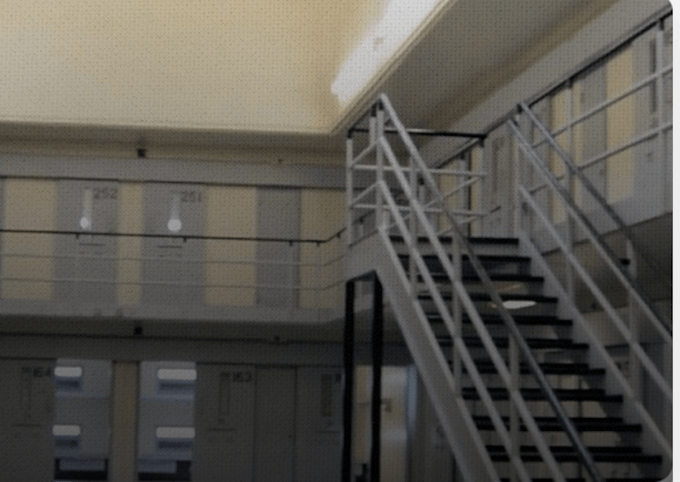
Photo: South Carolina Department of Corrections.
Over the span of a single week at the end of March, a Michigan prisoner was found dead inside his cell in what authorities are investigating as a homicide, two inmates died inside New York City’s infamous Rikers Island jail complex, and an inmate was killed inside a California jail.
The violence and abuse that is commonplace in American prisons is beginning to draw national attention. That same week, The Marshall Project released its investigation into systemic sexual abuse inside a Texas womens prison, a civil rights lawsuit was filed accusing an Oregon corrections deputy of raping an inmate inside her cell, and the state of California paid $1.9 million to settle a lawsuit against jail staff accused of excessive use of force. The American prison system is in a crisis of accountability. Until state legislatures take measures to protect the speech rights of prison inmates, incarceration will become an unspoken death sentence for more American citizens.
Last year, filmmakers Andrew Jarecki and Charlotte Kaufman brought us into the heart of this crisis. Their documentary, The Alabama Solution, uses smuggled cell phones to document abuses inside Alabama state prisons. The documentary-style investigation found over 1300 deaths inside Alabama prisons since 2019, less than half of which were of natural causes. One family, whose son was beaten to death by prison guards, was allegedly told that if they contacted reporters, his body would not be returned to them. Another family received their son’s body from prison officials with his heart missing after the family commissioned a private autopsy.
As of 2025, 45% of Americans have an immediate family member who at some point was incarcerated, most of them will never be featured in an award-winning documentary. In order to prevent, investigate, and prosecute prison abuses, we need to know about them in the first place. While a trio of 20th century Supreme Court decisions grant prison officials discretion in barring media access behind bars, inmates still retain the right to free speech, so long as it doesn’t legitimately jeopardize prison security. Doubling down on free speech behind bars will make America’s jails and prisons safer.
In many cases of prison abuse, it is the victims who are punished instead of the perpetrators. In its investigation into sexual misconduct in Texas prisons, The Marshall Project notes how inmates and staff who spoke out were threatened, one of the victims was even moved to a more restrictive facility after reporting her sexual abuse. Likewise, when the initial media buzz surrounding The Alabama Solution quieted, three inmates most critical to the film were placed into solitary confinement. Filmmaker Charlotte Kaufman explains, “What’s so disturbing is that [state prison officials] don’t have to give a ‘why.’ They can… take away all of their belongings, cut them off from their family members, cut them off from the outside world.”
This can even be done to well-resourced inmates. Last year, billion-dollar crypto fraudster Sam Bankman-Fried was placed in solitary confinement after conducting an “un-authorized” interview. You don’t even need to be convicted of a crime to find yourself in solitary. In 2021, D.C. jail officials decided that all accused January 6th Capitol rioters would be housed in solitary. Forced to eat off the floor, they were locked in their cells 23-hours a day, given one hour daily to shower, exercise, and meet with their attorneys.
Fortunately for those inmates, reporters latched on to their stories. The Alabama Solution filmmakers launched a website for viewers to sign an open letter, call Alabama correctional facilities, and donate directly to inmates. Sam Bankman-Fried is now in a low-security California prison, and all accused January 6th rioters were pardoned by President Donald Trump. Transparency, in those cases, led to action.
But not everyone has a film crew, million-dollar legal funds, or the president of the United States to advocate for them. Thankfully, state legislatures can take practical legal action to defend prisoners’ speech rights behind bars. This begins with making jailhouse phone calls free of charge. The Prison Policy Initiative notes that a 15-minute phone call costs anywhere from 93 cents in New Jersey to $5.47 in Minnesota. A significant price for inmates making less than $1 per hour at their prison jobs.
Facilities should also allow some inmates to have cell phones and social media accounts of their own. It is reasonable for many non-violent offenders to communicate freely with the outside world. Social media is a particularly effective way to do this, yet in most cases is strictly forbidden. For example, the South Carolina Department of Corrections considers inmates “creating and/or assisting with a social networking site” a Level 1 offense — putting it in the same category as murder, rape, and hostage-taking.
In our 21st-century media ecosystem, there is no reason for prisons to be information black holes. What happened last week, can happen next week, which is why we need transparency today. Doubling down on prisoners’ First Amendment rights is the best way to do it.
[ad_2]
Source link
