
[ad_1]
 Many teachers are panicking over AI (artificial intelligence), and for good reason. This goes beyond students using AI to cheat on their homework or write their essays for them. If you have AI essentially think for you, then you will not learn to think. On the other hand optimists point out that AI can be a powerful tool to aid in learning. It all comes down to how we use, regulate, and manage our AI tools.
The cautionary approach was captured well, I think, by Mark Crislip in this SBM commentary, in which worries about the effects of AI on doctor education. How will a new generation of physicians learn how to think like expert clinicians if they can have AIs do all their clinical thinking for them? My question is – is AI fundamentally different than all the other technological advances that have come before. Did calculators take away our ability to do math? The answer appears to be no. Students still gain basic math skills at the same rate with or without access to calculators. But there are lots of confounding factors here, and so some teachers still warn of allowing kids access to calculators too soon. Others point out that access to calculators has simply shifted our math abilities, away from basic operations toward more modeling, problem solving, and complex concepts. It seems we are in the middle of the same exact conversation about AI.
We can also think about things like GPS. My ability to navigate from point A to point B without GPS, or to navigate with maps, has definitely declined. But using GPS has also made my navigating to unfamiliar locations easier and more efficient. I would not want to go back to a world without it.
But is AI different because it is not about some narrow specific skill but about fundamental skills like writing, arguing, and thinking? I think the answer is – it could be. At the very least we cannot assume that it isn’t. We don’t want to look back in 20 years and realize we raised a generation that is intellectually crippled by previous standards. It does not seem prudent to just hope that this is not the case and it will all work out, like it did for calculators.
Part of the problem is that AI technology is developing very fast, and our culture and institutions do not have the time to adapt. Regulations, if any are needed or would be helpful, are also lagging behind. In fact it seems that the tech industry has been successful in cutting off any serious regulations at the knees. They have a point that sloppy regulations could hamper innovation and cede a vital emerging industry to our competitors. But they present this as a false choice, with the only other option to just trust them and have essentially no regulation. They want us to replicate what happened with social media, or with crypto, where lack of effective regulations turned what could have been useful tools into…something else. It is no surprise that recent surveys find people are more nervous than optimistic about the net effects of AI.
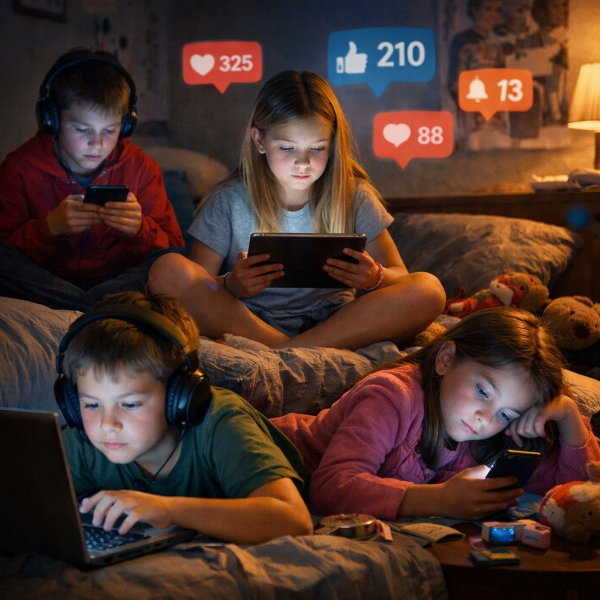
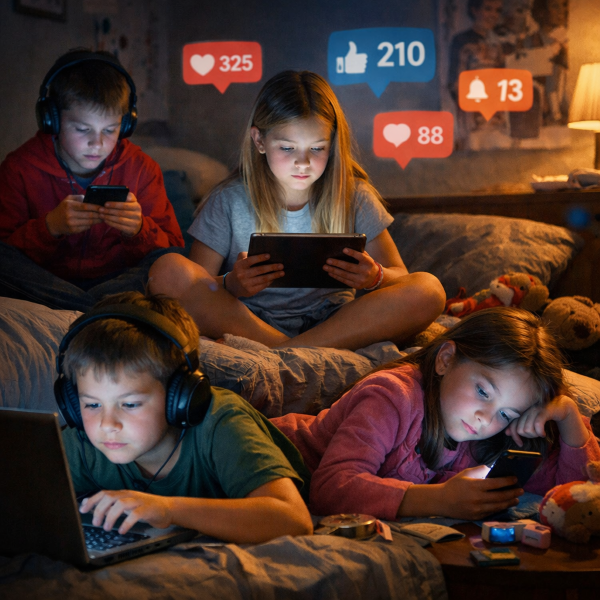
It is hard to know what the long term effect of the recent judgement against META and Google will be, but a court did find that these companies were “negligent” in protecting children from their products. These products have been deliberately optimized for addictiveness. Algorithms provide a bottomless scroll of content designed to outrage people, or drag them down a rabbit hole of increasing radicalization – whatever maximizes their engagement. The effects on individuals and society do not seem to have factored in.
As with so many complex and technological issues, we seem to be perpetually stuck between two extremes. On the one hand we have tech bros unfettered in their attempts to “move fast and break things” and then use their billions to buy up media outlets and politicians to fend off any regulations. On the other we have politicians who may or may not be well-meaning, but either way seem to lack the knowledge and expertise to effectively regulate these new technologies. So their clumsy attempts at regulation backfire, and are used to skuttle any further regulation attempts. This is happening during a time of intense political polarization and the collapse, in many ways, of effective legislating.
What we want is a third option – effective, narrow, targeted regulation informed by experts with meaningful metrics that prevent abuse and harm with a minimal effect on innovation. Of course, this is not easy. It requires hard work, lots of consultation and discussion, and rounds of experimentation, evaluation, and adjustment. But that is what our complex world requires. Perhaps we are just not up to it.
The academic world also needs a carefully calibrated and thoughtful response. I do think we can leverage AI as a tool to improve education, to make it more personal and adaptive. But at the same time we need to avoid or minimize the obvious potential downsides. I do think it is a good idea for young children to avoid certain technologies while their brains are still developing. We need to maximize their use of verbal, math, and cognitive skills so that their brains will maximally develop these abilities. Then we can phase in technologies as tools they can use to be more effective. Start too young, however, and technology becomes a crutch, and their skills not only atrophy – they never develop in the first place.
In fact we need to think carefully about this digital virtual world we are creating for ourselves. Yes, this technology provides amazing tools and opportunities for engagement and entertainment. But they are also a soporific, lulling us into contentment for a small and isolated existence. I worry about a generation that never knows anything else.
Education is an opportunity to prevent such a digital dystopia, by not only providing the opportunity but the necessity that children do physical activities, get out into nature, communicate with actual people, and use every cognitive skill they have. We obviously have to introduce them to technology along the way, and in fact there is no way to avoid it. It is embedded out there in the world, and children do not live at school. So we also need to teach children to use technology responsibly and effectively. Meanwhile school is a place where they use and develop other abilities.
We have to be thoughtful about this. It is doubtful that just going with the flow down the path of least resistance (and maximal profits for the tech industry) will lead to the world we want to have.
The post AI And Schools first appeared on NeuroLogica Blog.
[ad_2]
Source link
