
[ad_1]
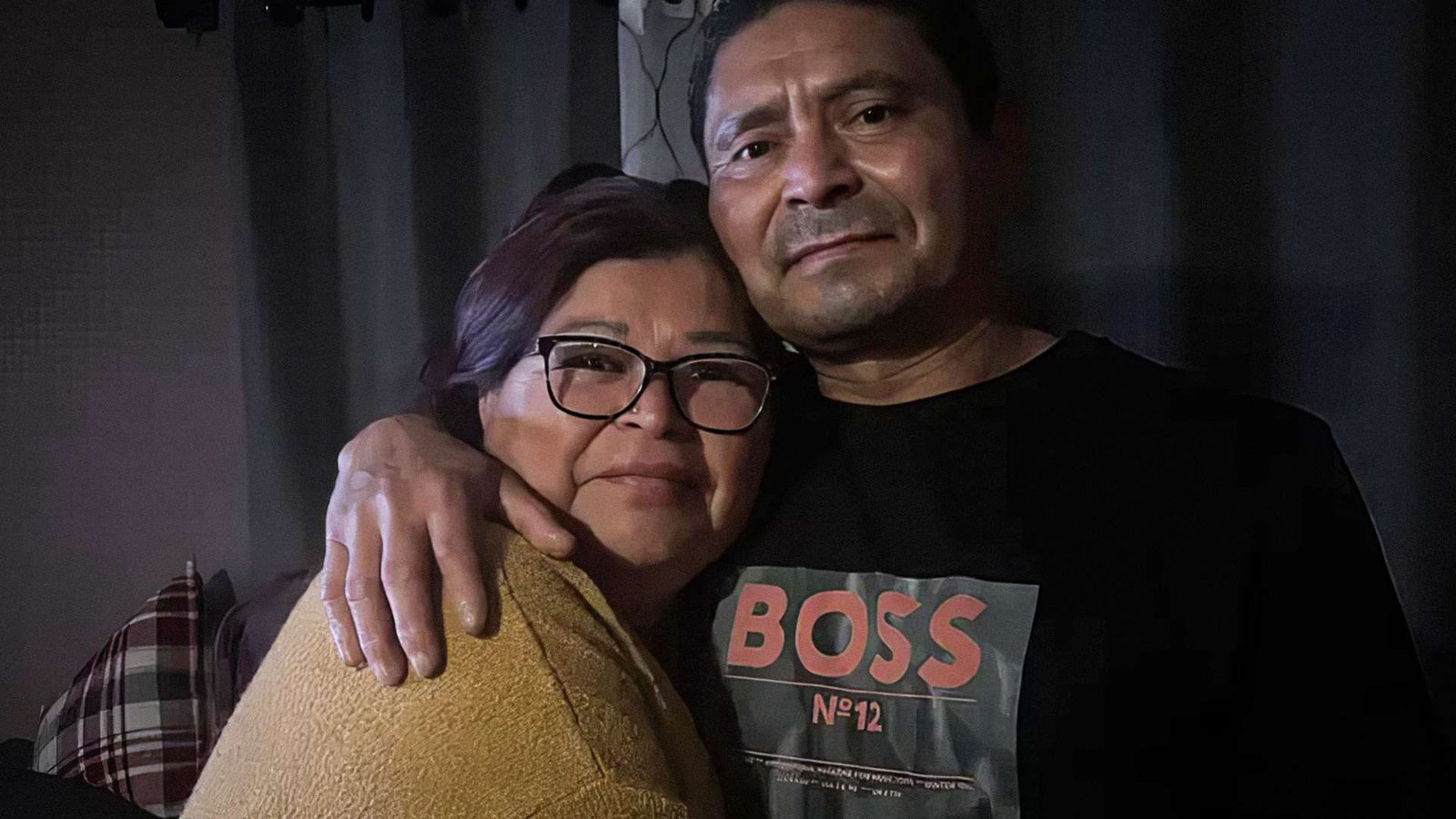
Antonia Tovar last spoke to Jose Ramos-Solano, her husband of nearly three decades, on March 25. He called her from the Adelanto ICE Processing Center, a federal immigration detention center in Adelanto, California; he said he was going to the commissary to buy some things but would call her again later.
“It never came,” Tovar says. “He never called me.”
Ramos, 52, died that evening after falling unconscious in his cell. A medical examiner’s report obtained by Reason through a public records request concluded that he died of COVID-19 pneumonia.
Ramos’ family says his death was a result of medical neglect—one of dozens of allegations of inferior health care and unhygienic conditions at Adelanto. The weight of those allegations led a federal judge last Thursday to order immediate improvements to conditions at the detention center.
U.S. District Judge Sunshine S. Sykes, an appointee of President Joe Biden, ordered Immigration and Customs Enforcement (ICE) to provide Adelanto detainees with potable water, sufficient nutrition, and adequate sanitation; to stop putting detainees in solitary confinement without valid safety concerns; to develop a plan to improve medical care and disability accommodations; and to appoint two independent monitors to report on conditions at the detention center for the remainder of the litigation.
Sykes’ order was in response to a separate lawsuit filed in January by detainees alleging medical neglect, unsafe food and water, mold, and retaliation against detained people at Adelanto. Ramos’ case and the judge’s injunction highlight a dangerous and sometimes deadly problem at detention centers across the country: the spread of highly infectious diseases due to unhygienic conditions and substandard health care.
In a statement to Reason, a Department of Homeland Security (DHS) spokesperson said that ICE has “higher detention standards than most U.S. prisons that hold actual U.S. citizens.”
“Any claims that there are subprime conditions at Adelanto ICE processing facility are FALSE,” the DHS spokesperson said. “This is another example of a Biden appointed activist judge trying to smear our ICE law enforcement.”
“This is the best healthcare than many aliens have received in their entire lives,” the statement continued.
Yet evidence to the contrary has continually leaked out of detention centers since the Trump administration’s mass deportation campaign began last year. Just last week there was a reported tuberculosis outbreak in a Colorado detention center and a measles outbreak at another detention center in Arizona. Internal audits and external investigations by civil rights groups have reported inhumane conditions in the largest detention center in the nation, a 5,000-bed tent camp in Texas. Suicides have spiked. One detainee died from a severe tooth infection.
“Everything that’s happening in these detention centers is subpar from a medical standpoint, and it’s very similar to issues we see in in jails as well,” says Amesh Adalja, a doctor at Johns Hopkins University whose work focuses on infectious disease emergencies.
Adalja says contagious diseases can rapidly spread in “congregate settings” like jails and detention centers, and that recognition of what’s happening is often delayed. He says there are routine measures the government could take to stop disease outbreaks, such as improving intake screenings, increasing access to health care, and monitoring wastewater—if it wanted to.
“There’s a lot of things that they can do proactively. The question is do they do they have the incentives to do it?” Adalja says. “And the answer is probably no. This isn’t a technology problem. This is a policy problem.”
Jesus Arias, an attorney representing Ramos’ family, as well as two other families of detainees who died at Adelanto, says they are “glad that the Federal Court is ordering major changes at the Adelanto ICE processing center.”
ICE officers arrested Ramos-Solano on February 23 at a courthouse in Torrance, California, where Tovar says he was appearing for a traffic ticket.
According to an ICE press release, Ramos, an unauthorized Mexican immigrant, was convicted in 2025 of theft and possession of a controlled substance, which resulted in a diversion sentence, a common sentencing outcome for low-level and first-time offenders.
Tovar was with him at the courthouse the day he was arrested. The two had grown up together in Mexico and separately crossed over the border into the U.S. in the 1990s, first Tovar and then Ramos. Although they both entered the country unlawfully, they built a life together in the U.S. in the decades that followed. They had been married 28 years and had two adult children.
Later that day, Tovar and her children received a call from Ramos-Solano at the Adelanto ICE Processing Center, asking them to bring insulin for his diabetes.
Ramos-Solano’s intake screening when he arrived at Adelanto identified several chronic conditions, including diabetes and high blood pressure.
Civil rights and immigrant aid groups say that medical care in detention centers around the country is severely lacking. In January, a month before Ramos arrived, the Coalition for Humane Immigrant Rights and two Adelanto detainees filed a class action lawsuit alleging myriad deficiencies at the privately run facility.
“Mold grows on bathroom and dormitory walls,” the suit alleged. “Individuals across various dormitories contracted an infectious skin disease called a staph infection—and more than a dozen detained individuals were hospitalized. Another unit recently experienced an outbreak of chicken pox. Detained individuals are forced to clean the bathrooms themselves. The kitchens are filthy and serve insufficient—and sometimes spoiled—food. People go hungry. The limited drinking water often appears dirty and tastes odd, raising serious concerns about its potability. Rooms are kept cold, and detained individuals are provided only a thin blanket if they are provided one at all. Some detained individuals protest the conditions and speak out, but are met with retaliation or punishment.”
The lawsuit was accompanied by more than two dozen sworn declarations by Adelanto detainees describing unsanitary conditions, medical neglect, and other abuse.
In the month or so that Ramos was detained at Adelanto, he reported similar conditions to Tovar.
“He always told me that the food there was bad, that the clothes were washed only in water, and that there were a lot of people crammed in together,” Tovar says. “A few days before he passed away, a person arrived who was sick, and he told me the man was coughing a lot. He asked me to send him money to buy food, and to send him money to buy a sweater because it was very cold. And that they were treated badly.”
“When they felt bad from a headache or something, [staff] wouldn’t give them medicine,” Tovar continues. “They had to go to the hospital to be seen, and it took a long time for them to be taken.”
On the evening of March 25, Ramos-Solano began feeling unwell and took off his shirt, according to both Tovar and the statement of an Adelanto nurse who was interviewed as part of the county coroner’s investigation.
“I’ve been told many times that he took off his shirt because he felt he had a fever,” Tovar says. “They say he was sitting there, that suddenly he was looking at his tablet, when my husband took off his shirt because he felt terrible—like he was suffocating.”
What happened after that is disputed. Tovar says that other detainees told her that guards ignored Ramos-Solano’s condition.
“The guys there saw that he was feeling ill, and one of them said, ‘Let me give him first aid because I know how,’ and none of the guards that were right next to him would even look at him,” Tovar says. “They never did anything for him.”
According to the nurse’s statement, guards were walking their rounds when “they closely noticed that Jose was breathing shallowly and was unresponsive when they tried to wake him.” A code blue was called at 5:35 p.m. A nurse arrived, and 911 was called within two minutes. The nurse said two separate teams of paramedics arrived: first the local fire department at 5:46 p.m., then AMR paramedics at 5:54 p.m.
Ramos was pronounced dead at a local medical center at roughly 6:30 p.m.
“His transport to a hospital was extremely, shockingly delayed,” Arias told Al Jazeera in June. “He died at the center, we believe.”
There are other inconsistencies. A forensic pathologist listed Ramos-Solano’s cause of death as of “Covid 19 Pneumonia, days”—indicating that the interval between the onset of illness and death took several days—with a contributing cause of hypertension and heart disease.
According to ICE records, Ramos-Solano’s last contact with a nurse was on March 23, two days before his death. He received chronic care treatment for his blood pressure and diabetes, but the nurse made no notes of cold symptoms or breathing problems.
Tovar also says Ramos-Solano didn’t say anything about feeling unwell when they last spoke on March 25. She recalls asking him how he felt, and him saying “fine.”
Whatever the case, Tovar says none of her husband’s conditions should have been a death sentence.
“He was a very good father and a very good husband, and he left two children who miss their dad,” Tovar says. “They’re already grown, but even so, they’re going to miss him. His parents, his mother, in pain, his siblings. Yes, he was sick with diabetes and [high] blood pressure, but it wasn’t the kind of illness that would kill someone. What happened there was medical negligence. They killed him there. We want this to stop.”
Ramos-Solano is one of four people who have died in Adelanto since last September. He’s also one of 17 Mexican nationals who have died in ICE custody during that period, a trend that has strained diplomatic relations between the two countries. In April, Mexico’s Ministry of Foreign Affairs denounced conditions at ICE detention centers as “incompatible with human rights standards and the protection of human life.”
Alvaro M. Huerta, the director of litigation and advocacy for the Immigrant Defenders Law Center, said in a press release that the injunction “makes clear that the administration’s misrepresentations about conditions inside the Adelanto ICE prison collapse under the weight of the evidence.”
“Behind Adelanto’s barbed-wired fences, people have endured conditions so egregious that four individuals have lost their lives there in the last six months alone,” Huerta said. “Make no mistake, those deaths were preventable. We’re grateful that a federal court has acted to ensure that others detained at Adelanto will now have basic protections and receive adequate medical care. We celebrate this ruling even while we mourn the pain this administration continues to cause so many families.”
There are some things that lawsuits and policy changes can’t fix. Antonia Tovar says she and her children still haven’t gotten used to the fact that Ramos is gone.
“It’s hard—very hard—to think that he’s not coming back,” Tovar says. “We wake up thinking this is a nightmare, and then we realize that it’s reality.”
[ad_2]
Source link
