
[ad_1]

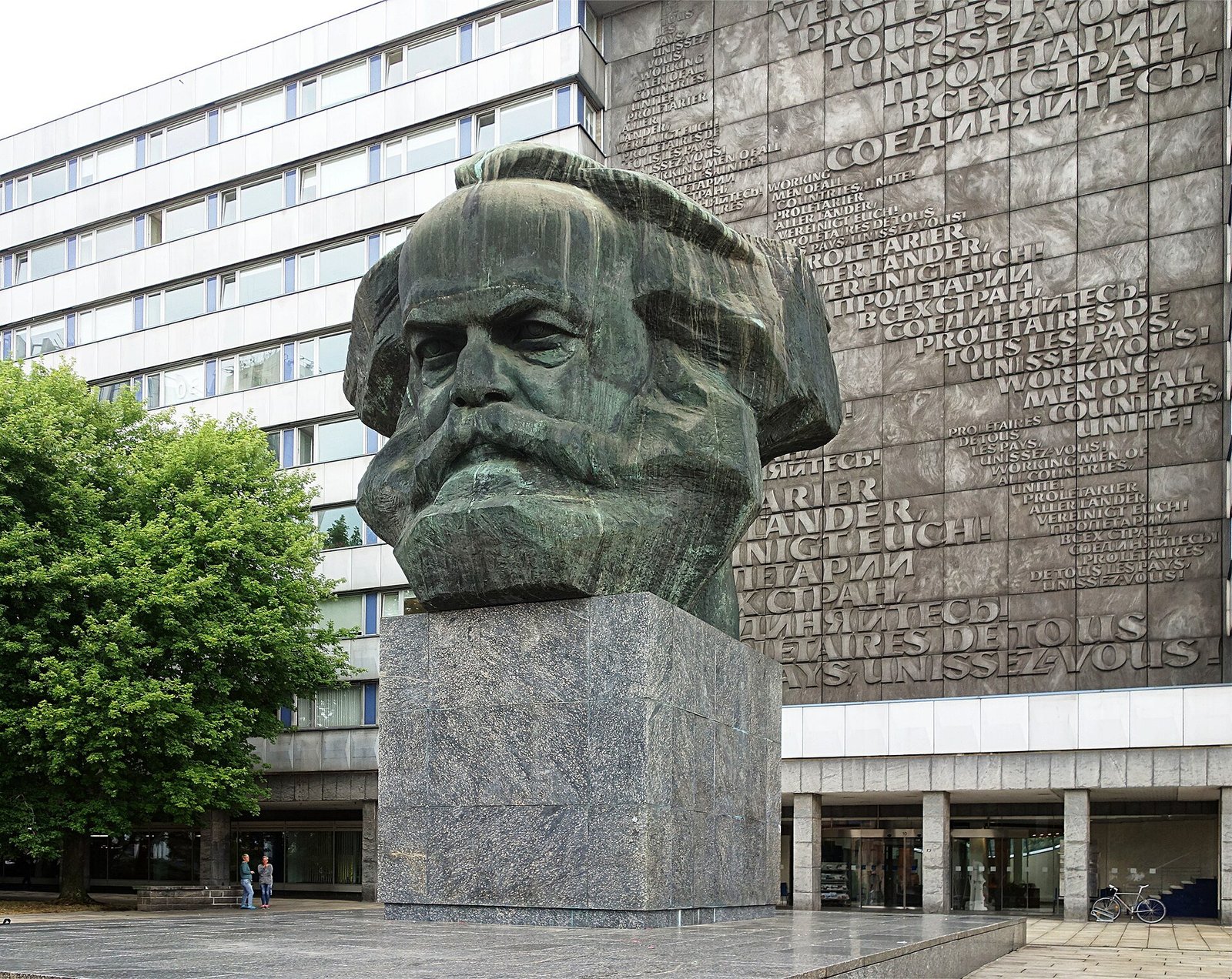
Photograph Source: Velvet – CC BY-SA 4.0
(I.) SDS
According to a familiar narrative, protest is a kind of parlor game of privileged students. When it occurs on Ivy League campuses, it gets its fair share of attention, creating an impression that social/political movements based on long tradition have their point of origin there. (The 170 students arrested at the City College of New York’s Gaza encampment on April 30, 2024, largely people of color, had a median family income less than a quarter of that of the students arrested at Columbia. The news coverage—of their pepper spraying—and reported tasering—and broken teeth and bones—was delayed a few days and then relegated to the back pages. (See Sarah Baum in the Progressive Magazine)
In Campus Wars, Kenneth J. Heineman points out that student mobilization against the Vietnam War–and in support of free speech and the right to organize on campus–arose initially at publicly funded state universities.
Enmeshed in a hot war and a cold war, awash in DoD grants for war-related research, the universities assumed a division of labor: Elite schools turned out foreign policy “experts”; while state schools supplied teachers and engineers for the home front as well as international policing experts needed to shore up the unpopular South Vietnamese government.
At Penn State (and Kent State) the “cultural environment was conventional as well as hostile to dissent.” The antiwar movement “remained small, isolated, and under ideological and often physical attack throughout the ‘60s.” (Heineman, p. 270)When General Maxwell Taylor spoke at Penn State in the fall of 1965, around 30 members of the campus group SENSE peacefully demonstrated as “prowar partisans marched in an ever-narrowing circle” around them, “lobbing eggs and hurling obscenities . . . while campus police officers looked on, prepared to arrest the antiwar demonstrators if they attempted to break out of the circle.” (ibid., p. 150)
“James Creegan [a SENSE partisan], a member of the Penn State Socialist Club in 1965 and a founder of the campus SDS chapter in 1966, experienced ‘culture shock’ upon leaving Philadelphia for State College,” Heineman writes. “The son of an Irish Catholic labor and Communist organizer in Great Britain, who later immigrated to America, Creegan was frequently assaulted on the campus and in his dormitory by athletes.”
“Creegan . . . did not believe that the war was a product of American foreign policy makers’ mistaken reasoning. Rather, the war provided evidence of American capitalist plans to ‘maintain the entire underdeveloped world as a source of colonial exploitation . . .
“In October [1965], four members of the Socialist Club and SENSE burned their draft registration cards at the campus mall as one hundred students watched. Lively discussion ensued when Creegan urged the student body to ‘join us against the war machine of United States imperialism which is perpetuating most of the crimes of this war.’ Hawkish students pummeled Creegan and FBI agents from Philadelphia soon descended upon State College in search of the draft resisters.” (ibid., p. 149)
As Kirkpatrick Sale points out in his lively, widely regarded as definitive—certainly indispensable–history of SDS, in those days “imperialism” and “monopoly capitalism”—necessary concepts—were “out-of-bounds” terms. SDS would“describe imperialism without giving it that name . . . (Sale, SDS, p. 245) SDS’s parent/sponsor organization, the (Cold War liberal) League for Industrial Democracy (LID), funded in part by the AFL-CIO and the International Ladies Garment Workers Union–both fiercely anticommunist unions–was irate when SDS in its Port Huron statement (drawn up at its founding conference in 1962) questioned the motives behind the Cold War. “American foreign policy in the fifties,” its student authors wrote, “was motivated by a concern for foreign investment . . . We participated unilaterally–usually through the Central Intelligence Agency—in revolutions against governments in Laos, Guatemala, Cuba, Egypt, Iran . . . “
Michael Harrington, the 34-year-old celebrity Socialist author of the best-seller The Other America, acting as the LID’s liaison with the students at Port Huron, demanded they deny observer status at the conference to a member of a Communist party youth group. SDS made it plain they would resist censorship. So the LID immediately changed the locks on the door of SDS’s New York office.
(Norman Thomas [the Socialist Party’s eminence grise and six-time presidential candidate] was then advising young people to go into SDS rather than his own Socialist Party youth group, the Young People’s Socialist League (YPSL), “so that they would avoid sterile faction fights and find something ‘more native, more healthy.’’[Sale, p.47] Thomas, a longtime member of the CIA-linked “Vietnam Lobby,” supported Vietnamese dictator Ngo Dinh Diem’s decision to cancel the 1956 elections called for by the Geneva accords, for fear that Ho Chi Minh and the Viet Minh might prevail. (See James Creegan’s September 17, 2017, article in CounterPunch “The Left Wing of the Permissible: The Politics of Michael Harrington.”)
Before arriving at Penn State, Creegan became involved with the Progressive Labor Movement (later the Progressive Labor Party). Organized by ex-Communist Party members who either quit or were expelled for sympathizing with China in the Sino-Soviet dispute, its student group, the May 2nd Movement, was the first to proclaim its resistance to the draft in 1964.
“College students could enjoy a ‘2-S’ student deferment. PLP argued that a principled anti-war position required refusing this class privilege. . . . As a result, numbers of PLP members were drafted. PLP’s principled position . . . won widespread respect throughout the movement” and even “the grudging admiration of [PL’s] rightwing opponents within SDS.” (See articles written as a series in Challenge-Desafio during the first half of 2007)
Left-wing parties (such as Progressive Labor, the Socialist Workers Party and the Communist Party), had a few hundred of their members enlist in the military, to act as organizers. “They are erased, the same way the recent PBS/Ken Burns series on the war erased G.I. resistance entirely.“ (See Matthew Rinaldi, “Waging Peace in Vietnam,” Military Law Task Force, 2019) Penn State’s SENSE president Andy Stapp, who was stationed at Ft. Still, Oklahoma, became an organizer of the Soldiers Union and was subsequently court-martialed in 1967. (Heineman, p. 158)
In 1965, PL urged its members to join SDS and nudge it in a left direction. “PL helped organize chapters on scores of campuses and became part of the leadership in many. As the movement grew, hundreds of students joined PL to ‘fight for revolution,’ not just against this particular war.” (Challenge-Desafio)
As the writer Jim O’Brien observed in the November 1977-February 1978 issue of Radical America
Within SDS, despite the generally unobtrusive nature of PL’s work at first, the party came under increasing attack. . . . The attacks sprang in part from visceral worry about any disciplined cadre organization working within the unstructured milieu of SDS, and in part from PL’s ‘culturally retrograde’ opposition to the New Left’s attempts to fuse youth culture . . . and radical politics. . . . It had ready answers during a time when SDS national leaders were turning to one after another strategy in a series of efforts to comprehend the mushrooming student revolt and to decide where they should try to nudge it.
After President Johnson escalated the Vietnam War in late 1964 following his landslide victory in the presidential election, SDS remained “reluctant to pay attention to any single issue.” But just six weeks later, LBJ launched all-out war and enlarged draft calls, and SDS, roused to action–energetically rallied antiwar groups and left organizations; liberal unions like District 65 and 1199; Bronx reform Democrats; and others to a massive April peace march in Washington, D.C.; 25,000 protestors descended on the nation’s capital, for what turned out to be the largest peace demonstration in US history. (Sale, pps.169-76)
However, because Communist groups were invited to participate, the LID did its utmost to sabotage the march. LID leaders Bayard Rustin, A.J. Muste, and Norman Thomas—”reluctant to oppose a war that was anticommunist in intent”–persuaded the New York Post [when still liberal] to run an editorial featuring their statement opposing the march. Michael Harrington, who did not sign the statement, raised no objection. He and fellow LID leaders Bayard Rustin, and Irving Howe remained firmly attached to the politics of the International Ladies Garment Workers Union (ILG), which, “representing the liberal wing of the Establishment,” voted at its May convention to endorse Johnson’s actions in Vietnam and in the Dominican Republic. (Sale, p. 239n)
Although this contributed to SDS’s final rupture with the LID in October 1965, SDS had yet to develop an antidraft program, or even an official position on the war itself. To dissociate itself from the ‘draft dodgers,’” its National Office adopted a “Build not Burn” strategy proposing that alternate service be made grounds for exemption from the draft. However, the “Boy Scout cast of the statement”; the fact that it did not attack the draft itself as an inequitable and undemocratic institution”; did not urge evasion of the draft; or “make any of the necessary connections between the draft and the war, showing them both as inevitable products of the American military-industrial state . . . The apologetic effect of it, especially, irritated many as being too defensive, too craven . . .”
PL, on the other hand, had adopted a strategy of “Anti-Draft Unions” to demonstrate at induction centers; oppose college administrations’ cooperation with the draft; call for no ROTC, military recruitment, or war research on campus;“Go to High Schools with leaflets, street meetings, . . . union meetings, etc. . . .” –to bring as many people as possible—particularly working-class people—into the anti-war movement. (Sale, pps. 232-6)
At this point, SDS’s old guard (seen by many as an elite remote from the rank and file [ibid., p. 248]) were graduating from college and being replaced, in Sale’s words, by a
new breed of activist, a younger cohort who, brought to SDS a new style and a new heritage . . . For the first time at a meeting people smoked marijuana . . . Men grew Pancho Villa mustaches . . .Blue workshirts, denim jackets, and boots were worn by both men and women. . . . These were generally people raised outside the East Coast, many from the Midwest and Southwest . . .often without any family tradition of political involvement, much less radicalism. . . .
Not that they were all simply ‘anti-intellectual’, the phrase with which many of the old guard and more of the Old Left dismissed them; rather, they were generally without exposure to this kind of learning, being underclassmen from mediocre colleges or conservative state universities; they were nervous and often inarticulate in public debates with well-versed old-guard radicals, and they emphasized morals and values, action and bodies-on-the-line, honesty and courage, not ideology and theory and what they called ‘old Leftism’ and ‘all that thirties horseshit’ . . .
As people still in their teens, five, six, and seven years younger” they were quicker than the old guard had been “to write off labor, liberals, the Democratic Party, reforms and the ‘system’ in general . . . “ (ibid. pps.204-6)
In the spring of 1966, President Johnson decided to draft students, and anti-draft protest and protest against the ranking system began in earnest. FBI agents approached college deans for SDS membership lists; army intelligence began sending its agents to campuses. (ibid., pps. 262-4)
At televised hearings on the Vietnam war, Arkansas Senator William Fulbright stated the US was deliberately dropping napalm bombs on South Vietnamese villages. Although a steady drumbeat of articles and editorials from the NYT maintained that napalm burns in Vietnam were “negligible,“ through other sources the truth came to light. The writer Martha Gelhorn managed to convince the editors of the Ladies Home Journal to run her article about the chemical effects of napalm, describing through eyewitness testimony how Dow Chemical’s napalm bombs explode on contact and “melt the flesh.” William Pepper reported in Ramparts magazine that an estimated quarter-million South Vietnamese children had so far been killed and another 750,000 wounded. (See Christian G Appy, American Reckoning: The Vietnam War and Our National Identity, p. 53)
SDS moved from protest to a program of active draft resistance and many young men burned their draft cards.
In the spring of 1967, PL angered much of the peace movement, and lost much of its base of support, when it attacked the North Vietnamese for accepting a small amount of aid from the Soviet Union. PL accused the USSR [seekingdétente with the West] of colluding with the US to crush the revolution in Vietnam; PL claimed Moscow influenced the Hanoi leadership to narrow its goals to independence and national liberation, and retreat from its original position that there was nothing to negotiate about until the US invaders got out.
Sale claims it was at this point that PL—in a search for new recruits–developed the idea of a “worker-student alliance” to support striking workers and the demands of campus workers, and involve workers in antiwar actions–a strategy they would stick with in the coming years. (ibid., p. 332-3) By contrast, many non-PL SDSers argued that the traditional working class had become obsolete, was reactionary, and that hope for revolution lay in a “new working class” of alienated intellectuals and professionals that “lies at the very hub of production.”
As the Spring Mobilization Committee to End the War in Vietnam held massive demonstrations on the streets of New York and San Francisco on April 15, 1967–drawing 300,000 protestors (Martin Luther King spoke, appealing to the Administration to “save our national honor”)–many in SDS were convinced of the futility of peaceful marches.
Now for the first time the people around SDS began toying with the idea of revolution,” Sale writes. “[A]t this stage something different and . . . more comprehensive was wanted, some unified way of talking about the war, the military machine, imperialism, complicity, university governance, corporate liberalism, and the ‘postscarcity economy. (Sale, pps. 334-7)
At its 1967 summer convention, SDS took an official stand on the war, repudiating the calls of liberals like Bobby Kennedy for negotiations and a stop to the bombing; calling instead for immediate withdrawal and an end to conscription in any form—and went on record in favor of desertion from the military. (ibid., pps. 363-5) As the universities’ role in the war effort came to light, “an increasing number of sit-ins changed from symbolic acts of moral witness–where students went limp and were carted off to jail—to “Tactical Political Resistance”–purposeful obstruction and disruption of operations such as Dow Chemical recruiting “BY WHATEVER MEANS NECESSARY.” (ibid., pps. 379-382)
On October 21, one hundred thousand people had assembled for a march on the Pentagon (called by the National Mobilization Committee), when
. . . suddenly a group of young people—an SDS contingent and some New York Yippies—made a breakthrough in the line of soldiers, swept over the weather fences, ran past more startled troops, and presented themselves directly to the walls of the Pentagon itself. . . .they were beaten with rifle butts, hauled away and arrested. By then, however, several thousand more had come up behind them; troops and marshals flailed desperately at the crowd, fired teargas, used their clubs . . . (Sale, pps. 383-89)
SDS’s National Office, “now began to see itself as the core of a political revolutionary vanguard. . . . “” (ibid., pps.391-2) “Within SDS, the encounter with Marxist ideas was accelerated by the entry of Progressive Labor.” (Max Ebaum, Revolution in the Air, Sixties Radicals turn to Lenin, Mao, and Che, pps. 69-70) PL “persistently invoked ‘the Marxist standards’ . . . gradually quotations from Marx, then Lenin, and then the modern European Marxists found their way into SDS and other Movement literature.” (Sale, p. 391)
While rejecting Soviet-style “Communism, SDS leaders disputed the widespread assumption the October Revolution (which they embraced) led inevitably to Stalin. As Creegan put it, the Bolshevik party (“in which Lenin by no means always had the last word”) called for “all power to the soviets” (democratically elected councils of soldiers, peasants, and workers) at the moment when Russian soldiers themselves began deserting the Eastern front in droves, peasants were seizing land from the landlords, and workers were taking over the factories—actions violently opposed by the provisional government of Alexander Kerensky, committed as it was to remaining in the war.
SDS leaders viewed the disciplined (“Leninist”) cadre party structure (operating in secrecy) as more applicable to their situation than the media-driven “open” political groups they had worked with in the past, such as the LID or the Democratic party–top-down organizations that no one could reasonably call democratic. The feeling of necessity for such a cadre party may have been induced by the fact that the DoD
recorded (and made available to state and local agencies) the names, pictures, locations, and political beliefs of upwards of eighteen thousand citizens . . . The Selective Service System issued a directive to local draft boards that students involved in draft resistance [or even just SDS members in some cases] were to be immediately reclassified 1-A and, if possible, packed off to Vietnam.
The FBI openly visited students and faculty and successfully enlisted administration officials to spy on and submit reports about campus radicals. Police departments “encouraged right-minded students to report on their fellows . . . at Penn State a student government rep estimated . . . there were no fewer than 200 student informants . . . some doing their own private wiretapping. (ibid., p. 406-7)
The Selective Service System was now calling up less than 20 percent of the college population, “depending for most of its fodder on strata of the society that were less inclined to make a fuss about it. . . .draft-card burning in working communities was regarded as faintly cowardly and decidedly unpatriotic . . .” (ibid., p. 422) Police showed little restraint in attacking unarmed students—the government, university, press, and public supported them.
In response, there grew among some “a willingness to commit violence. Not violence against people” but “against property . . . connected with a hated or complicit institution.” SDS did not endorse this position, calling its perpetrators “the left adventurers” and the “crazies.” (ibid., p. 426-8) While SDS’s national leadership saw the present task as one of “regular sustained resistance,” PL argued against most confrontations, “avoiding student power issues which might strike the working class as elitist.” (ibid., p. 397)
During the monthlong strike at Columbia University, 200 students were injured, another 700 arrested as police violently cracked down on student occupiers. PL wanted to take the battle off campus and involve people squeezed by Columbia’s landlordism. (ibid, p. 429-38) The university planned to build a gymnasium in Harlem, where it owned hundreds of vacant apartments it preferred to keep vacant rather than rent to residents of Harlem. Advocates of “The New Working Class” among Columbia’s SDS leadership instead seized upon the strike as “an opportunity to hold ‘liberation classes’ and reinvent Columbia as a progressive institution.” [Challenge-DeSafio, spring 2007])
President Johnson called the protestors “young totalitarians.” Congress passed bills to withdraw aid from ‘disruptive” students,’ . . . and allow the President to send federal troops, specifically exempted from sanctions on interfering with an individual’s civil rights, anywhere in the county at his own whim . . . ” (Sale, pps. 442-6)
The media, with a predictable measure of exaggeration and paranoia, began treating the New Left as if it were a developed and dangerous revolutionary threat already, the effect of which was to convince many young people that they really were that . . . [C]elebrations of youth culture . . . and the embracement of it by wide segments of the capitalist economy, also served to convince many that youth had significant power within America and that its expression in political terms might be as devastating as its expression in cultural ones.. (ibid., p.459)
As SDS membership surged nationally, there was a “pervading sense” among some 600 attendees at its 1968 summer convention in East Lansing, Michigan, that SDS was “the likely organization to be the cutting edge of the second American revolution . . . ”
Open warfare erupted between PL and the other factions, who elected Bernadette Dohrn as their Interorganizational Secretary and sought to build an anti-imperialist youth movement. PL ridiculed them for trying to organize without the working class. Traditional SDSers labeled PL “external cadre” denouncing their rigidity, cadre discipline, short hair, and anti-Hanoi politics—Shouts of “PL out! PL out!” went on for 20 minutes. (ibid, pps. 453-72)
Seeking to deepen the factional crisis, the FBI stepped up its investigation and penetration of SDS; college administrators opened up their files to the police and FBI . . .at least 1265 arrests were made. Some campuses banned SDS outright. “These maneuvers” and “this kind of pressure,” Sale writes, had a “steadily debilitating effect. . . . [I]n practically no instance were chapters prepared to deal with phone-tapping, daily surveillance, police infiltration, large-scale arrests . . . ”
The non-PL faction of SDS rallied around a manifesto “Toward a Revolutionary Youth Movement,” arguing the route to building a working-class movement lay through organizing working-class youth. (PL said the Revolutionary Youth Movement [RYM] placed too much emphasis on youth culture.) Pinning their hopes for the overthrow of capitalism on “revolutionary” nationalist struggles, RYM “gave particular attention to the Black liberation movement.”
PL on the other hand, condemned popular positions identified with “Third World Marxism” and ‘anti-working-class nationalism,’ assuming the standard Marxist position that the workers of advanced capitalist countries would be the agents of revolutionary change. They “singled out the Black Panther Party, Elbaum writes, for special venom.” ( Elbaum, pps. 64-70) (The Panthers “have no class outlook,” and the aims of black student groups are “limited to securing a better deal for themselves,” not “at defeating the system.” [Sale, p. 535])
Fistfights between RYM and PL broke out at meetings. RYM divided into two tendencies: the Weatherman—“in actual practice,” Elbaum notes, “far more anarchist than Marxist”; and RYM II, which “took seriously the notion of immersing itself in the working class.”
“How ironic it all was: at precisely the time of the greatest explosion of the American left in all of the decade, SDS . . . was gradually but unmistakably isolating and diminishing itself, losing its student constituency, its women, . . . failing to connect with the high schools, the soldiers, the workers . . .” (Sale, p. 528): GI resistance had led to the establishment of coffeehouses. GI newspapers; campus and church sanctuaries for AWOL and deserting soldiers, and an increase in army desertions. A third of the nation’s students were involved in strikes. At San Francisco State College, students boycotted classes for four and a half months to protest institutional racism and police brutality. (Sale, pps. 512-19)
Nixon’s Attorney General John Mitchell and Deputy Attorney General Richard Kleindienst, and Hoover’s FBI geared up
no fewer than twenty federal agencies . . . to maximum surveillance, disruption, and harassment of the New Left, among them the army (with political dossiers on at least 18 million civilians), the Civil Service Commission (with 15 million names of ‘subversive activity’ suspects), the Secret Service (with 50 thousand dossiers), the Department of Health, Education and Welfare . . . and even the IRS . . .[T]he House Internal Security Committee ([had] an admitted 754,000 cards of ‘subversives’ on file). Every good-sized city now had its own Red Squad . . .
Hundreds of blatantly unconstitutional bills were introduced in the Senate and state legislatures –in one instance (West Virginia) giving police
a license to kill on campus without legal reprisal. . . .
Police or National Guardsmen were called in on at least 127 campuses . . . sometimes for weeks on end, and more than four thousand people were arrested in campus protests from January to June. In addition, at least one thousand students were expelled or suspended . . . making them instantly eligible for the draft and a possible future in Vietnam . . . (’signing a death warrant,’ as it was called).
SDS, the prime target, was banned outright at half a dozen campuses (including Kent State), pro-SDS faculty members were fired. (Sale, pps. 543-51)
At SDS’s 1969 summer meeting, Bill Ayers and Bernadette Dohrn drew up a document for PL’s expulsion, calling it “racist, anticommunist and reactionary.” PLers started to giggle as Dohrn declared PL no longer part of SDS. She stormed off the stage.
Hundreds, perhaps seven hundred in all, followed her, their fists raised, chanting a mélange of slogans . . . out into the Chicago night.
RYMII formed a unity slate with the Weatherman.” “ . . . Many of the Old Left-style sects, such as the Labor Committees, Internationalist Socialist Clubs, and the Spartacists, stayed with PL-SDS . . . Others—Yippie collectives, the Panthers, and the Radical Union—stayed with the SDS regulars. “Plers were not particularly pleased with the split . . . but at the moment it seemed best to put as good a face as possible on the whole affair and try to claim legitimacy for their side.” (Sale, p. 575)
“[N]one of the high-powered bulwarks of American industry was aware of the difference between PL and SDS, and assumed that . . . PL . . .was speaking for SDS and, moreover, the ‘SDS’ of rioting and subversion which the press had created. In fact, however, PL had no intention of trying sabotage or disruption or rioting: Its remnants held WSA summer”work-ins” “to give students . . . some factory line experience.” And better understand the problems facing workers (ibid., P. 597)
In July, RYMII broke with the Weatherman. Widely regarded in SDS as “a bunch of adventurist fools” (Sale., p.590), they “farmed out in collectives to poorer neighborhoods of Chicago, pursuing their “kickass” tactics . . .violently disrupting classrooms in what they called ‘jailbreaks’ in high schools and community colleges . . . engaging PLers and others who disagreed with them in bloody fistfights, coming on with macho toughness.”(ibid., p. 601)
Of course the media and politicians conflated them with SDS. But SDS had, in effect, ceased to exist. “Within a few months most SDSers walked away from all the organized factions.” (Elbaum, pps. 70-1) RYMII’s core membership would go on to establish Marxist-Leninist collectives—Maoist in orientation—scrambling to keep up with the twists and turns of the Chinese Communist Party’s foreign policy over the next decade (which Max Elbaum covers in his history Revolution in the Air: Sixties Radicals Turn to Lenin, Mao, and Che.)
(II.) Post-SDS
Creegan, for his part, graduated and returned to Philadelphia. He said that reading Isaac Deutscher’s biography of Trotsky changed his life. Embracing the revolutionary Trotskyism of James P. Cannon, he rejected the “Third camp” position (equal opposition to the USSR and Western imperialism) represented for a while by Max Shachtman and James Burnham, who later turned much farther to the right.
Onetime followers of Trotsky, they broke with him on the occasion of the 1939 Hitler-Stalin pact, when they pronounced the USSR a new form of state-dominated class society, “bureaucratic collectivism,“ as if, protested Trotsky, the fact of the October revolution could be so easily reversed by the twists and turns of Stalin’s foreign policy. Trotsky defined the USSR as a deformed “workers’ state.” He believed the overthrow of capitalism in the Soviet Union was a gain worth defending, and that world revolution would sweep aside the Stalinist bureaucracy.
Shachtman and Burnham, at the historical moment of the Hitler-Stalin pact, chose to reject Marxism as well, replacing Marxist “theory” with an empiricism categorizing a social or an economic formation purely on the basis of its superficial characteristics rather than its historical development.
The ultimate forbidden text, Das Kapital, [Marxism] the theory that dares not speak its name—put forth in three dense volumes (if one sets aside the Grundrisse)–a 19th century theoretical landmark whose substance its opponents seldom address directly—instead maligning it as a “religion”—not a “science”—because it’s merely “theory” (take that, Darwin; goodbye, Political Science )–and invoking any “Marxist” bad actor they can think of—to rule out any possibility the present economic and social system could evolve beyond this, its final moment—the end of history.
Machines begetting machines—increasingly interconnected—as if forming one big machine—its ever-diminishing labor component (source of value) embodied in ever-cheaper mass-produced commodities with an ever-shrinking ratio of profit–doomed to obsolescence by its own law of development–plagued by recurrent crises of overproduction and underconsumption; late-stage capitalism is driven by a profit motive entirely extraneous and unconnected to the need of humanity in general to survive.
After completing coursework for a PhD in philosophy at the University of Colorado, Creegan moved to New York in 1979 to study economics at the New School for Social Research. The campuses were quiet, the war in Vietnam rebranded now by the right as a “syndrome” preventing Americans from intervening militarily in other countries. On the left, social democratic views steadily gained ground over Marxism. (See Christian Appy’s American Reckoning)
Yet wandering into a corner newsstand in Greenwich Village—and other parts of the city—you still found, beside established publications of the left on the rack, those of the old left parties and their myriad offspring–a plethora of magazines and journals of the new socialist parties and preparty formations– Stalinist, Trotskyist, Maoist and post-Maoist—all with a shared perspective that capitalism was to be replaced through the agency of a vanguard party–and still found their authors (who used pseudonyms) at every demonstration and left event—eager to dispute and discredit one another. New York City’s leftist Guardian newspaper tried to hold together the remnants of a fractured post-Maoist camp with an antiimperialist Third World perspective.
Did there really exist a holdover of Marxist intellectuals who had not yet made a “strategic” retreat into academia or publishing? A familiar figure at NYC events, Creegan was a fountain of information in the days before Wikipedia—a genuine public intellectual. Searching for a political home, he became an “indentured servant” (as he later put it) in the Spartacist League, a Trotskyist sect attracting other ‘60s campus veterans; he would later describe it as a cultish formation centered around the needs of its leader, James Robertson.
Coworkers at the Village Voice in the ‘80s and ’90s will recall the eloquent and erudite shop steward in classified advertising who, when business got slow, read the New York Times at his desk instead of wasting time trying to look busy. For over 20 years, he fended off management’s attempts to fire him. The Voice always dissociated itself from the city’s “hard” left political culture–giving a vigorous thumbs-up to post-Marxian cultural criticism and thumbs down to Marxism itself. The ideological framework in place at the paper enjoined its letters editor from ever running any letter written by Lenni Brenner, a leftist historian who—although raised an Orthodox Jew–opposed Zionism.
Shortly before his own death, Creegan spoke at a memorial for Mike Lardner, one of the founders of the New York Marxist School. He said,
These days in Greenwich Village you find only ‘68ers’ and millennials at Marxist lectures and events. The generations in between are missing. There are never any middle-aged people present . . . Marxism fell into a state of near extinction until it was revived maybe in somewhat different form . . . Broader horizons of possibility may be opening up.
During the Occupy movement a decade earlier, Creegan had joined a revived Democratic Socialists of America—the organization Michael Harrington originally helped found in 1982—trebling in size since the Sanders campaign.
A lifelong Marxist, he rejected the notion of transforming a corporate party into its diametrical opposite–an independent working-class party. DSA’s strategy of joining the Democratic Party in hopes of pushing it more than mildly leftward seemed a gargantuan if not hopeless task. But even within the parameters of what DSA deemed politically possible, Creegan thought the sort of opportunism practiced by Harrington could only hinder any momentum toward the development of an independent anticapitalist movement. He summarized his argument in a long essay that Jacobin refused to publish. It ran in CounterPunch (September 7, 2017):
Harrington joined the youth arm of Norman Thomas’s Socialist Party in 1953, and till the end of the ‘60s, remained loyal to its leader, his mentor Max Schachtman. who believed the West was engaged in a “progressive” war against Stalinism (even though many decades after Stalin’s death). “Shachtman’s belief in Western capitalism as the lesser evil . . .led him to support America’s worldwide anti-communist crusade, including the 1962 Bay of Pigs invasion of Cuba, and–at first only privately–the Vietnam war. Domestically, Shachtman came to see the Democratic Party as the political arena in which socialists should work, and within the Democratic Party he viewed the AFL-CIO bureaucracy –first in the person of United Auto Workers chief Walter Reuther, then in the federation’s president, George Meany—as representing the true interests of the American working class.”
The emergence of Vietnam as the defining political issue of the ‘60s presented a dilemma for [socialists like Harrington] who pursued a strategy of leftward “realignment” of the Democratic Party. . . . Johnson had appointed Sargent Shriver to head his . . .War on Poverty, which took Harrington into its counsels. But even the minor role Harrington played in Johnson’s reform team came at a price . . . Harrington was not among the most zealous of cold warriors. But despite definite personal misgivings, declining to call for US withdrawal from Vietnam was a price Michael Harrington was willing to pay for a seat at the table of power throughout the Johnson years. During the mid-to-late 60s, he often referred to Vietnam as a ‘tragedy’ . . .
Schactman, who privately voiced to Harrington his preference for an outright US military victory rather than a negotiated compromise—nevertheless “wanted to maintain some kind of presence in the antiwar movement, where most of the action on the left was then taking place.” And so, Harrington “helped Shactman and others organize a new group called Negotiations Now, which promoted itself as a responsible, moderate alternative to the irresponsible, radical groups calling for the immediate withdrawal of US forces from Vietnam.”
Harrington finally called for US withdrawal in 1970–three years after Martin Luther King did. By this time, nearly half the US public was in favor of withdrawal. “Differences among Democrats were also mirrored among trade union officials” as Walter Reuther pulled the UAW of the AFL-CIO; the shift was facilitated by the fact that the war since 1969 was being waged by Nixon. “Within the Democratic party and union bureaucracy, [Harrington] could associate himself with a growing liberal wing thatfavored withdrawal for pragmatic reasons. A stronger antiwar position had, more than being morally imperative, become politically respectable.”
The split among Democrats and union chiefs resulted in the breakup of the Socialist Party—the majority, who continued to support the war, followed Shachtman and Bayard Rustin into the far-right Social Democrats USA. Those who supported McGovern went with Harrington into the DSOC, which merged with the New American Movement in 1982 to form the DSA. “One of the agreed-upon conditions of the merger . . . was support for the state of Israel.”
Creegan notes Harrington’s continued uncritical support of concessionary “union chiefs” bearing responsibility for the historic defeats suffered by labor in the ‘70s and ‘80s, whom Harrington never stopped trying to represent as progressive.
“Harrington is today a venerable founding father in the eyes of many on the left. . . . DSA displays his image on its web page…
Throughout his life Michael Harrington tirelessly devoted his outsized talents to his vision of progressive social change. His method was however largely confined to cajoling and persuading those who already wielded power in politics and organized labor. His insider methods left little room for those who would challenge existing authority from the outside or from below. . . . Because American workers have never formed a party of their own, socialists of Harrington’s persuasion were never able to participate in government. Tethered as they remained to the Democratic Party, they lacked the opportunity to carry out welfare-state reforms like the ones European social democratic governments enacted in the twenty-five ‘golden years’ following World II.
[ad_2]
Source link
