
[ad_1]
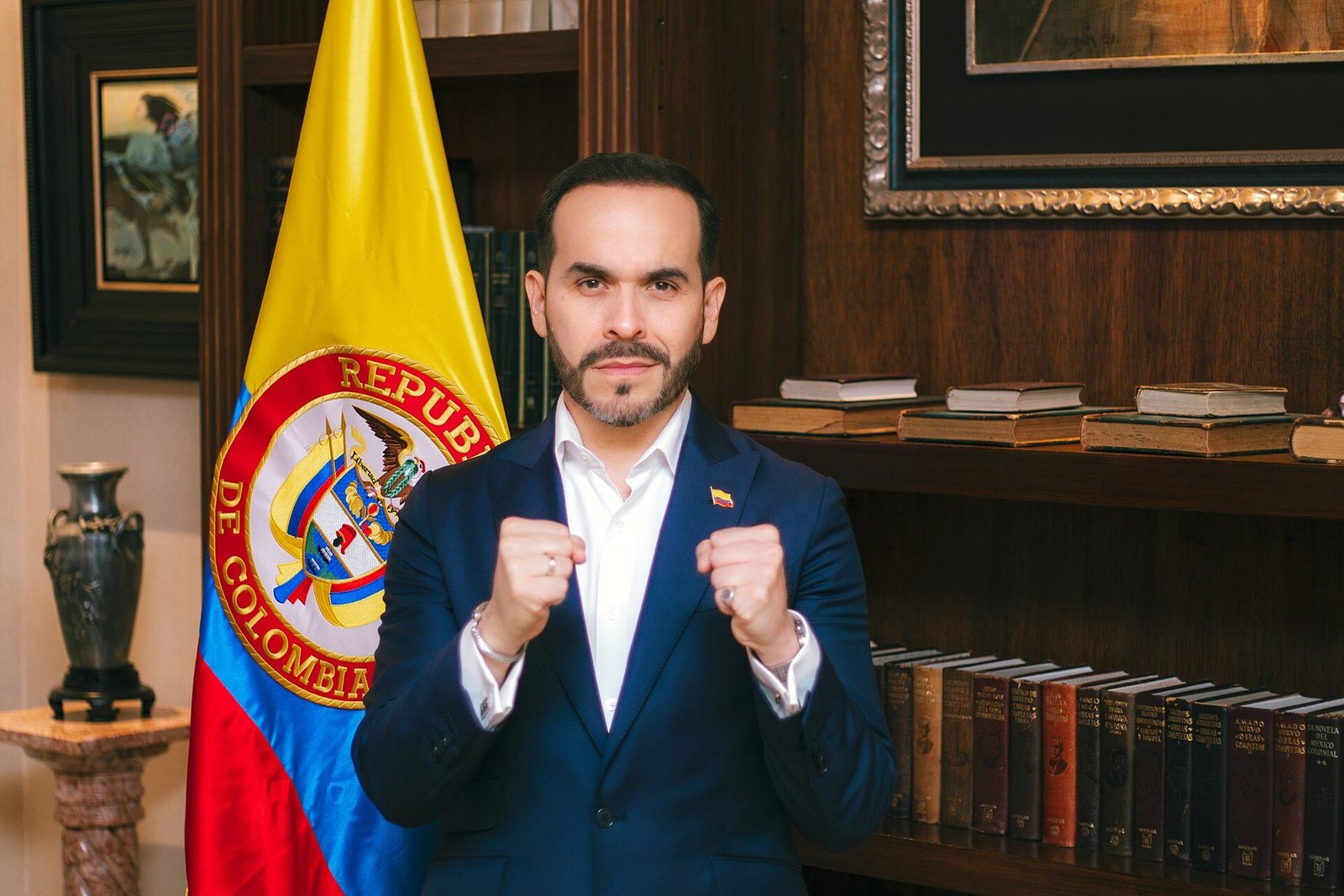
The announcements already being made by Abelardo and his designated cabinet mark a significant change of course, not only for the Colombian people but also for the country’s place in the world.
The runoff election reaffirmed that there are two visions for the country in Colombia: Abelardo won with 49.66 percent of the vote, championing the reduction of the state and social policies to further the development of a neoliberal, extractivist, and dependent model, compared to the 48.70 percent secured by Iván Cepeda, who sought to continue the project of change, expand social and environmental justice, peace, and sovereignty.
Given the election results, it was expected that the level of violence and anger from Abelardo’s campaign would subside in order to seek a national agreement that would allow for governance and the inclusion of the electorate that did not vote for his agenda but will also be under his responsibility for the next four years. His first public message, following the announcement of his victory, seemed to be heading in that direction.
However, Abelardo’s camp has sought to discredit Petro’s government, going so far as to attempt to suspend the transition process, accusing outgoing officials of ‘corruption’ and ‘coup-mongering.’ At the same time, it has launched attacks against social movements, stigmatizing entire regions that voted for Cepeda with the false narrative of the ‘forced vote‘ (which claims, contrary to all evidence or actual data, that rural populations voted under coercion from armed groups rather than out of conviction, thereby seeking to justify future military actions without distinguishing between armed individuals and civilians) or the announcement that he will tear down the Monument to Resistance in Cali, which commemorates the 2021 Social Uprising.
Today we can see every possible warning sign regarding two issues on which Colombia has been significant to the world in recent years: peace and foreign policy for life.
Peace Under Threat
Since the campaign, Abelardo has spoken out against continuing the country’s peace agenda, and his most recent announcements indicate he is serious:
The dismantling of a significant portion of the peace-related institutional framework, through the restructuring of the Presidency, will mean, for example, that the leadership overseeing the implementation of the Final Peace Agreement—which ended the armed conflict between the now-defunct FARC-EP guerrilla group and the Colombian state in 2016—will no longer be managed by a specialized institutional system but will instead be headed by the new National Security Commissioner. At the same time, the current Office of the Peace Commissioner—which has until now been in charge of ‘Total Peace’, a program developed by the Petro administration to promote new rounds of dialogue with armed groups still present in a country that currently has eight non-international armed conflicts on its territory—will be dissolved.
He also attacks the Special Jurisdiction for Peace, a transitional justice framework that made possible the signing of the 2016 Final Peace Agreement and the disarmament and reintegration into civilian life of approximately 13,000 peace signatories who belonged to the now-defunct FARC-EP. He argues that it is a system that fosters impunity and is very costly for the country. He then publicly stigmatizes Timoleón Jiménez (Rodrigo Londoño), the last commander of the FARC-EP and president of the Comunes party—which emerged from the group’s transition from armed struggle to legal politics—thereby jeopardizing not only his personal safety but also the rights that he and his comrades have acquired under the peace process.
These announcements signal the predominance of a security-focused narrative that denies the existence of the internal armed conflict, its causes, and its dynamics, and treats it more like organized crime. In other words, it will not seek to address the social inequalities that produce exclusion and violence in these territories, nor will it provide guarantees and confidence in a negotiated resolution to the armed conflict (for those who have already signed the peace agreement and those who remain armed); rather, it will merely attack—using the most militaristic model possible—the conflict’s consequences and its armed manifestations.
Colombia experienced something similar during the Duque administration (2018–2022), and the results led to greater fragmentation and weakening of armed groups, as well as an increase in harm to the civilian population in rural areas.
A Heartless Foreign Policy
Petro’s foreign policy centered on the defense of life based on four fundamental pillars: peace and human rights, environmental justice, Latin American and Caribbean integration, and feminist foreign policy.
There are several milestones along this path: The break in diplomatic relations with Israel and the international condemnation of the genocide against the Palestinian people; COP 16 and the agenda to address the global climate crisis and the energy transition; the revitalization of organizations such as CELAC and the holding of the First CELAC-Africa High-Level Forum; and, although still in its early stages, the mainstreaming of a gender perspective in Colombian diplomacy.
In contrast, Abelardo speaks of a diplomatic break with Nicaragua and Cuba, the reestablishment of diplomatic relations with Israel, Colombia’s accession to the Shield of the Americas, and the possible withdrawal of Colombia from the UN.
In this new diplomatic landscape for Colombia, political affinity and pragmatism will prevail—even over diplomatic tradition (for example, diplomatic relations with Cuba have been maintained since the 1990s, and those with Nicaragua have never been severed)—along with a diplomacy that prioritizes potential economic benefits and closer ties with major global powers such as the United States and Israel, leaving multilateral relations behind and compromising national sovereignty.
Abelardo is an expert at making announcements that later cannot be carried out without violating Colombia’s Constitution or that he blatantly denies, but this does not make the scenario unfolding on 7 August any less concerning. As we have seen in similar governments in the region, the democratic facade is easily malleable when the interests of capital prevail and the preservation of life and peace ceases to be the primary responsibility of the person holding the office of president.
This article was written by Globetrotter.
[ad_2]
Source link
