

[ad_1]
When used to describe Israel’s conduct in its war against Hamas in the wake of the latter group’s brutal October 7 massacre, which killed approximately 1,200 Israelis, the word genocide no longer functions primarily as a condemnation of military action designed to destroy a civilian population group. Instead, it has become shorthand for outrage at the scale of destruction in Gaza and, often, a broader condemnation of Israel’s entire military campaign, and sometimes of Israel’s very existence. The force of the accusation has grown through repetition, reinforced by the undeniable emotional impact of images emerging from the conflict.
But genocide is not simply another word for devastating war, overwhelming force, or even a high rate of civilian casualties. It is not an emotional intensifier to be invoked when the consequences of war are particularly grim.
The dictionary definition of genocide is the deliberate and systematic destruction of a racial, political, or cultural group.1 Similarly, in international law, genocide is a narrowly defined crime. It requires proof of dolus specialis—the specific intent to destroy, in whole or in part, a protected group as such. That requirement is not a technical detail, but the central feature that distinguishes genocide from every other form of wartime violence.2
The concept of genocide was forged in the immediate aftermath of the Holocaust. Raphael Lemkin, the Polish-Jewish jurist who coined the term, was influenced not only by the destruction of European Jewry but also by earlier episodes of targeted mass violence, including the Armenian massacres and the killing of Greek and Assyrian communities by the Ottoman Turks. Lemkin understood that war has always produced enormous civilian suffering. Indeed, the Allied campaign in World War II resulted in the death of several million civilians. Some Allied actions, such as the bombing of Dresden, were morally dubious, but neither Lemkin nor his collaborators in creating the modern concept for genocide believed that the U.S. and Great Britain had engaged in genocide in Europe or Asia.
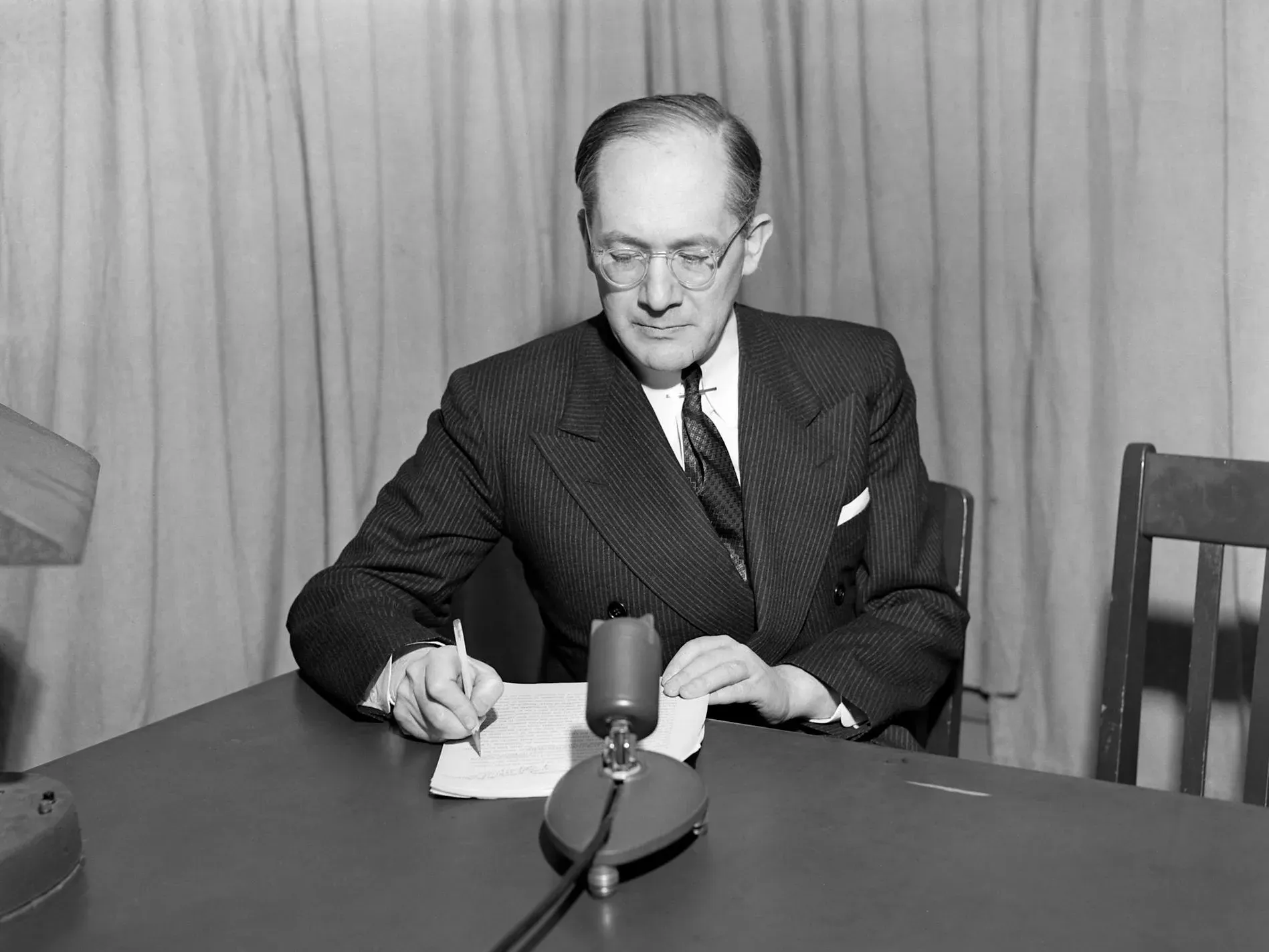
What set genocide apart, then, was not the scale of death alone, or even insufficient concern regarding civilian suffering, but its purpose. War may kill to secure territory, defeat an enemy, or compel surrender. Genocide kills because of who the victims are, with the aim of eliminating a peoples’ existence as a group.
When the international Genocide Convention treaty was adopted in 1948, its drafters were acutely aware of the stakes. To label a state genocidal is not merely to allege criminal conduct. It is to render a sweeping moral judgment that the state stands outside the bounds of lawful and civilized order. For that reason, the definition was deliberately demanding. The drafters understood that if the term became elastic—if it could be stretched to cover every brutal conflict or every campaign marked by tragic civilian loss—it would lose the distinctive force that made it meaningful.
Given that background, and later international judicial rulings, the accusation that Israel has committed genocide in Gaza is unsupportable. Establishing a claim of genocide against Israel would require more than pointing to the scale of suffering in Gaza or to deeply felt moral condemnation. It would require setting aside established precedent, blurring the distinction between intent and consequence, and relying heavily on tendentious, nay dishonest, interpretations of rhetoric by Israeli leaders. In effect, concluding that Israel has engaged in genocide requires not just expanding the definition of genocide beyond its accepted legal contours but well beyond reasonable interpretation of the concept.
Importantly, the charge that Israel is committing genocide against Palestinians did not arise for the first time in the context of the post-October 7 conflict in Gaza. Variants of the accusation began as a product of Soviet propaganda during the Cold War, specifically following Israel’s victory in the 1967 Six-Day War, which left the Soviet Union facing a significant geopolitical setback. Its Arab allies had been decisively defeated by a Western-aligned state. In response, Soviet institutions engaged in what they described as “active measures”—long-term efforts to influence international narratives to undermine Israel and win favor with Arab and Muslim countries.3, 4, 5, 6
One strand of this effort involved reframing Zionism by combining traditional Russian antisemitic tropes with avant-garde anti-colonialist theory. Rather than a national movement for Jewish self-determination, Zionism was increasingly portrayed as a form of colonialism and racist Jewish supremacy.7 Soviet-era publications, sometimes grouped under the label “Zionology,” advanced these themes, portraying Israel in starkly negative, and often antisemitic, terms.8 Indeed, the USSR chose right-wing extremist Russian nationalists, heirs to the most intense antisemitic tradition in Europe, to run its anti-Zionist propaganda campaign.9
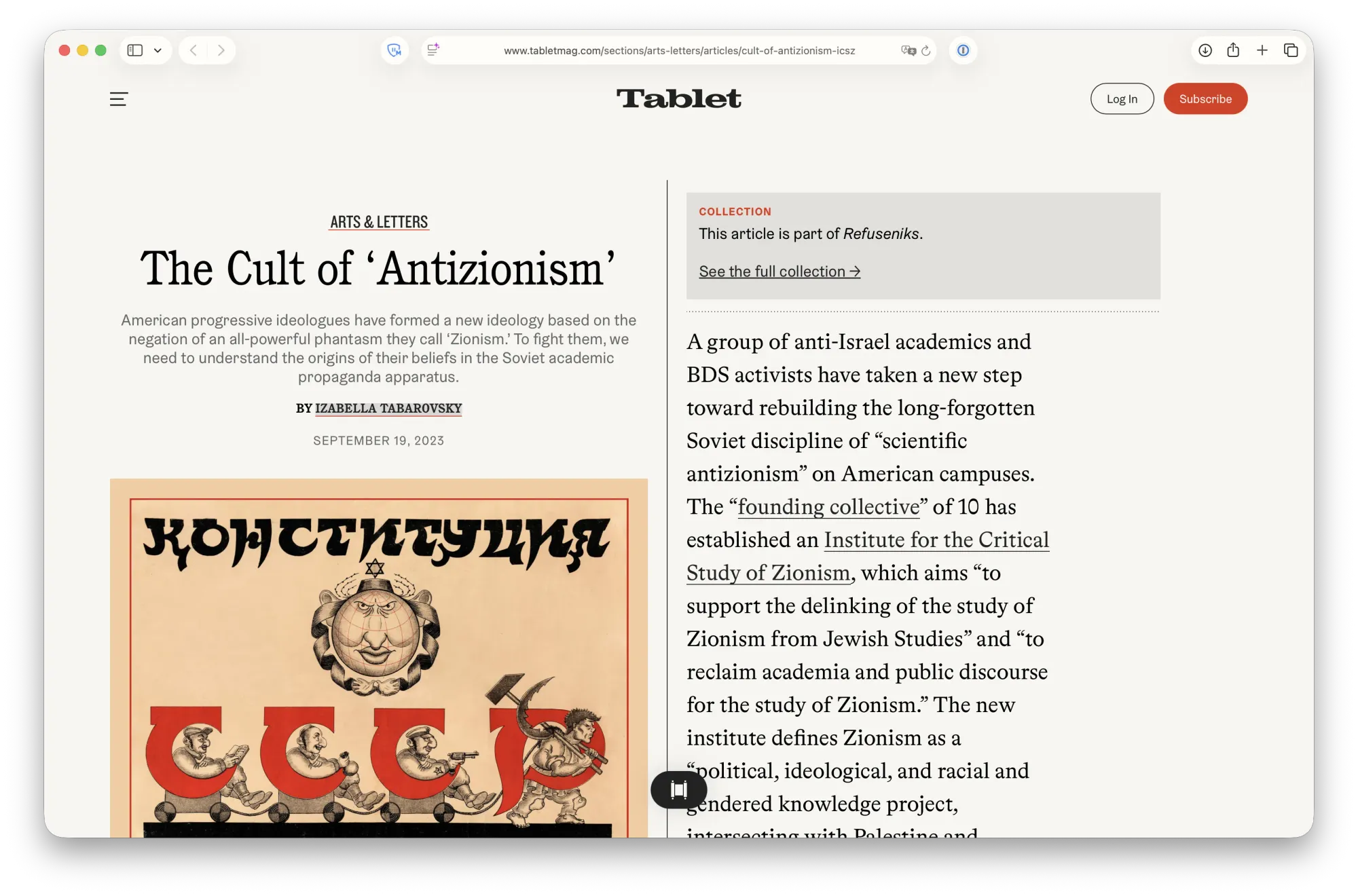
The Soviet’s anti-Zionist rhetoric had a clear internal logic. If Zionism could be equated with racism, and racism with fascism, then Israel itself could be depicted as a morally illegitimate state. More pointedly, it enabled a striking moral inversion: a state established in the aftermath of the Holocaust was cast as embodying traits associated with the very regimes that had persecuted Jews. The upshot was a massive Soviet effort to portray Israel as a racist, genocidal power akin to Nazi Germany.10
This framing found expression in international institutions. United Nations General Assembly Resolution 3379, which declared in 1975 that Zionism, unique among movements for national self-determination, “is a form of racism and racial discrimination,” represented a culmination of these efforts. Thereafter, accusations of genocide against Israel became a familiar feature of anti-Israel rhetoric, even as the Palestinian population of the West Bank and Gaza, captured by Israel in 1967, grew at among the highest rates in the world.11, 12
The fall of the USSR in 1991 and the beginning of the Oslo peace process between Israel and the Palestine Liberation Organization (PLO) in 1993 put a damper on this rhetoric for a time. But then Palestinian Authority chairman Yasser Arafat rejected Israel peace offers at Camp David and Taba in 2000 and 2001 in favor of a terrorist war against Israeli civilians that came to be known as the Second Intifada. Anti-Israel activists saw both a need and an opportunity to reframe public debate from Arafat’s intransigence and resumption of brutal terrorist activity to what they saw as Israel’s inherent illegitimacy.13, 14, 15, 16, 17
Genocide is not simply another word for devastating war, overwhelming force, or even a high rate of civilian casualties.
The upshot was that the genocide accusation reemerged prominently at the 2001 United Nations World Conference Against Racism in Durban, South Africa. The official diplomatic proceedings were marked by significant controversy,18 but it was the parallel NGO forum that proved especially influential in shaping subsequent discourse.19 There, amidst an orgy of antisemitic rhetoric, and the shameful spectacle of purported human rights NGOs openly hawking the antisemitic forgery The Protocols of the Elders of Zion,20 the official NGO final statement described Israel as an apartheid state guilty of “acts of genocide” and called for its international isolation.21
Following Durban, activists routinely accused Israel of genocide.22, 23, 24 The accusation was raised during multiple rounds of conflict in Gaza—in 2008–2009, 2014, and 2021—as well as at times when large-scale hostilities were not underway.25, 26, 27, 28 For example, Israeli efforts (ultimately wildly unsuccessful) to restrict the import of war material to Hamas-controlled Gaza were frequently depicted as genocidal.29
That continuity is important for understanding the speed with which the accusation resurfaced after October 7, 2023. Historically, genocide determinations have followed extended periods of investigation. In Rwanda and Srebrenica (Bosnia), the term was applied only after patterns of organized, identity-based killing had been clearly established. In contrast, accusations of genocide in the current conflict emerged almost immediately after the initial air strikes by Israel—before reliable casualty data existed and before patterns of conduct could be meaningfully assessed.30, 31
This sequence suggests a reversal of the usual analytical process. Rather than evidence leading to a conclusion, the conclusion preceded the evidence, shaping how subsequent events were interpreted. Once the label was applied, civilian suffering was readily understood as confirmation of a predetermined narrative of genocide.
For anti-Israel activists the accusation performed a strategic function in public discourse. Characterizing a military campaign as genocidal places it in a category that carries both legal implications and a profound moral condemnation. While the war in Gaza could have ended at any time with Hamas’s surrender and release of the hostages it took, the genocide allegation served to pressure Israel to cease hostilities on Hamas’s terms.
Meanwhile, Israel’s accusers ignored or evaded the governing legal standard for the crime of genocide. In Bosnia and Herzegovina vs. Serbia and Montenegro (2007), and again in Croatia vs. Serbia (2015), the International Court of Justice confronted a central question: How can genocidal intent, necessary for a charge of genocide to stick, be inferred from conduct in the absence of an explicit extermination order?
The Court’s answer was deliberately strict. For a pattern of conduct to establish genocidal intent, that intent must be the only reasonable inference that can be drawn from the evidence. If the facts can plausibly support another explanation, the inference of genocide fails.
This “only reasonable inference” requirement is not a minor doctrinal detail. It is the mechanism that preserves genocide as a crime of specific purpose rather than one inferred from tragic outcomes. If there is a plausible alternative explanation—such as the pursuit of military objectives in an armed conflict—the legal threshold is not met.
The Court applied this reasoning in Croatia vs. Serbia. Even in the face of widespread atrocities and ethnic cleansing, it declined to find genocide because the conduct could reasonably be explained as an effort to displace a population and secure territory rather than to destroy the group itself. In practical terms, the Court drew a sharp distinction: horrific civilian suffering, even if a matter of policy rather than an unintentional by-product of war, is not enough. A state’s conduct must be inexplicable except as an attempt to annihilate a protected group.
Applying that standard to Gaza highlights the difficulty of sustaining a genocide claim under existing law. Israel has articulated identifiable military objectives: dismantling Hamas’s military infrastructure, destroying tunnel networks embedded beneath civilian areas, preventing rocket attacks, and securing the release of hostages seized on October 7 and held by Hamas in Gaza.32, 33, 34
A standard that renders even morally justified wars against genocidal regimes themselves genocidal would cease to function as a meaningful legal test.
One may debate the proportionality of particular Israeli strikes, criticize specific tactics, or even argue that earlier Israeli policies were primarily responsible for the underlying conflict that led to the war. But as long as Israel’s state military objectives provide a plausible explanation for its conduct, the inference that the campaign is aimed at destroying Palestinians as a group cannot be the only reasonable interpretation.
Under the ICJ’s own precedents, that conclusion should carry significant weight—even if the Court’s future application of those precedents, given the polarized political environment in which it operates, is uncertain. Some contemporary legal arguments, including by countries hostile to Israel, implicitly acknowledge the constraint imposed by the existing standard and seek to revise, indeed, undermine it.
For example, Brazil has asked the ICJ to adopt a “balanced approach to dolus specialis, one that reflects not only the criminal law dimension but also the Convention’s overarching humanitarian object and purpose.”35 Belize, meanwhile, rejects the plain meaning of the Genocide Convention and subsequent precedent, and asserts that “there is no requirement that the State or individual act exclusively with genocidal intent.”36 Chile suggested adoption of “a fluid concept of intent,” based on “a holistic analysis of evidence.”37 All of these standards virtually invited subjective and politicized decision making, effectively transforming genocide from a crime of purpose into a crime of outcome, where civilian suffering, as such, is proof of genocide—at least if the suffering has sparked sufficient international outrage.
The drafters of the Genocide Convention rejected that approach. The 1948 Secretariat Draft explicitly distinguished heavy civilian losses in war from genocide, noting that such losses “do not as a rule constitute genocide” and fall instead within the domain of the laws of war. International humanitarian law governs how wars are fought—through rules of distinction, proportionality, and precautions. The Genocide Convention addresses something different: the intentional destruction of a group.
A further source of confusion arises from the ICJ’s January 2024 provisional measures order in South Africa vs. Israel. Many commentators—including international law scholars—have interpreted the Court’s finding that certain rights were “plausible” as a determination that an ongoing genocide was itself plausible.38, 39, 40
That is not what the Court held. At the provisional stage, the ICJ assesses whether claimed rights under the Convention are plausible and whether interim measures are warranted to protect those rights while the ICJ investigates and watches subsequent developments. As former ICJ President Joan Donoghue later clarified, the Court did not conclude that a plausible case of genocide had been established.41, 42 The distinction is significant, even if it has often been blurred in public discussion, and explains why the ICJ did not order an immediate halt to Israeli military actions.
To understand why the genocide accusation encounters these doctrinal obstacles, it is useful to consider how recognized genocides have been identified in practice. The Holocaust remains the clearest example. The Nazi regime did not kill Jews as a by-product of combat. It constructed an integrated system of annihilation: identification, registration, deportation, and industrialized killing. The Nuremberg Tribunal described this as a “record of consistent and systematic inhumanity on the greatest scale.” The key feature was not only the scale of killing, but its organization and purpose.
Similar patterns appear in later examples of recognized genocide. In Prosecutor vs. Akayesu (ICTR 1998), the killing of Tutsis by Hutus in Rwanda was described as “meticulously organized,” with roadblocks, identity checks, and targeted massacres of civilians. In Srebrenica, the ICTY found genocide based on the systematic separation and execution of Bosnian Muslim men and boys. In Cambodia, the Khmer Rouge implemented policies targeting specific groups for destruction, supported by centralized directives.
Across these cases, common elements recur: coordinated planning, identification of victims based on group membership, separation of civilians from combatants, and extermination as a state objective rather than a by-product. Genocide is organized destruction directed at a group as such, rather than simply large-scale civilian death in wartime.
The current war in Gaza presents a different pattern. Israel has been engaged in an urban conflict against a non-state armed group that operates within civilian areas, stores weapons in residential buildings, and maintains extensive tunnel networks beneath civilian infrastructure. These facts do not eliminate Israel’s obligations under international humanitarian law. But they do provide a framework within which the resulting destruction can be understood as part of a military campaign rather than as evidence of a policy of extermination.
Public debate often relies heavily on casualty figures, but here too careful distinctions are necessary. Estimates of total deaths in Gaza vary and are often drawn from sources that do not clearly differentiate between combatants and civilians.43 In some activist discourse, aggregate figures—sometimes cited, based on Hamas’s Ministry of Health’s data, as approximately 72,000, sometimes using entirely made-up figures of up to 500,000—are presented as evidence that Israel has killed or murdered that number of innocent Gazans.44, 45
Once the label was applied, civilian suffering was readily understood as confirmation of a predetermined narrative of genocide.
That formulation obscures several important points. Even taking Hamas’s 72,000 figure at face value, it includes combatants as well as civilians.46 The killing of enemy fighters in an armed conflict is not unlawful, much less genocidal. In addition, Hamas’s total likely includes individuals who died of natural causes during the course of the war,47 and those killed by Hamas and Palestinian Islamic Jihad, the result of either errant missiles or executions of political opponents.48, 49 The aggregation of all deaths into a single figure presented as evidence of criminal intent reflects a broader tendency to treat all harm associated with a conflict as a product of unlawful conduct.
This approach has analytical consequences. If the killing of combatants is treated as equivalent to the killing of civilians, and if all deaths are framed as evidence of wrongdoing, then the underlying objection is not limited to alleged violations of the laws of war. It is, more fundamentally, an objection to the existence of military action itself. In that context, allegations of war crimes or genocide risk becoming rhetorical extensions of a broader opposition to a particular war or even war itself—at least war waged by Western-aligned countries—rather than conclusions grounded in international law.
The tendency to infer intent directly from outcome without regard to intent is tempting in the face of large-scale suffering resulting from a military campaign by a state like Israel that has many ideologically motivated enemies. But the structure of genocide law is designed to resist that inference.
Comparative examples reinforce the accepted distinction between deliberate annihilation and other military operations that cause civilian harm. The Battle of Mosul (Iraq) against ISIS in 2016–2017 resulted in extraordinary destruction; large portions of the city were damaged or destroyed, and thousands of civilians were killed. ISIS embedded its forces within civilian areas and used civilians as shields, complicating targeting decisions and magnifying the human cost. The devastation was widely recognized as horrific. Yet no serious legal analysis characterized the campaign as genocide. It was understood, instead, as brutal urban combat against an entrenched armed group.
The same logic applies in earlier conflicts. The Allied invasion of Normandy resulted in tens of thousands of French civilian deaths. The objective was to defeat Nazi Germany and liberate occupied Europe. If the scale of civilian harm in urban warfare were sufficient to establish genocidal intent, such operations would fall within the definition of genocide. A standard that renders even morally justified wars against genocidal regimes themselves genocidal would cease to function as a meaningful legal test.
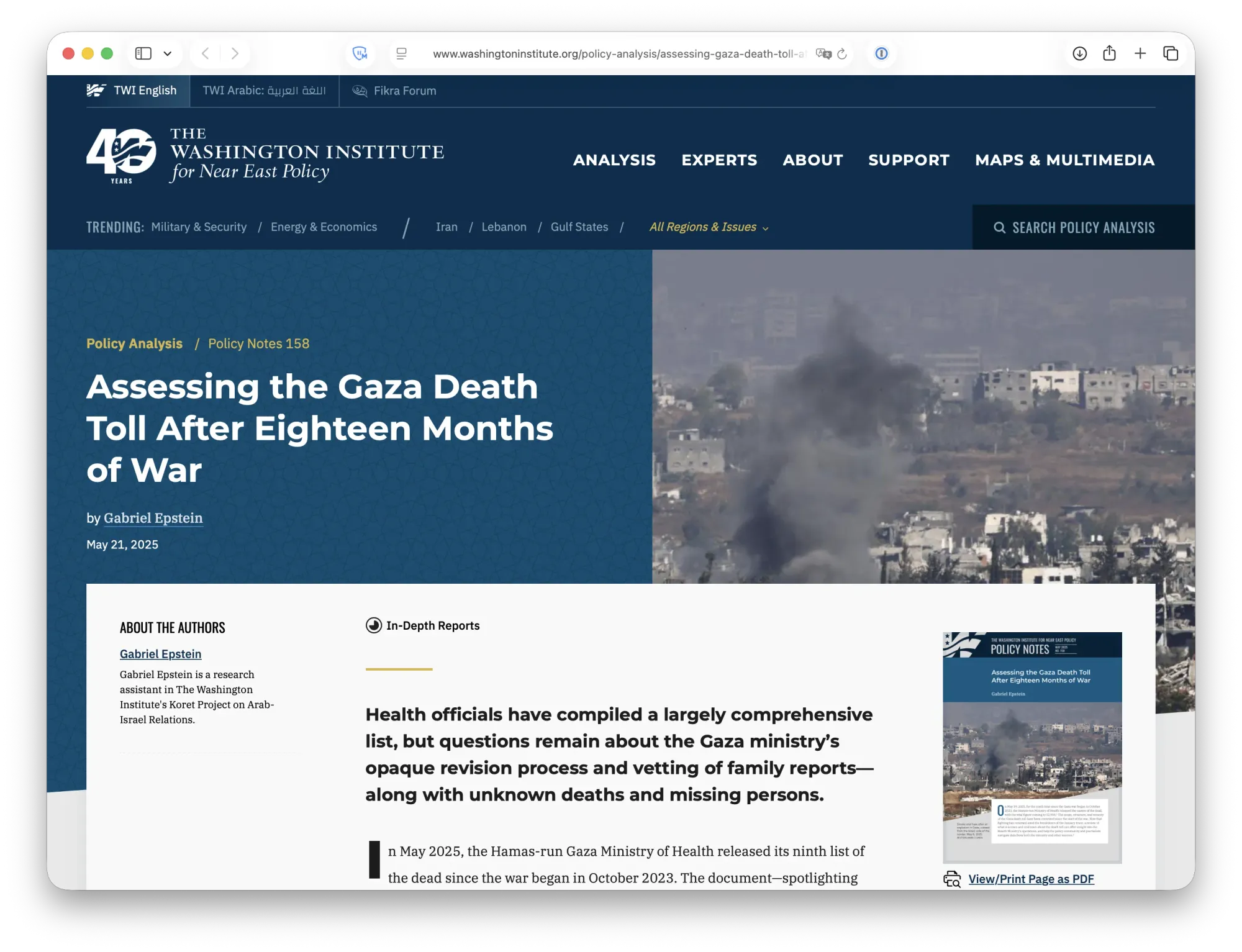
Casualty data in Gaza, often invoked in public debate, do not alter this analysis when examined carefully. Estimates of civilian-to-combatant ratios in Gaza remain contested and should be treated with caution.50 Suffice to say that even the higher figures—at least those that have a reasonable basis in the available data51—are far from inherently damning. This is especially true when one considers that the international community resolved that—contrary to international law and Egypt’s treaty obligations—the vast majority of civilian Gazans would not be permitted to flee the conflict, unlike civilians caught in other wars. Egypt’s lengthy border with Gaza remained firmly shut to refugees, save for those with the resources to provide Egyptian officials with substantial monetary payments (that is, bribes).52
Further eroding the case for genocide is the military mismatch between the parties. Israel possesses overwhelming military capabilities, including one of the most powerful air forces in the world. If the objective were the destruction of Palestinians as a group, Israel could have easily killed hundreds of thousands of civilians within the first month of the war. Genocidal campaigns historically involve efforts to maximize destruction. By contrast, Israel has employed a range of measures associated with attempts to mitigate civilian harm, including warning civilians of an impending strike, issuing evacuation orders before military advances, and implementing humanitarian pauses and corridors to facilitate aid delivery.53, 54, 55 Every non-exigent military strike was approved by military lawyers trained in international law who reported only to other lawyers. Israel even facilitated a vaccination campaign that resulted in over half a million Gazan children being vaccinated for polio.56, 57 The existence and use of such measures do not resolve all legal questions, but they cannot be reconciled with an inference of exterminatory intent.
Meanwhile, approximately two million Arab citizens of Israel—most of them ethnically Palestinian—live within the state, participate in its political system, and serve in public institutions. In recognized genocides, the targeted group is not simultaneously incorporated into the political and civic life of the state alleged to be pursuing its destruction.
Claims of Israel’s genocidal intent are sometimes supported by reference to isolated statements by Israeli public officials. Famously, Prime Minister Benjamin Netanyahu analogized Hamas to Amalek,58 an ancient genocidal enemy of the Jewish people that according to Jewish tradition reappears in different guises throughout history. This remark was wildly misconstrued to mean that, first, all Gazans were Amalek, and, moreover, their status as Amalek meant that they all should be killed.59 The latter accusation was based on a misinterpretation of a biblical verse distinct from the verse Netanyahu quoted;60, 61 the latter verse, instead, reminds the people of Israel to remember what the Amalekites did to them.
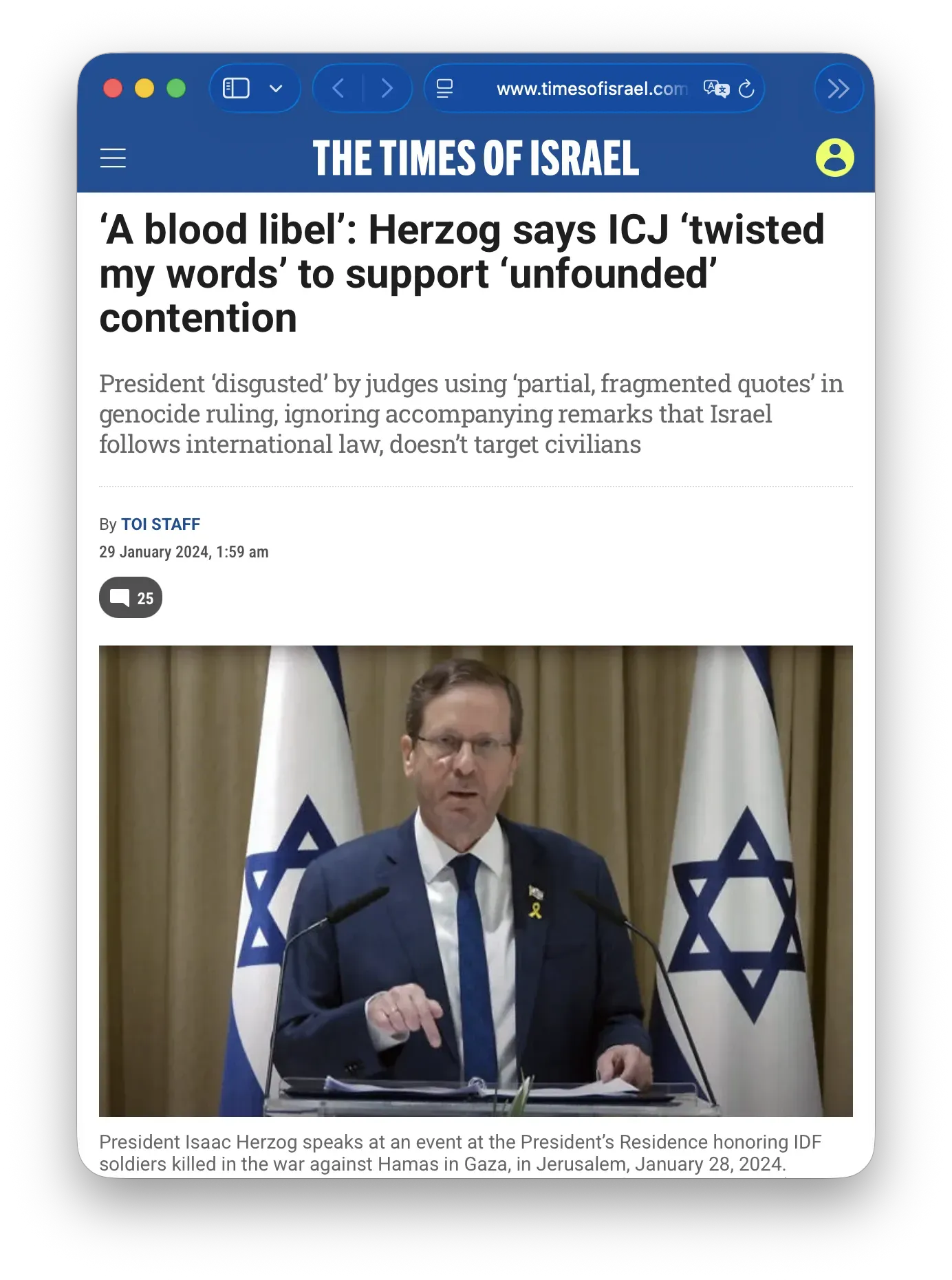
Similarly, a statement attributed to Israel’s president Isaac Herzog to the effect that Gazan civilians bore collective responsibility for Hamas’s Oct. 7 atrocities is frequently cited as evidence of genocidal intent.62 Putting aside the fact that this statement is taken out of context,63 and Herzog immediately thereafter pledged that Israel would obey the laws of war,64 Israel’s presidency is largely ceremonial and does not direct military operations. Stray statements made from outside the relevant military and political chain of command cannot possibly show genocidal intent.
As noted previously, some legal advocates pressing the genocide claim against Israel argue, explicitly or implicitly, that the definition itself must be adjusted to fit the facts of Gaza.65 In other words, verdict of genocide first, and—if necessary—we will manipulate the law to support the preconceived outcome. South Africa, which brought a genocide claim against Israel to the International Court of Justice just three months into the war, argues that intent, rather than being the only reasonable inference from a state’s conduct, may be inferred by extensive civilian death and suffering.66

Given South Africa’s prominent role in the proceedings and propaganda war against Israel, this argument is especially notable. Redefining genocide in this way would have implications that would extend well beyond the Gaza conflict. Any state engaged in combat against an armed group embedded within dense civilian environments would face the risk of genocide accusations whenever the level of civilian casualties provoked moral outrage by a vocal segment of world opinion. The term would cease to function as a precise legal category and would instead become a more general instrument of political and moral condemnation, weaponized to prevent certain disfavored militaries from pursuing legitimate military ends.
For some activists, this is undoubtedly the goal. Israel, beyond its own unpopularity among Islamists, Arab nationalists, and self-styled “anticolonialist” leftists, is the “canary in the coal mine” for a set of legal tactics designed by anti-Western forces to render liberal democracies unable to defend themselves against non-state actors.
Israel currently operates under some of the most restrictive Rules of Engagement of any modern armed forces.67, 68, 69, 70 The Israel Defense Forces use tactics—such as “roof-knocking” (warning civilians of an impending strike), sending millions of text message evacuation alerts, and dropping millions of leaflets—that were virtually unheard of previously to limit civilian harm.
By accusing the most legally regulated military in the region of genocide, activists seek to create a new, impossible “Floor of Illegality.” If the IDF’s conduct can be successfully branded as genocide, then the same legal precedent can be used against the United States or NATO in any future conflict against groups like ISIS or Al-Qaeda.
A sober analysis requires acknowledging both the scale of suffering in Gaza and the limits of the legal concepts used to describe it. Civilian harm is real and devastating. Allegations of violations of the laws of war deserve careful investigation.
Raphael Lemkin’s understanding of his genocide neologism was meant to identify a specific and extreme form of human destruction. Preserving its meaning requires resisting its expansion into a catch-all term for wars that produce severe suffering. If the term is applied whenever urban combat yields tragic results, it will lose its capacity to distinguish the phenomenon it was created to describe.
In that sense, the stakes are not limited to this conflict. The question is whether genocide will remain a narrowly defined crime of intentional group destruction, or evolve into a broader label applied whenever motivated activists disapprove of a war that causes significant civilian harm. The former preserves a critical legal and moral distinction. The latter risks dissolving it.
[ad_2]
Source link
