
[ad_1]
In one of the scariest moments in modern history, we're doing our best at ScheerPost to pierce the fog of lies that conceal it but we need some help to pay our writers and staff. Please consider a tax-deductible donation.
H. Patricia Hynes for Informed Comment
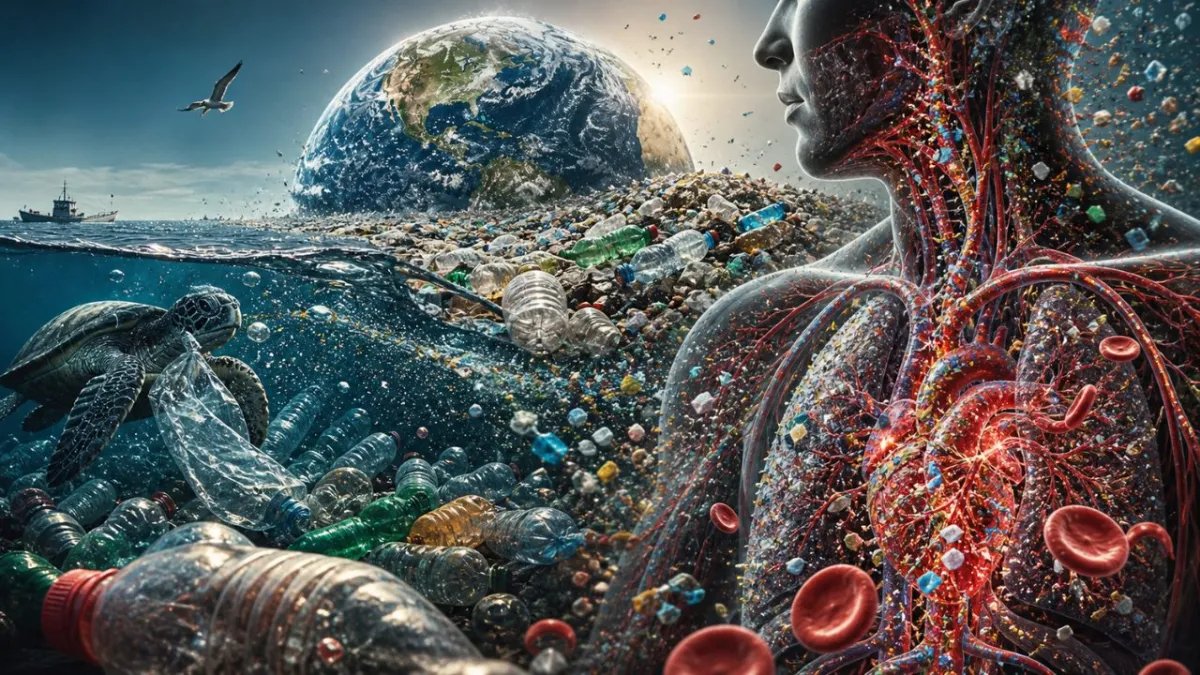
Microplastics, those miniscule particles smaller than 5 millimeters which plastics physically break down into, have now infiltrated every part of the planet – from the highest point of the Himalayas; to the deepest depths of the sea; to the snow of Antarctica. They penetrate all layers of ocean and are often mistaken for zooplankton and consumed by fish. Consequently, people of coastal countries and islands who are highly dependent on the sea for food are consuming microplastic contaminated fish.

Scientists have recently detected microplastics in human blood, breast milk, heart arteries, lungs, testicles, brains and placentas, foreboding serious human health consequences.
A 2024 study found that 99 percent of seafood samples in stores and West Coast fishing boats were contaminated with microplastics. Plastics, made from oil and gas and toxic chemicals and manufactured largely in poor, communities of color in Texas and Louisiana, are a major source of greenhouse emissions and air pollution. Plastic recycling is a master myth, given 5-6 percent are actually recycled in the U.S. as of 2021, despite a century of existence.
When I first learned that plastic flakes filled my lightweight winter jacket, I thought “great” – recycling plastic rather than throwing it away. But I have since learned what Judith Enck, author of The Problem with Plastics, and other critics prescribe: the best thing we can do is Reduce the use of plastic in our lives, if we are ever to bring our planet back from this runaway pollution. Yes, we can re-use as much as certain plastic allows, which is not back to itself like wood, paper, metal, and glass. It is “down-cycled” at best, like the filling in my jacket, before disposed in a landfill, or incinerated, or dumped unconscionably in a poor, developing country.
Invented a century ago, plastic is now ubiquitous, having increased from about 2 million tons annually in 1950 to one half billion tons a year today, and projected to triple by 2060. Plastics are derived from fossil fuels, which are converted into chemical components such as ethylene and propylene – the building blocks for plastics. They were first manufactured as nylon and PVC, then boosted by use in WWII and subsequently Increased by the middle-class love affair with single-use products, such as straws, coffee cups, and water bottles. Agricultural fields are polluted with plastic through the use of plastic-contaminated sewage sludge. irrigation water, and plastic films to suppress weeds. These then decompose into microplastic and enter streams, rivers and, ultimately, the ocean.
With the growth of renewable technologies replacing fossil fuels, oil and gas corporations are aggressively promoting plastics, such that greenhouse gases from plastics are poised to surpass those of coal. Because of the plethora of toxic chemicals added to it, plastics are now associated with the rise of non-communicable diseases such as diabetes, reproductive cancer and cardiodiseases.
The plastics industry aims to account for one-half of oil and gas demand by 2050, unless (and that is a questionable unless) the world’s countries can reverse the failed 2025 Plastics Convention.
What we can do
Stop using single-use plastics, which constitute some 40 percent of plastics today. This would immediately reduce throwaway plastic, greenhouse gas emissions, our exposure to hundreds of toxic chemicals in plastic, and diminish ocean pollution. Further, critics advocate never using plastic to package food because research shows that chemicals can migrate from plastic food packaging into food.
One thousand strategies with tens of thousands of people in the lead advocating for city, state and federal bans on single-use plastics are needed. Surveys indicate that the public (both Republicans and Democrats) support ‘a pause’ in new manufacturing facilities and legislation to protect oceans from further plastic pollution.
Beyond Plastics provides a guide for Meals on Wheels, restaurants and dry cleaners to reduce use of throwaway plastics and also invites organized groups to join them as an affiliate and to use the model legislation they provide.
Women lead the charge against plastics. Author Judith Enck recounts the story of nearly a dozen women, some from Cancer Alley and the Gulf Coast, whose unstinting activism has blocked plastic industries from their neighborhoods.

Image by Pete Linforth from Pixabay
For decades the US and higher-income countries have exported much of their plastic waste to low-income countries – an environmental injustice on a massive scale. Researchers found that poor people living in more than 25 developing countries burn the flammable plastic waste to cook and heat their home, making plastic pollution a “daily health and survival issue.” Women in poor countries., responsible for all the household chores and childcare, inhale disproportionately these toxic plastic fumes. Additionally, smoke from chimneys in packed slum neighborhoods contaminates everything: people, water sources, soil and crops.
Plastics, “the terrible debris of progress,” is an immense environmental injustice. We must stop this juggernaut.
H. Patricia Hynes is an ardent feminist who has worked for environmental justice for communities of color and women’s rights for years. An environmental engineer, she was Professor of Environmental Health at Boston University’s School of Public Health and author of 6 books, among them The Recurring Silent Spring, which was nominated for the 1990 Gustavus Myers Center for the Study of Human Rights Award and A Patch of Eden: Community Gardens in Inner Cities which won the 1997 National Arbor Day Foundation Award. She is a member of the Traprock Center for Peace and Justice, which she directed for 11 years.
Editor’s Note: At a moment when the once vaunted model of responsible journalism is overwhelmingly the play thing of self-serving billionaires and their corporate scribes, alternatives of integrity are desperately needed, and ScheerPost is one of them. Please support our independent journalism by contributing to our online donation platform, Network for Good, or send a check to our new PO Box. We can’t thank you enough, and promise to keep bringing you this kind of vital news.
You can also make a donation to our PayPal or subscribe to our Patreon.
Please share this story and help us grow our network!
[ad_2]
Source link
