
The Committee for Skeptical Inquiry (CSI) underwent some significant changes after it entered its fourth decade—while remaining true to its core mission. Those changes allowed CSI not only to continue to carry on its important work but revitalized the organization.
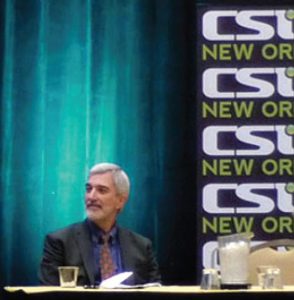
In June 2008, I became the president and CEO of the Center for Inquiry as well as CSI and the Council for Secular Humanism, the trinity of critical thinking, if you will. Unlike the case with the Christian Trinity, however, there was the perception by some that, at least as of 2008, there was less than complete harmony and coherence in the missions and activities of this secular triad.
As James Alcock related in his excellent history of the founding of CSICOP in the January/February 2026 Skeptical Inquirer, Paul Kurtz was instrumental in organizing the Committee for the Scientific Investigation of Claims of the Paranormal (CSICOP) in 1976. At the time, Kurtz was editor of The Humanist magazine as well as a member of the board of directors of the American Humanist Association (AHA). Indeed, the founding meeting of CSICOP took place in conjunction with an AHA conference. All this by way of saying that in addition to his interest in promoting scientific inquiry and combatting pseudoscience, Kurtz had a profound interest in secular humanism with its focus on promoting philosophical naturalism, freedom of inquiry, personal autonomy, and critical examination of religious claims.
Kurtz left AHA (many different versions of their split can be found) and in 1980 founded the Council for Democratic and Secular Humanism (CODESH), later shortened to the Council for Secular Humanism (CSH). Kurtz served as the chair of both organizations. In 1991, he founded the Center for Inquiry (CFI), technically what the IRS classifies as a supporting organization (that is, providing production, technical, staffing, and related support to CSI and CSH). From its inception, however, it was tacitly understood that CFI would assist in integrating the work of CSI and CSH. Or that was the hope. To ensure neither “skeptics” nor “humanists” would dominate the CFI board, the bylaws explicitly provided that three board members would be selected from the CSI board and three from the CSH board, along with one or more at-large members. In practice, the at-large member was Kurtz. Although this mandated parity of directors calmed concerns that CSI would be subordinated to humanists or CSH subordinated to skeptics, it also had the unfortunate effect of reinforcing the (in my view) mistaken notion that skeptics and humanists were pursuing markedly different missions.
Although Kurtz never lost interest in CSI’s work, it is fair to say that by 2008, his attention was directed more to the humanist side of the ledger. Most major conferences, for example, were heavily weighted toward humanist speakers and topics. In fact, by the time I became CEO, no CSI national conference had been held for several years. Kurtz not infrequently remarked to me and Barry Karr, the executive director of CSI, that “skeptics don’t give money” and on a couple of occasions dismissed the work of “Bigfoot skeptics.”
I was of the view that CSI’s work was no less important than CSH’s work, in part because I saw the work of both organizations as sharing the goal of inculcating the habits of critical thinking. Their focus might be different, but at bottom they were both educating the public on how to critically examine claims too often accepted by the public and the media without any analysis, whether it is a matter of acupuncture or angels, Reiki or reincarnation, homeopathy or hell. Moreover, both organizations promoted and encouraged reliance on science by, among other things, emphasizing the proper teaching of evolution and the need to guard against the distortion of science, whether by a secular ideology or religious dogma.
In close consultation with Karr, Ken Frazier, Jim Underdown, and others with long experience with CSI, there were several initiatives I greenlighted with the aim of reinvigorating CSI. To begin, we decided to restart annual conferences. Thus, the first CSICon took place in New Orleans in 2011. (See Frazier’s report on that conference in the March/April 2012 SI.) Perhaps one reason CSI donations lagged a bit behind CSH donations was that CSI’s public visibility had diminished.
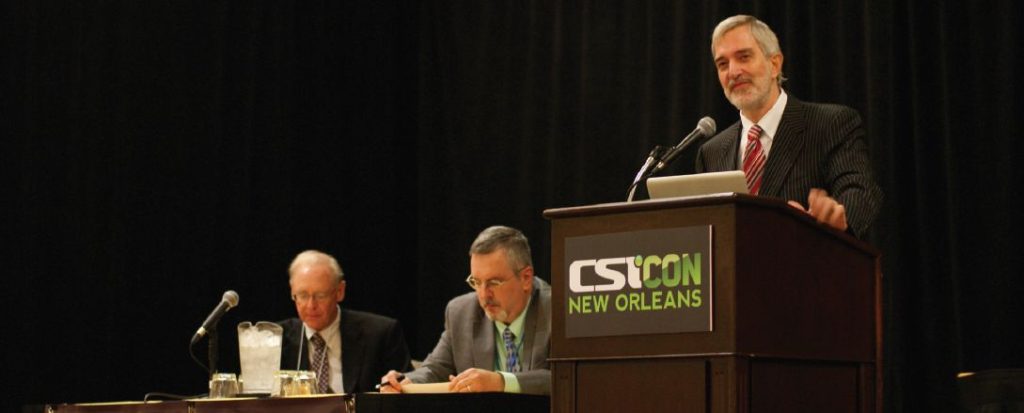
Admittedly, we were taking a financial risk—and that risk came to fruition. We took a bath on the first CSICon. The thing is, CSI had more or less ceded the ground for skeptic conferences to the James Randi Educational Foundation with its highly successful The Amazing Meeting (TAM). But CSI had to get back in the game. Over time, CSICon became the annual conference for skeptics, and it is with pleasure that I look forward to the upcoming CSICon this June in Buffalo, New York (visit csiconference.org to see the schedule).
Another initiative CSI undertook was to become more directly involved in public policy debates. Obviously, as a nonprofit CSI is politically nonpartisan, but that does not preclude the organization from advocating for science-based policy. For example, CFI/CSI petitioned the Federal Drug Administration (FDA) for tighter regulation of homeopathic products. In 2015, both the FDA and the Federal Trade Commission (FTC), which has jurisdiction over product advertising, held hearings on the need for such regulation. We submitted comments to both agencies, and Michael De Dora, CFI’s director of government affairs at the time, testified at the FDA hearing. (Interestingly, other than a professor from Georgetown University, De Dora was the only witness who argued for tighter regulation. Most of the witnesses at that hearing were representatives of the homeopathic industry.) CSI also became more heavily involved in debates over the safety of vaccines and the proper government response to climate change.
Corporate reorganization was also on our agenda. The multiplicity of organizations (there were actually two other affiliated corporations, a holding corporation and the development fund, in addition to CSI, CSH, and CFI) was a huge administrative and financial burden. Each corporation had to keep separate books, be separately audited, submit separate filings, and so forth. After significant legal maneuvering—the original CFI had to be dissolved because it could not exist on its own as a supporting organization—one unified organization emerged. Both CSI and CSH continued their work, but they were now programs of CFI. In addition to the financial savings, arguably more importantly the unification of the organization ensured that there was no longer any question of favoring humanists over skeptics or vice versa. The unified organization promotes science and freedom of inquiry and uses critical reasoning to examine all claims with the only difference being the type of claims typically scrutinized.
Finally, serving as an exclamation point for this unified, reinvigorated mission, at the end of my tenure I helped bring about the merger of the Richard Dawkins Foundation for Reason & Science with CFI. What better way to emphasize our integrated work than to join forces with one of the world’s most preeminent scientists and advocates for scientific, evidence-based examination of all claims, whether secular or religious.
CSI has a secure foundation. As it now enters its sixth decade, I am confident it will be around as long as there is a need for science-based, critical examination of controversial, extraordinary, or pseudoscientific claims—which, given human nature, may be a long time.
