
[ad_1]
Photos: Rodney Cammauf / NPS and public domain.
In February, Douglas Dixon was arrested by Immigration and Customs Enforcement (ICE), and taken to a Florida migrant detention camp. This month, Dixon was deported back to Canada. Dixon, a dad and grandad who ran a Tropical Smoothie Café in Port Charlotte, Florida, was a legal permanent resident of the United States. Covid forced him to shut down the business. He fell behind in his taxes. Before the arrest, which separated him from home and family, he was delivering groceries for DoorDash.
Dixon wound up at Florida’s first state-run migrant detention camp, opened in 2025 at the Dade-Collier Training and Transition Airport in Ochopee. It’s a large installation, meant to store some 3,000 people. Dixon spent more than a week of his 65 days in detention caged in a communal cell with 16 bunk beds, two urinals, and one toilet for 32 men. He found it impossible to sleep because of the crowding and commotion. Most of the others were Cuban or Venezuelan, Dixon told Canadian media. “These people all have families. Everyone is pulling for everyone else. They were working and were in there for nonsense reasons.”
No doubt you’ve heard the place called Alligator Alcatraz. But we are not amused to see our taxes spent on signs for Alligator Alcatraz, Detention Depot, and other grotesque, smart-alec nicknames. A detention camp is no joke for the migrants and legal residents who are plucked from homes and workplaces and streets and thrust into something resembling Dante’s Rings of Hell. Inside the metal fencing, many are warehoused for indefinite periods, even though some have made valid claims under the UN Convention Against Torture.
Betty Osceola, a member of the Miccosukee Tribe of Florida and the Panther Clan and an advisor to Florida International University’s Global Indigenous Forum, has spoken of the importance of teaching the value of empathy to our younger generations. In the detention camps, empathy is missing. Human life is mocked. Accounts of abuse, neglect, and deaths have arisen repeatedly.
The Ochopee detention camp is installed on land federally recognized as sacred to several of Florida’s indigenous communities. The Miccosukee people objected to a detention site being built without consultation with the tribes. That alone ought to have stopped it. For the matter of whether the U.S. government can house people on tribal land is a question from sovereign to sovereign. Yet Florida simply seized land in Big Cypress National Preserve at the behest of the Department of Homeland Security, with the enthusiastic assent of the state governor, in order to serve an invidious immigration policy.
Betty Osceola began holding prayer vigils outside the camp. Friends stepped up to amplify Miccosukee concerns. Quakers with Southeastern Yearly Meeting’s Peace & Social Concerns Committee produced a Statement of Accompaniment for the Miccosukee filings in Friends of the Everglades v. Noem, a legal action to confront the continued desecration of these public, spiritually significant, and environmentally critical lands.
In a time of climate turmoil, more is at stake than ever.
Accompaniment for Big Cypress and Its Living Communities
Big Cypress, the first U.S. national preserve, protects 729,000 acres of Florida wetlands that send clean water across the Greater Everglades. The area is home to many Florida species of particular concern to conservation ecology. Florida International University ecology professor John Kominoski, leader of the Florida Coastal Everglades Long Term Ecological Research Program, has spent years teaching the public why the Everglades needs humanity’s beneficial attention.
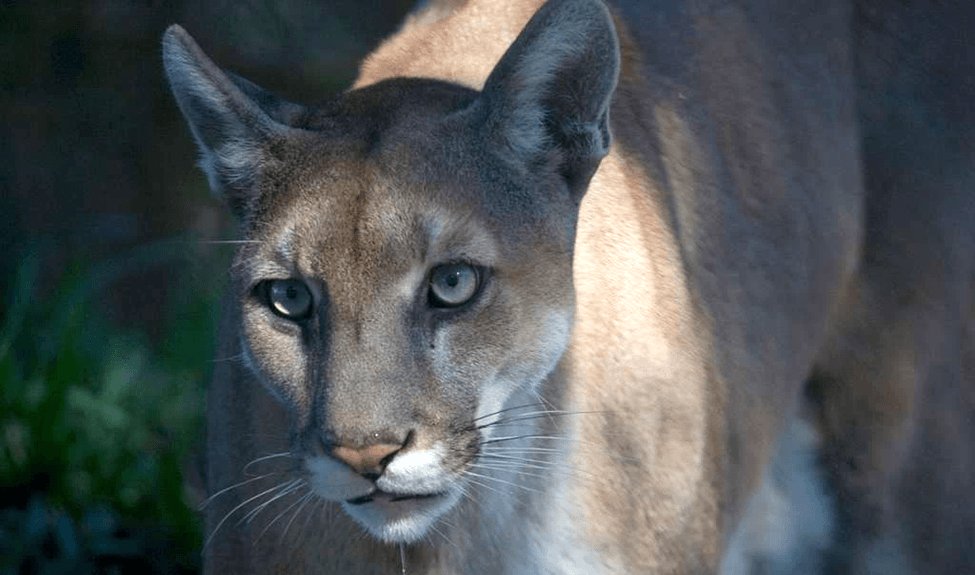
Consider the Florida panthers. They need a habitat larger than metropolitan Orlando, Kominoski explains, to breed successfully. Yet human development has fragmented Florida’s wetlands to control hydrology, grow sugar and other crops, and build resort towns, continually reducing the panther’s habitat. Efforts to increase and connect habitat include the Comprehensive Everglades Restoration Plan—the largest effort of its kind in the world, supported by state and federal partnerships.
The detention camp and attendant infrastructure represent yet another source of built structures, traffic, pollution, and habitat loss. Documented evidence shows the big cats have walked on a disused runway that the detention camp was built on and around.
American alligators, who feature in the sarcastic nickname for the detention camp, are named by the National Park Service as a keystone species of the Preserve. It is illegal to provoke them—or any other living communities in the wetlands ecosystem. Florida red-bellied turtles pick alligator nests as protective spots to hatch their young. Water stored in alligator holes sustains marsh life through Florida’s dry stretches.
To Protect the Climate, Protect South Florida Wetlands
If you were asked to point to a key ecosystem to our planet’s climate, you might do well to choose South Florida’s restored wetlands. They capture some 14 million metric tons of CO2 from the atmosphere each year. That’s equivalent to around 10% of the state’s transportation emissions. Wetlands emit methane, yet the power of the mangroves to absorb CO2 more than makes up for this. The net result? An 18% reduction in total greenhouse gas across the region. In short, South Florida’s restored wetlands are, to borrow the words of NASA researchers, champions of carbon capture.
Working with NASA scientists within the Everglades National Park and Big Cypress National Preserve are five universities, Florida International University included. For a quarter-century, this collaboration has developed sensitive research technology, using NASA and satellite data. Millions of dollars have been invested in the work.
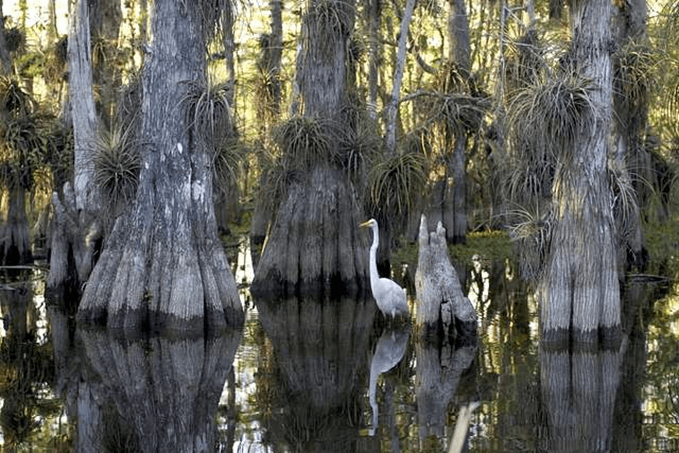
The latest challenge researchers face? How wetlands can make it through climate-related sea level rise. Salt water infiltration is dangerous; it kills healthy marsh life. Protected freshwater marshes are essential for all the big reasons: to filter water, to secure habitat, to store carbon. All of this underscores the value in the protections of U.S. environmental laws.
Under the National Environmental Policy Act (NEPA), federal agencies must consider the environmental impact of major actions that could significantly affect the human environment. Notably, drinking water for more than seven million Florida residents comes from this ecosystem.
Yet much more is at stake here. While funds are spent on infrastructure that degrades this ecosystem, money is urgently needed for reparative work.
Under NEPA, decades ago, the site was not allowed to be degraded by the addition of a new jetport. But now, on that very site, here’s a migrant warehouse. Here’s more asphalt, which can alter natural water flow, increase water runoff, and help spread pollutants that kill aquatic life. Artificial lighting, noise, traffic, fences and barbed wire do not belong in this space and it’s appropriate for people of conscience to make this clear.
Moreover, any state and federal resources allocated to forming this detention camp, and others being planned for various parts of the state and beyond, are no longer available to meet residents’ critical needs.
“We must have greater concern for climate chaos affecting our region,” said Warren Hoskins, co-clerk of the Peace and Social Concerns Committee of Southeastern Yearly Meeting. Hoskins decried the “anticipated impacts of expected severe weather events in the absence of meaningful federal assistance and the aftermath of diversion of state emergency funds to building immigrant detention sites.”
We Must Be More Than Bystanders
In August 2025, a federal court halted activity at the Ochopee migrant detention site. But an appeal from the government is holding the site open. The federal appeals court heard oral arguments on the case on April 7. Two of three panel judges may be disinclined to uphold the injunction issued by U.S. District Judge Kathleen Williams (based on the panel judges’ stated opinion that Florida’s in charge–not the feds, who are responsible for following NEPA). The arguments can be heard here.
Again, this is only one of a growing number of migrant detention camps being installed across Florida and in various areas of the country. Meanwhile, as a heated equatorial climate takes its toll on crop harvests, migration is becoming a human imperative. And people will come—to what end? To be caged for indefinite terms? To be turned into an ever-available workforce? Detainees have sued the GEO Group corporation (market cap $2.36 billion as of April 2026) for forcing them to work for $1 a day. To add another ring to the legal hell, GEO Group maintains it enjoys sovereign immunity from lawsuits because the company is acting at the behest of the government. GEO promises investors it’s “preparing for what we believe is an unprecedented opportunity to help the federal government meet its expanded immigration enforcement priorities.”
We the People of these United States had better have a talk with ourselves about our purpose and our humanity. And as government actors do harm to Indigenous folk, migrants, and the living communities with whom we share our planet, we call on concerned people everywhere to join us in a movement of accompaniment.
Concerned readers may check into the ongoing legal work, and vigils sustained by Betty Osceola, the Workers Circle, and other faith-based and environmental groups. Form a local group to stop ICE in your area. Don’t just be a bystander.
[ad_2]
Source link
