
[ad_1]
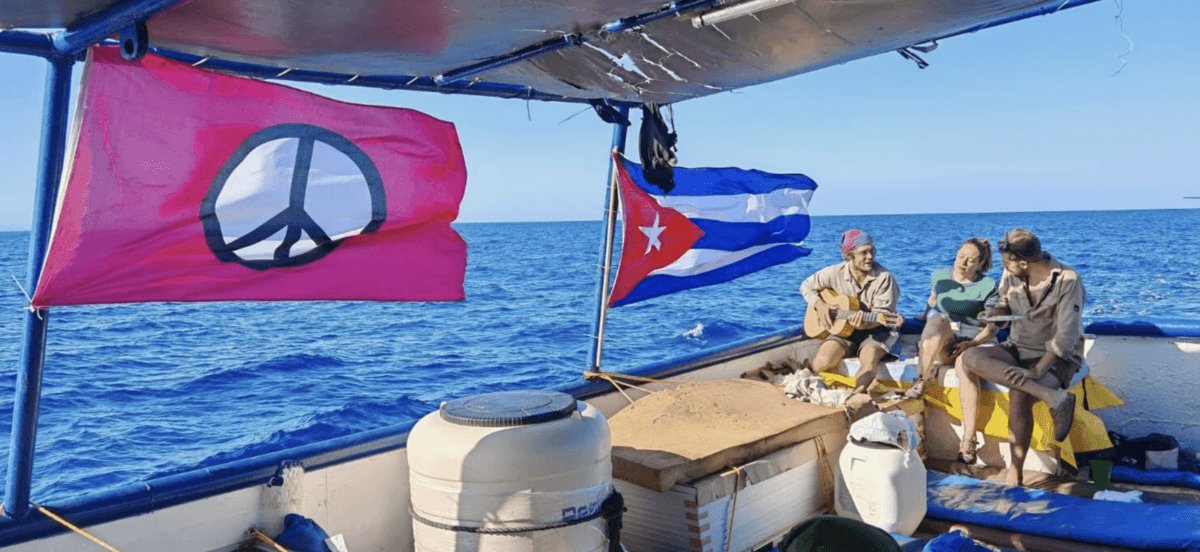
Image courtesy of CodePink.
Flotillas have historically been fleets of military vessels—tools of empire designed for swift offensive or defensive operations at sea. The images they evoke are ones of imperial power and looming violence. Just look at the massive US naval buildup that surrounded Iran as part of the recent US attacks.
But peace activists have also developed a new kind of flotilla.
Instead of instruments of war, flotillas have become symbols of peace—acts of humanitarian direct action, civil resistance, and cross-border solidarity. Take the flotillas that have tried to reach Gaza, like the Global Sumud Flotilla. Even though they have been illegally intercepted by the Israeli military, they have educated millions of people worldwide about Israel’s atrocities, activated entire cities to shut down, and offered a beacon of hope to the beleaguered people of Gaza.
As U.S. policy continues to sanction and blockade Cuba—causing immense hardship for the Cuban people—I, along with many others, felt compelled to escalate our own tactics of solidarity by joining the recent flotilla to Cuba as part of the Nuestra América Convoy. Our boat carried 15 tons of aid, part of the more than 40 tons delivered by the convoy.
The United States is currently imposing some of the harshest sanctions on Cuba in recent history, compounding a 67-year blockade that has restricted access to medicine, fuel, and food. But in recent months, the US added another dimension: a naval blockade to severely limit fuel imports, leading to a humanitarian crisis.
In an ideal world, we wouldn’t need fossil fuels—we would already have made a just transition to renewable energy. And while Cuba is working at lightning speed to expand solar power, the current reality is stark: people still need fuel to cook, to transport food, to operate ambulances, to power hospitals, and to keep ventilators running.
The international community has responded to this escalation in U.S. economic warfare with intensified solidarity. Hundreds of thousands of people around the world have been mobilizing to send aid and condemn the US blockade. In March, Progressive International, CODEPINK, and The People’s Forum launched the Nuestra América Convoy, bringing together over 600 people from 33 countries. We came with millions of dollars’ worth of aid—from urgently needed medical supplies to longer-term solutions like solar panels.
While many of my friends boarded planes to Havana, packing every inch of their luggage with medicine, hygiene products, vitamins, and art supplies, I traveled to Mexico to meet the flotilla crew. We spent four days at sea together—activists, journalists, organizers. Some had helped organize the Gaza Sumud Flotilla; others had taken part in mass protests in solidarity with Palestine.
Our goal was to deliver much-needed aid to the people of Cuba. But just as important was challenging the dominant narrative—that Cuba’s suffering is the result of its own government, rather than decades of U.S. cruel policy.
Even though the boat was full of journalists documenting the trip, their cameras could not fully capture the sense of community among strangers united by a shared mission. I remember being nervous about the cold and the possibility of seasickness, but within minutes, people were offering ginger chews, acupressure bracelets, and rain gear.
Our departure was delayed due to weather, boat repairs, and the logistics of loading the aid. In the meantime, we stayed with supporters in Mexico who couldn’t join the voyage but found other ways to contribute. We shared a send-off dinner at an Egyptian restaurant whose owner had followed the Gaza flotillas. He told us how proud he was to see a flotilla to Cuba leaving from his small town.
On the boat, we shared cooking, dishwashing, and night watch shifts—standard practice in occupations, encampments, and direct actions where resources are limited but creativity and collaboration are abundant. At sea, a simple breakfast of rice, beans, eggs, guacamole, and toast tastes like a feast. We slept under galaxies of stars, woke to sunrises on the horizon, and at sunset made music with whatever we had—a guitar, a bucket drum, water bottles filled with dry beans.
Meanwhile, I stayed connected to those traveling by plane, watching group chats fill with photos of carefully packed bags and urgent questions: Who can fit more supplies? How many solar batteries can we carry on? The coordination was constant, collective, and inspiring.
The blockade severely limits what goods can reach Cuba. While US citizens can still travel there under certain categories, they face restrictions and often risk questioning upon return. But solidarity is not tourism. It is not about swooping in, taking photos, and leaving. It is about building relationships, listening, and committing to ongoing struggle from our home countries.
We had a beautiful reception from the Cuban people when we landed, and then had the opportunity to speak directly with community groups about current conditions.I learned how they overcome so much by placing value in community over the individual.
The US empire is indeed dying, and it is up to us to not just reimagine the better world we need and want, but to actually put that world into practice. Reflecting on my experience, I started thinking — if we can turn flotillas from a force of evil into vessels of hope and solidarity, then what else can we change? What if we built schools around the world instead of sending bombs? What if, like the Cubans, we funded healthcare over warfare and sent doctors to cure people instead of soldiers to kill them?
You don’t have to board a boat with humanitarian supplies to show solidarity. Flotillas are one tactic, but we need a variety and diversity of tactics right now, and always. You can move forward by showing solidarity to your neighbors at home, as well as to our neighbors 90 miles off our shores. Because what we build together, in community—whether through a peace flotilla or local mutual aid—is stronger than anything built through force.
[ad_2]
Source link
