
[ad_1]
Most if not all large-scale organizations resist reform. Colleges’ and universities’ institutional structure enables them to resist better than most.
At most if not all large-scale organizations, management and labor incline to maintain established practices. Ingrained habits, stable and predictable procedures, and the accumulation of experience equip those working in and out of the C-suite to accomplish the organization’s official goals. Yet valuable habits, procedures, and experience can also function to deflect fresh ideas, suppress new methods, and undercut innovative arrangements – particularly those that threaten to redistribute power, downgrade roles, and take jobs. In commercial enterprises the discipline imposed by market imperatives mitigates management’s and workers’ temptation to put private interest in preserving the old and comfortable ahead of the organization’s interest in renewal and reform.
The forces favoring inertia, if not dereliction of duty, at large-scale organizations operate at most if not all colleges and universities. However, higher education lacks the discipline imposed by the profit motive. And at colleges and universities, tenure exacerbates the forces securing the status quo.
Academic tenure provides a vivid example of the law of unintended consequences. Created to safeguard academic freedom, tenure aims to empower scholars to follow the evidence and argument where they lead without fear that administrators and colleagues will fire them for vexing findings, unorthodox interpretations, and disagreeable speculations. In practice, however, tenure fosters a culture of conformity. It creates a clubby atmosphere – for the tenured professors – in departments, faculties, and disciplines. With substantial deference from the university administration, tenured professors confer tenure. Being human, they often expand and consolidate their career-making and career-breaking power by promoting candidates who can be counted on to share the tenured professors’ scholarly priorities, carry forward their research paradigms, and uphold their political opinions.
Tenure may be the least bad option for promoting academic freedom, but bad it has proved to be. Over the last several decades tenured faculty have contributed to the production and reproduction of an educational establishment, particularly in the humanities and humanities-adjacent social sciences, that has obscured, set aside, or forgotten the basic imperatives of liberal education.
Faculties have curtailed free speech, for the most part to silence deviation from progressive orthodoxy. They have stifled viewpoint diversity, rendering conservative opinions inherently suspect on campus and ensuring that professors who hold those opinions are few and far between. And they have used the curriculum either to advance specialized research agendas or to promulgate progressive political views. All of this comes at the expense of a liberal education that makes a priority of introducing students to the principles of American freedom, the larger Western civilization of which America is a part, and other peoples and nations.
Recently, reformers have made noteworthy strides. While much work remains to be done, estimable organizations such as The Foundation for Individual Rights and Expression, Heterodox Academy, and the Academic Freedom Alliance (I am a founding member) have taken the lead in strengthening free speech and augmenting viewpoint diversity at the nation’s colleges and universities.
Curriculum reform, however, has been lagging. That’s understandable. Reformers can fortify free speech on campus by encouraging universities to live up to their own formal commitments and, in the case of public universities, to honor their First Amendment obligations. Colleges and universities can respond to demands that they enhance viewpoint diversity by inviting an occasional right-wing speaker to campus or making a token conservative appointment or two to the faculty. But restructuring the curriculum threatens well-entrenched interests. It would require colleges and universities to shift considerable resources and to tell professors what they ought to teach, which often diverges sharply from what they wish to teach.
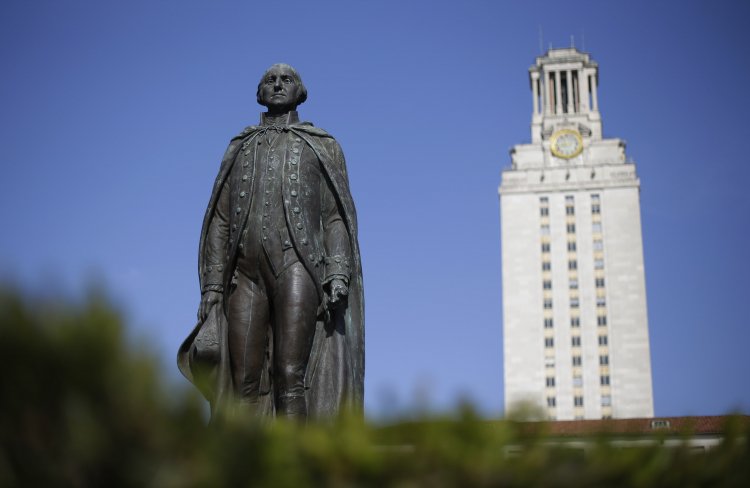
Accordingly, the staunch efforts of University of Texas at Austin President James E. Davis and Executive Vice President and Provost William Inboden to reform the university’s core curriculum deserve special attention. Last fall they created a task force to tackle the job. Chaired by Professor of Government Devin Stauffer, the task force comprises 25 faculty members drawn from the humanities, social sciences, and sciences. In mid-August, members issued “UT Austin Core Curriculum Task Force Report.” The thoughtful report takes into account the imperatives of liberal education, the exigencies of large public universities, and the realities of the contemporary professoriate. If the university implements something like what the task force has proposed, UT Austin will enhance its own students’ education and set a better standard for American colleges and universities. Still, by accommodating the exigencies of large public universities and the realities of the contemporary professoriate, the reform falls short of the imperatives of liberal education.
The report indicates that the current UT Austin core fails students. “It should prepare them for their advanced studies and provide a common experience that integrates them into the vibrant intellectual community of the University,” writes the task force. “It should also help them grow into informed, thoughtful, and responsible members of society.” Instead, the current core offers numerous options, leaving it to students to cobble together a coherent and constructive curriculum.
The problems start with the current core’s basic approach. Students must take one or a few courses in each of 10 different areas encompassing the humanities, social sciences, and natural sciences. In practice, the core sets forth a large smorgasbord of classes revolving too much around professors’ specialized research interests and too little around students’ interest in acquiring a well-structured liberal education. The primary common experience the current core provides students is jumping through arbitrary hoops.
In contrast, the UT Austin task force proposes a core that offers “a rigorous and cohesive curriculum based on what students most need to learn in their first years of college.” The new core puts students first, featuring “realms of study and modes of inquiry,” emphasizing “fundamental themes and questions,” and helping students prosper “as thoughtful citizens, well-educated human beings, and capable members of the workforce with the adaptability they will need in an evolving economy.”
The proposed core comprises three principal categories. Students will take five classes in “Arts & Humanities” – one each in “Culture and the Arts,” “Great Questions of Human Life,” “Masterworks of Literature,” “U.S. History,” and “Western Civilization.” Students will take three classes in “Social Sciences” – one each in “Principles of American Politics,” “World Politics and Cultures,” and “Foundations of Social Science.” And students will take four courses in “Science, Technology, Engineering, and Math” (STEM) – one each in “Great Ideas in Science,” “Natural Science & Engineering,” “Math, Statistics, & Data Science,” and “Computer Science & AI.”
The report identifies several challenging steps UT Austin must take to successfully implement the new core. Professors will need to design courses that are broad and deep, offer them as small seminars, concentrate on in-person teaching, and require extensive writing. The university will need to provide financial incentives to induce current faculty to accept the new core-curriculum teaching responsibilities, and it will need to raise substantial resources to hire new faculty whose main obligation will be teaching core courses. And the Provost’s office will need to create three committees, each reporting to it and overseeing one of the core’s three principal categories.
These major reforms face major obstacles.
Can enough tenured faculty be persuaded to participate in the new core? If persuaded, will tenured professors, frequently themselves the product of an undergraduate education bereft of a coherent core and recipients of a graduate education centered on narrow research agendas, possess the wide learning, classroom skills, and temperament to assist students in exploring fundamental ideas, enduring questions, and clashing opinions? Can the Provost’s office and the committees overseeing the core’s major categories overcome the ingrained habits, stable and predictable procedures, and accumulation of experience that enable colleges and universities to function while also aggravating their malfunction?
A simpler, more tightly knit core would better serve the interests of liberal education. That is, instead of offering what amounts to a smaller and more refined smorgasbord of classes as does the UT Austin proposal, the university might require all undergraduates to take, say, eight mandatory seminars based on fixed syllabi: American political ideas and institutions, history of Western civilization, masterworks of ethics, masterworks of literature, world politics and cultures, quantitative reasoning, foundations of natural science, and technology and AI.
A simpler, more tightly knit core based on fixed syllabi – subject to regular review and revision – and taught in the liberal and Socratic spirit would produce a genuinely shared educational experience. It would prepare students for further study. And it would equip them to consider thoughtfully their rights and responsibilities as American citizens and free men and women.
Then again, it would have been reasonable for the UT Austin task force to conclude that a simpler, more tightly knit core would have likely provoked greater resistance among a tenured faculty that is captive to powerful interests in maintaining the status quo.
Either way, proponents of liberal-education reform should wish UT Austin well in its determination to provide its students, and to model for colleges and universities across the nation, a core curriculum more befitting citizens of a free republic.
Peter Berkowitz is the Tad and Dianne Taube senior fellow at the Hoover Institution, Stanford University. From 2019 to 2021, he served as director of the Policy Planning Staff at the U.S. State Department. His writings are posted at PeterBerkowitz.com and he can be followed on X @BerkowitzPeter. His most recent books are “Reclaiming Liberal Education in America” and “Explaining Israel: The Jewish State, the Middle East, and America.”
[ad_2]
Source link
