
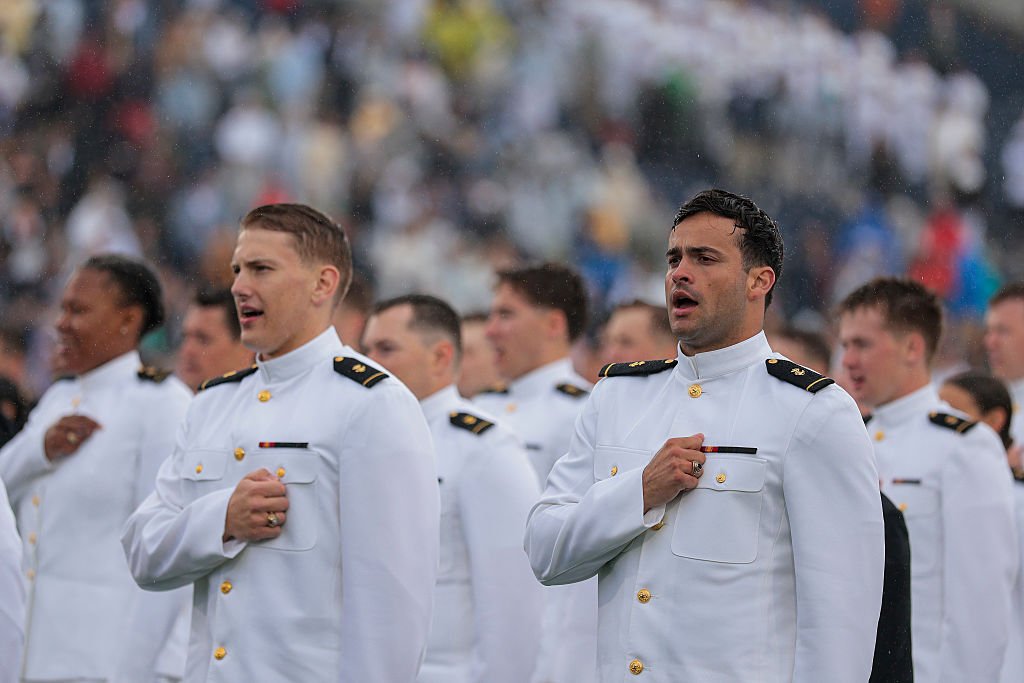
In his crusade to exorcise “wokeness” from the military and imbue it with a new spirit of lethality, Defense Secretary Pete Hegseth is waging battles on the nation’s storied war colleges and service academies. But is he fighting the wrong war?
The American Conservative spoke to several former and current instructors at such institutions, plus retired senior officers who have attended these schools. All said that Hegseth’s reforms may not go far enough and result in worsening a broken system.
While no one who spoke to us believes there is a place for intrusive diversity, equity, and inclusion requirements or social engineering at these institutions, they agreed the attention should be on the schools’ broader inability to produce exceptional leaders who win wars—rather than ambitious yes-men with soft critical thinking skills who, despite losing records, collect stars, pensions, and lucrative post-service second careers with all the entitlement of entrenched bureaucrats.
So, why have these schools become the breeding ground for everything that is wrong with the professional military today?
We need “tough-minded individuals who are going to be effective in combat. We need people of character, competence, and intelligence,” said Douglas Macgregor, a retired U.S. Army colonel who graduated from West Point. Macgregor wrote Breaking the Phalanx as a blueprint for Army reorganization and tactical reform after he served as a tank commander in the first Persian Gulf War.
That the strategy in the current Iran War has failed is not just the fault of civilian policymakers, he said, but the top brass at the Pentagon. Macgregor called that failure “a massive indictment of the entire military system.”
He said military commanders should have undergone a more “rigorous” process of schooling that instilled higher standards and ensured they were “able to stand there with great confidence and say, ‘This will not work, we don’t have that.’”
In a recent memo, Hegseth said he wants to end tenure for instructors at the service academies (undergraduate-level Army, Navy, Air Force, Marine Corps, and Coast Guard students) and war colleges (graduate-level students in the Army, Navy, Air Force, and Marine Corps). He also wants a line-by-line review of the schools’ curricula to ensure what is being taught aligns to one standard: “tactical, operational, and strategic combat leadership.”
But other advocates of reform say the issue is not only what the students are being taught, but how. There is also the question of whether these schools are educating and graduating the right people and whether instructors (both military and civilian) are hired and promoted because they adhere to doctrinaire views and exhibit conformism—risk averse, reflexively hawkish, unreflective—and do not challenge their students to think for themselves.
“We have chosen war as a policy, and I don’t think we’ve gotten our preferred outcomes from it in the last 30 to 50 years,” said one current war college instructor who listed a series of failed U.S. wars right up to the present. “Frankly, there is a perception that we aren’t doing so well, so isn’t it worth thinking how PME [professional military education] has served us?”
He and others say the “golden age” of war colleges was in the 1930s, when war-gaming and strategy dominated. During the 1970s reforms, the curriculum broadened to cover strategy and policy, joint operations, and national security decisionmaking. Later, in the 1990s, they became accredited graduate schools where officers got their PME requirements. Together, they graduate roughly 2,000 students a year, including international officers and distance learners.
Great on paper, but critics contend that, in practice, the wheels have come off. Some call the graduate-level experience an in-residence “sabbatical” for officers and a cushy waystation between commands. Others complain that the Naval War College, for example, has become the chief PME box-checking option for non-combat arms officers like chaplains, human resources specialists, and JAG officers, as well as for those whose promotional trajectory has hit a dead end.
Combat officers, the ones most likely to go to war, prefer to get PME at the staff colleges instead, one source said.
“In practice, everyone at the war college sits around, no one is held to any standard,” charged Macgregor, who contends that everyone passes whether or not he can write a graduate-level paper or even read the assigned material. A cursory review of publicly available war college data indicates graduation rates of over 95 percent. A 2024 RAND study found the schools graduate the “vast majority of their students.”
Of course, opinions vary. Sources tell TAC that the colleges have carried a strong tradition of both warcraft and statecraft into the 21st century; their professors include veterans of the country’s most recent wars, dedicated to a broad understanding of those conflicts and what the future battlespace might look like. They contradict critics who say they are not graduating exceptional leaders.
An article on then-Secretary of Navy John Phelan’s commencement speech at the Naval War College during its 2025 graduation notes, “On average, 60 percent [of graduates] are selected for command. In its history, the college has produced three chairmen of the Joint Chiefs of Staff, 15 chiefs of Naval Operations, and 13 other U.S. service branch chiefs.”
Lyle Goldstein, a former Naval War College professor who achieved tenure in his 18th year before leaving at year 20, told TAC, “There are really brilliant people there. I think there are very smart and patriotic people doing rather good social science research and people trying to help generally even in a bipartisan way.”
But Goldstein said that the system needs reforms in diversity of thought, open-mindedness to new ideas in strategy, and a critical examination of history, not just reverence and memorization. Moreover, he believes that the curriculum when he was there “was devoted to being world-wise and DC-savvy” and not so much “a place of original research on all questions relating to war and the statesmanship connected with war, or the prevention of war,” thus straying from the vision of Adm. Stephen B. Luce, who established the Naval War College in 1884.
“So now we are surprised that officers get involved in politics? I’d like to see more focus on operations and tactics,” Goldstein said. “We have military officers intervening in politics far too much.”
He added that the most hawkish instructors were promoted faster, serving as lessons of conformity to younger hires and the officers they taught. Being more circumspect and nuanced about the limits of power was professionally isolating.
Donald Vandergriff, a retired Army major who, like Macgregor, has been actively working to change the way the military trains and thinks about warfare, says these colleges have become “ticket-punching” exercises.
“In that culture, success is measured by attendance, completion of a set curriculum, networking, and the acquisition of the right ticket punches. Officers learn to brief, to recite doctrine, and to socialize effectively,” he told TAC.
“What [the colleges] do not systematically develop is the cognitive agility, rapid decision-making under uncertainty, and moral courage required by mission command and multi-domain operations against thinking adversaries,” Vandergriff added. “The result is an officer corps that is often process-compliant rather than outcomes-focused.”
This shallowness can be pervasive even at the level of pedagogy. One retired war college professor recalled recitations of passages from venerated war theorists in the curriculum—apothegms like Sun Tzu’s “if you know the enemy and know yourself, you need not fear the result of a hundred battles.” “That’s just a profession of faith,” he said.
Sources who spoke to TAC say the problems are complex. The services may not be sending the most qualified professors to teach. The civilian professors, tenured or not, may be only “war-studies-adjacent” because teaching at a war college was not the first choice for many. In a military culture, they also know their place and don’t rock boats. On the other hand, professors do not set curricula—the chairman of the Joint Chiefs of Staff does—so they have to teach what the CJCS orders (although oversight of electives is less stringent).
When Donald Trump took over the White House in 2025, he issued an executive order on military academies laser-focused on getting rid of a culture that was deemed “un-American, divisive, discriminatory, radical, extremist, and irrational.”
While some sources who spoke with TAC say they are not against “de-wokifying” hiring and teaching, the new rules could end up replacing one regime of conformity with another, again leaving as an afterthought the core mission to educate future officers who can actually win wars.
Plus, there are other problems that Hegseth isn’t dealing with as he focuses on eradicating wokeness.
First, some 70 percent of graduates from the taxpayer-funded elite academies do not make the military a 20-year career. Upwards of 25 percent of these undergraduates are recruited for sports, and nearly half each year, according to West Point, have to go to the academy’s prep school because they do not meet the academic requirements before matriculation.
Moreover, the system has gone back and forth on letting its athletes go directly into professional sports rather than serve out their required five-year military service after graduation. Right now, there is a waiver system that Congress is attempting to loosen to make academies more competitive with NCAA programs at non-military schools.
“Enlisted sailors and Marines who have received no benefits from the [Department of Navy] are fighting and dying in the Middle East while the academy ring-knockers send their football players to the NFL after receiving a half million dollar free education,” fumed a former staff member of one of the service academies.
Critics say efforts to enforce a “warfighter ethos” through curbing speech and instilling fear among faculty will hurt critical thinking just as much as “wokeness” did.
“The ethos in the U.S. military values control and loyalty over truth, and this produces stunted personal and professional interactions and relationships, as well as dishonestly,” Tim Bakken, a law instructor at West Point since 2000, told TAC.
“Smart, accomplished, and dedicated military and civilian instructors at the academies and professional military schools learn to pull their intellectual punches to protect themselves, to the detriment of their own development and that of the cadets and military students,” he added.
Bakken is the author of The Cost of Loyalty, published in 2020. In it, he asserts that West Point has subordinated core learning to engineering and other STEM disciplines, lowered academic standards, and tweaked acceptance rates to maintain a facade of prestige.
In early August, Bakken prevailed in a suit against West Point over a 2025 policy—implemented in the wake of Trump’s order—that he said would curb instructors’ speech at the military academies.
“I do say that for the most part Americans would be very proud of the graduates at West Point,” Bakken said. “I will say at the same time they are undereducated and they are not as prepared as they should be to become generals who are making the most critical decisions in emergency circumstances.”
Subscribe Today
Get daily emails in your inbox
That is key, say military reformers. “Tinkering at the margins” will not fix it, said Macgregor, who thinks the “single-service war college should be put in the history museum right next to the woolly mammoth.”
He said there should be one war college teaching with much higher standards and accountability for tactical and strategic “all arms warfare.”
Macgregor said “we will have to fail and fail demonstratively” before learning how to teach America’s warfighters. “We’re well on our way.”
