
[ad_1]
If you drastically vary your account of the accused while adamantly proclaiming his guilt, you cast doubt on your judgment. So it is with Patrick Deneen and his grave and longstanding accusation against classical liberalism in America.
A University of Notre Dame political science professor, an Feminent postliberal thinker, and a significant influence on Vice President JD Vance, Deneen has made a thriving career of condemning the United States as a nation that is classically liberal to its core. In late July, Jason Hart posted on X a clip from a 2021 National Conservative Conference, in Orlando, Florida, in which Deneen took the contrary view, decrying liberalism in America “as a recent innovation.” In the speech from which the clip was taken, Deneen argued that liberalism was a dastardly imposition on a nation with premodern roots that, at its origins, was blessedly free of classically liberal beliefs, practices and institutions.
Both of Deneen’s conflicting claims are false. Classical liberalism, the most successful strand of the modern tradition of freedom, is above all characterized by the belief that human beings are by nature free and equal and that government’s chief responsibility is to secure citizens’ equal basic rights and fundamental freedoms. It is neither the one and only set of political beliefs, practices, and institutions that formed America and which supposedly poisoned its roots, nor a lethal doctrine grafted on an essentially healthy America that at its origins stood for something else entirely.
Deneen employs both of his erroneous theses in the effort to vindicate the identical antiliberal verdict: Liberalism in America is the enemy of all that is beneficial, good, and just and therefore citizens should repudiate it.
Deneen’s contradictory and radical pronouncements are worth revisiting because they exacerbate the rampant confusion in the nation, to which the left has made the primary contribution, about the fundamental elements of the American experiment.
In his 2021 Natcon conference speech, Deneen asserted that the larger liberalism that encompasses much of the American right and left is “an ideology of rapine and plunder” foisted on the nation by a 20th– and 21st-century conspiracy of conservative liberals and progressive liberals. “We must see this jointly created invented tradition of America as a fundamentally or solely liberal nation as a recent innovation that is in fact a departure from the actual American tradition,” he declared. “It is an invented tradition that has been launched in the service of a rapacious ruling class which is benefitting from its rewards.” According to Deneen’s Natcon account, the “genuinely American tradition” that true conservatives should remember and restore sought “to preserve a number of preliberal legacies of practices and of beliefs.”
Strangely enough, as much as any intellectual over the last decade, Patrick Deneen has acquired national and transnational renown by propounding the proposition that liberalism in America is not an “invented tradition” that obscured and displaced the original but rather one that defined America at its founding. As much as any professor, Deneen has benefitted from insisting that America suffers from rot and ruin because the country is “a fundamentally or solely liberal nation.”
In stark contrast to his 2021 Natcon speech, the thesis that America is “a fundamentally or solely liberal nation” drives Deneen’s 2018 polemic, “Why Liberalism Failed.” There, Deneen describes liberalism as “[a] political philosophy conceived some 500 years ago, and put into effect at the birth of the United States nearly 250 years later.” He contends that by founding their nation on liberal ideas, Americans made “a wager that political society could be grounded on a different footing.” However, Deneen charges, the trappings of liberalism – among them individual rights, the social contract, free markets, limited and representative government, the rule of law, an independent judiciary – were a snare and a delusion. That’s in large measure, in Deneen’s telling, because whatever classical liberals said about their assumptions and aims, the modern tradition of freedom always inclined “to grant pure and unmitigated freedom” – that is, to liberate individuals from every form of constraint, starting with the shackles of custom and tradition and culminating with the fetters of biology and physical nature.
“Nearly every one of the promises that were made by the architects and creators of liberalism has been shattered,” Deneen stated in “Why Liberalism Failed.” But not because liberalism lost faith with itself. Rather, liberalism “has failed because it has succeeded,” wrote Deneen. “As liberalism has ‘become more fully itself,’ as its inner logic has become more evident and its self-contradictions manifest, it has generated pathologies that are at once deformations of its claims yet realizations of liberal ideology.” The reasonable and morally respectable response, argued Deneen in 2018, was to withdraw from mainstream political society and create small, tight-knit communities devoted to the traditional virtues.
Although he declined to withdraw to the sort of community he prescribed, Deneen reaffirmed that America is “a fundamentally or solely liberal nation” in a 2023 interview. “When I say liberal, I mean the political philosophy of liberalism that has a kind of, is inaugurated in the kind of social-contract tradition of you know, late 17th-, late 18th-century Britain, and gets imported to the United States, it’s articulated by our founding fathers, and then it’s further developed in, from its kind of classical liberal origins, into its progressive liberal form.”
And later that year Deneen published “Regime Change: Toward a Postliberal Future.” That book also reiterated the claim that America is “structurally liberal,” the work of a “new science of politics,” an experiment that goes back “several hundred years” and “a regime that is exhausted.” Flatly contradicting his practical counsel in “Why Liberalism Failed,” Deneen argued in “Regime Change” that the reasonable and morally respectable response to the evils of liberalism was to fundamentally transform the United States of America.
Contrary to Deneen in 2021, America was not at its founding exclusively preliberal. And contrary to Deneen in 2018 and 2023, America was not at its founding exclusively liberal. His conflicting simplifications undermine his case for overthrowing liberalism in America and adopting a postliberal point of view. If he can’t get his story straight on the major question of whether liberalism is the essence of America or an alien intruder, why should his exhortation to overthrow the American regime be trusted?
Deneen goes wrong both in asserting that America was exclusively preliberal at its origins and in maintaining that it was exclusively liberal at its origins because he misunderstands America and misunderstands liberalism.
America’s founding heritage was neither purely preliberal nor purely liberal. It was mixed – a combination of elements from distinct yet overlapping traditions: biblical, classical Greek and Roman, and classically liberal.
And classical liberalism does not espouse, as Deneen asserts, “untrammeled individuality.” Deneen peddles an interpretation popularized by late-20th-century professors who read back into classical liberalism the absurd and incoherent postmodern presumption that human beings are by nature, or can make themselves, absolutely autonomous – that is, utterly emancipated from custom and tradition, and capable of fashioning from the ground up their own morals and way of life.
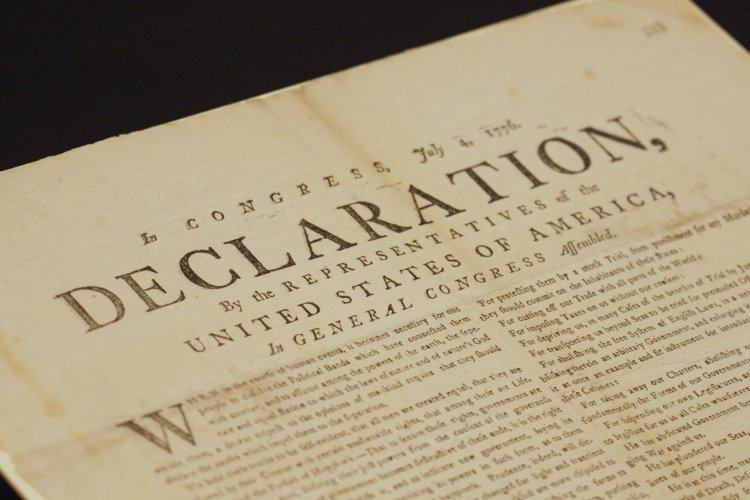
Classical liberalism’s actual point of departure is the conviction – eloquently affirmed in the U.S. Declaration of Independence – that human beings are equally endowed with unalienable rights. America’s founders held this conviction to be self-evidently true. Far from supposing that equality in freedom authorizes limitless individual choice, they followed John Locke in distinguishing liberty from license (“Second Treatise of Government” [1690], Chapter II, section 6). They agreed with Montesquieu that “political liberty does not consist in an unlimited freedom” but rather “is a right of doing whatever the laws permit” (“The Spirit of the Laws” [1748], Book 11, Chapter 3). And they believed as Washington emphasized in his 1796 “Farewell Address” that the responsible exercise of freedom was bound up with morality, and that morality was rooted in religion.
For the founders, the just exercise of political power derives from the consent of the governed. To ensure that government would secure their rights, founding-era Americans consented to a constitution that established a federal government whose powers are “few and defined” and whose branches checked and balanced one another. The freedom secured by limited government in America preserves room for an expansive civil society that, among other things, enables individuals, communities, and voluntary associations to conserve premodern virtues and associations.
Blinded by his grave indictment and contrary to his own self-proclaimed attentiveness to tradition, Deneen invents a liberalism supposedly fabricated by “architects and creators.” Classical liberalism, however, was not invented. It grew as part and parcel of the modern tradition of freedom, a tradition that both broke with and derived sustenance from premodern beliefs, practices, and institutions, and which developed in response to profound changes in European moral and political life.
Deneen rightly worries about America’s well-being – politicization of corporate media, Hollywood, the federal bureaucracy, and education; corruption of elites and degradation of civic life; debasement of popular culture and addiction to social media; family breakdown and falling birthrates; scorn for the rule of law; massive accumulation of national debt to the great detriment of rising generations; and hostility to national borders and enthusiasm for international organizations and transnational governance.
But he wrongly blames the nation’s manifold disorders on classical liberalism, whether there from the beginning or a recent affliction.
America has always been fundamentally, but has never been solely, rooted in the modern tradition of freedom. Restoring a healthy balance between America’s premodern and modern inheritance will both return the nation to its roots and equip citizen to meet today’s challenges.
Peter Berkowitz is the Tad and Dianne Taube senior fellow at the Hoover Institution, Stanford University. From 2019 to 2021, he served as director of the Policy Planning Staff at the U.S. State Department. His writings are posted at PeterBerkowitz.com and he can be followed on X @BerkowitzPeter. His most recent books are “Reclaiming Liberal Education in America” and “Explaining Israel: The Jewish State, the Middle East, and America.”
[ad_2]
Source link
