
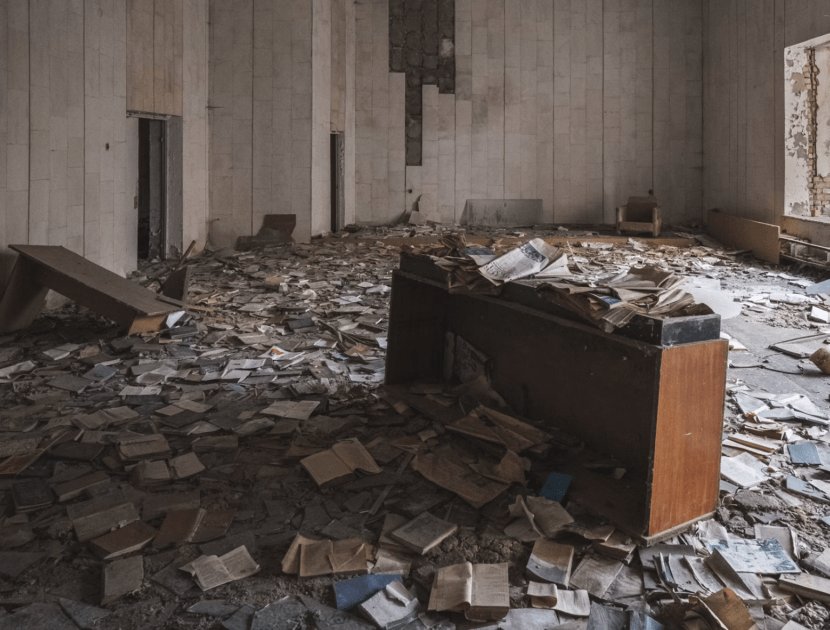
Photo by Mick De Paola
As colleges prepare for the fall, yet again they are under political attack. Some say that its standards are eroding. Or a college degree does not prepare one for a career or a job. The Trump administration red-baits universities, professors, and students. Others, such as the Washington Post’s Megan McArdle, rant about the alleged cluelessness of higher education.
None of these complaints are new. They are part of a long history of diatribes against higher education by those uncomfortable with change, or who have a political axe to grind.
Consider some recent events.
The grading fight is real enough right now. Harvard’s faculty voted in May to cap A grades at 20 percent of any class starting in 2027, after roughly 60 percent of undergraduate grades came back A’s the year before. The relevance fight is just as loud: a growing share of employers are hiring without degrees and screening for demonstrated skills instead, on the theory that a diploma has stopped telling them anything useful. Both feel like symptoms of a uniquely broken moment. Neither is.
Start with the practicality complaint, because it goes back the furthest. In 1509, the Dutch humanist Erasmus published In Praise of Folly, mocking the scholastic theologians who dominated Europe’s first universities for burying “simple truths beneath oceans of technical jargon and philosophical hairsplitting.” That is a five-hundred-year-old complaint about tenured scholars and abstract theory, voiced while European universities still taught in Latin to men training for the priesthood.
The complaint resurfaced with new force in the industrial era. The Morrill Act of 1862, which created the land grant university system, answered a widespread sense that classical education had become useless for a nation of farmers and mechanics, directing the new colleges to teach agriculture and the mechanic arts alongside classical studies. A decade later, the Reverend John A. Anderson, taking over what became Kansas State, stripped the classical curriculum out entirely and pledged to fit students for the ordinary pursuits of life.
The other side pushed back just as hard. In 1869, the poet and critic Matthew Arnold published Culture and Anarchy, arguing that education’s purpose was “pursuit of our total perfection by means of getting to know, on all the matters which most concern us, the best which has been thought and said in the world. Writing directly against the vocational drift of his own era. American education had its own version of this fight brewing at the same time. Horace Mann built the common school system on the premise that education existed to produce citizens capable of democratic self-government, a civic purpose neither purely vocational nor purely classical.
A half century later, John Dewey attacked the vocational-versus-liberal split directly, arguing that treating practical training and cultural education as opposites was itself the mistake, since it stigmatized manual work as mindless and academic work as useless.
Every argument since about whether college should train workers or educate citizens is a rerun of that same unresolved fight, dressed in new clothes: business majors versus philosophy majors in the 1980s, coding bootcamps versus the humanities today.
Now to grade inflation, which is older as a named anxiety than most people assume. In 1894, a Harvard faculty committee calling itself the Committee on Raising the Standard lamented that “Grades A and B are sometimes given too readily, Grade A for work of no very high merit, and Grade B for work not far above mediocrity.” That is Harvard, decades before radio, worrying that its own faculty had gone soft.
The term itself did not appear until 1972, when sociologist David Riesman coined it in a front-page New York Times story, tracing rising grades to Vietnam-era faculty reluctant to fail students into the draft. Even that framing treated grade inflation as new, when Harvard’s own faculty had said almost the identical thing seventy-eight years earlier. By 2001, Harvard’s own Harvey Mansfield was still fighting the same battle, calling the grades faculty gave a scandal. Notice the word still. Each generation of critics writes as though it caught its institution in a uniquely modern act of dishonesty. Each is, in fact, restating an 1894 memo, which is exactly what Harvard’s faculty did again this May.
A third complaint has always run alongside the first two: the fear that the university is quietly manufacturing the wrong kind of citizen. During the loyalty oath controversies of the McCarthy era, regents demanded professors swear anti-communist oaths or lose their jobs. A decade later the fear flipped content but kept its shape, as 1960s campus unrest convinced an older generation that universities were radicalizing students against the country. In the1960s Vice-President Spiro Agnew and eventually California Governor Ronald Reagan declared the same.
In 2025, President Trump accused faculty of turning students into “communists, terrorists and sympathizers of many, many dimensions.” The same loyalty oath logic in new packaging. What changes is which politics the university stands accused of manufacturing. What does not change is the fear that it is secretly converting the young into someone their parents would not recognize.
What should we make of complaints this durable? One possibility is that they are simply true, and have been true since the Grant administration, without higher education ever actually collapsing. That seems unlikely, given how much of modern science, medicine, law, and technology has come out of these same institutions in the meantime. The more interesting possibility is that these complaints are not really about facts at all. They are about anxiety: generational anxiety about whether the young are working hard enough, economic anxiety about whether a credential still buys what it used to, and political anxiety about who gets to shape the next generation’s convictions.
None of this means today’s version is wrong. Grades really have risen sharply, and the labor market really has grown skeptical of degrees that do not map onto a specific job. But history should make us humble about the diagnosis. If Erasmus was mocking impractical scholars in 1509, and Harvard’s faculty was writing panicked memos about grade inflation while the ink was still drying on the telephone patent, then the problem, whatever it is, is not a symptom of any particular decade’s decline. It is a permanent feature of how institutions age, and how societies argue with themselves about what education is actually for.
Additionally, largely ignored in all this is how corporate America has largely captured higher education, remaking it in its own image in terms of structure and organization. If higher education is failing it is because it is simply serving the narrow interests of capitalism.
Finally, grade inflation is a problem, but the declining quality of higher education speaks more to efforts by the Trump administration to censor academic freedom, restrict admission by foreign students, or by states such as Florida and Texas dictating curriculum. And let us not forget how elite schools such as Harvard continue to give away admissions to legacy students such that one can hardly say that they are accepting the best and the brightest or awarding grades on the basis of merit.
