
[ad_1]

The implosion of scandal-ridden U.S. Senate candidate Graham Platner’s campaign in Maine and the sudden passing of U.S. Sen. Lindsey Graham in South Carolina give a fresh pack of candidates a chance to make history. With Maine’s Democratic Party having until July 27 to name a new nominee, and a fast-tracked special Republican primary in South Carolina set for August 11, who stands to gain from an unexpected and condensed primary season?
From a candidate standpoint, those who recently campaigned or have been appointed, have national endorsements, and a clear partisan flair are most likely to emerge victorious.
Throughout his campaign, Platner wooed Democrats with his character and rhetoric – until they fled from him en masse. He framed himself as a blue-collar warrior new to politics, an unabashed progressive disillusioned with and fighting against economic and political oligarchy. Platner slammed Republicans as corrupt, speaking only to advance his party’s issues. His brazenness earned the support of Sen. Bernie Sanders, the Working Families Party, the College Democrats of America, and other left-wing actors.
With the blueprint for earning the nomination established, progressive acolytes seek to fill the void left by Platner. The most notable option is Troy Jackson, the Maine Senate’s former president, who secured a majority of pledged convention delegates over the weekend. Jackson is a fifth-generation North Woods logger who, according to The Guardian, “can speak to working-class, inland and rural Mainers” with his populism. Jackson benefits from having run in and lost the concurrent gubernatorial election, raising almost $1 million to host events, flood the airwaves with ads, and conduct voter outreach.
Jackson, like Platner, is “an unapologetic progressive fighter” who boasts name recognition. He also has the blessings of Congressman Ro Khanna and Sanders’ organization, Our Revolution. This existing foundation allowed Jackson to knock out his main rivals, Shenna Bellows and Nirav Shah, before the convention while remaining a Platner ally. Despite Platner’s fall, voters still want to reward this brand of party loyalty, as a recent poll found him lapping his former competitors by 17%.
The unexpected Senate vacancy in South Carolina forces a mini-primary of new and old candidates. GOP gubernatorial primary runner-up and U.S. Rep. Ralph Norman jumped into the race for Graham’s old seat, while Rep. Nancy Mace bowed out. Like Jackson, Norman has existing exposure to voters from this cycle, helping distinguish him from potential newcomers. According to Heritage Action, the five-term representative voted conservatively 100% of the time this session, including on the SAVE America Act and One Big Beautiful Bill. Despite his record, Trump initially endorsed Lt. Gov. Pamela Evette in the governor’s race over Norman.
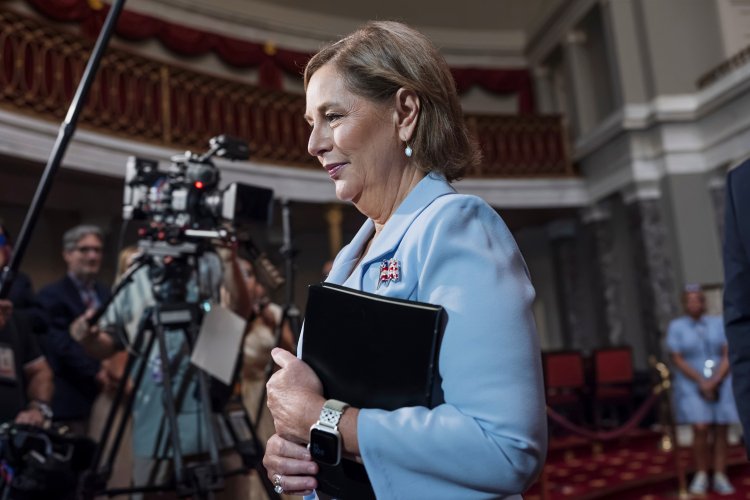
Now the president has urged Darline Graham – Lindsey Graham’s sister, who was appointed to fulfill his Senate term – to run for a full term. She declared her candidacy and honored the president’s request, knowing that candidates with Trump’s endorsement have a 99% success rate this cycle.
As the GOP largely supports the president, his preference can quickly resolve any messy and faction-based politicking. The informational shortcut of a “Trump-backed” candidate is powerful, showing who truly aligns with the national conservative brand. With polling showing no clear leader in the pack of possible contenders, in a three-week blitz Trump’s support could decide the GOP nominee from the get-go.
Lindsey Graham’s passing also looms large. Palmetto State voters may look towards an aspirant who can carry the late senator’s legacy of strong foreign policy, free enterprise, and pro-life activism. Darline Graham’s appointment – and her decision to run – signals that continuing her brother’s deal-making and honoring his institutional identity is what the movement currently needs. For Norman and others to compete, they must flex their national security, judiciary, and appropriations muscles to court the base that voted for the senior Graham consecutively since 2002.
The Maine and South Carolina frenzies test both parties’ strategic directions. Maine Democrats are doubling down on anti-establishment and reformist politics, hoping to strengthen the wave of related successes seen in Pennsylvania, New York, New Jersey, and Colorado. Voters are searching for someone ideologically acceptable to their base but non-toxic to independents, with crossover appeal built on policy boldness and personal integrity.
As populist as today’s GOP seems, traditional Republicanism remains prominent. Lindsey Graham extolled those values and built his reputation on such advocacy throughout the Trump era. Democrats have settled on their identity for this cycle, while Republicans debate whether moving right or left is worth the struggle. Graham’s successor will naturally diverge from his way of thinking; the degree of that split, however, determines whether his brand and philosophy can endure.
Crunch time and pressure do not change or build character; they reveal it. The vacancies in Maine and South Carolina will display what each political party truly prizes when running against the clock. The results there will tell the nation less about who these parties want to be in theory, and more about who they already are.
[ad_2]
Source link
