
[ad_1]
After the U.S. Supreme Court ruled that Temporary Protected Status for Haitians can end, Trump administration officials have said it is safe for Haitians to return to their country — despite a State Department warning against travel there because of violence.
In April, the State Department issued its highest travel warning, Level 4, which said, “Do not travel to Haiti due to kidnapping, crime, terrorist activity, civil unrest.” The warning said “violent crime is rampant in Haiti,” citing gangs and organized crime and terrorist activity.
On CNN’s “State of the Union” on June 28, host Jake Tapper repeatedly asked Homeland Security Secretary Markwayne Mullin how he squared the Trump administration travel warnings with comments that Haitians can safely return to their country following the court ruling.
Mullin told Tapper the advisory is for “American citizens traveling to Haiti, not Haitians going back home.”
Days earlier, a reporter asked Stephen Miller, White House deputy chief of staff, if Haiti is safe. Miller replied: “For Haitians? Absolutely,” adding, “Haitians live in Haiti.” Miller said there “might be pockets of Haiti” with higher crime rates, similar to some U.S. cities.
Ohio Gov. Mike DeWine, a Republican who started a school in Haiti and has defended his state’s Haitian workforce, rejected Miller’s comments.
“To say it’s safe to go to Haiti is absurd,” DeWine told PBS.
The June 25 court decision affects more than 300,000 Haitians and 6,000 Syrians who have Temporary Protected Status. Unless people have another status that protects them, they face deportation.
Ending TPS for Haitians aligns with Trump’s campaign promise. In 2024, Trump spread the falsehood that Haitians living in Springfield, Ohio, were stealing and eating people’s pets.
Other states with significant Haitian TPS populations include Florida, New York and Massachusetts.
Haiti continues to experience crime and unrest
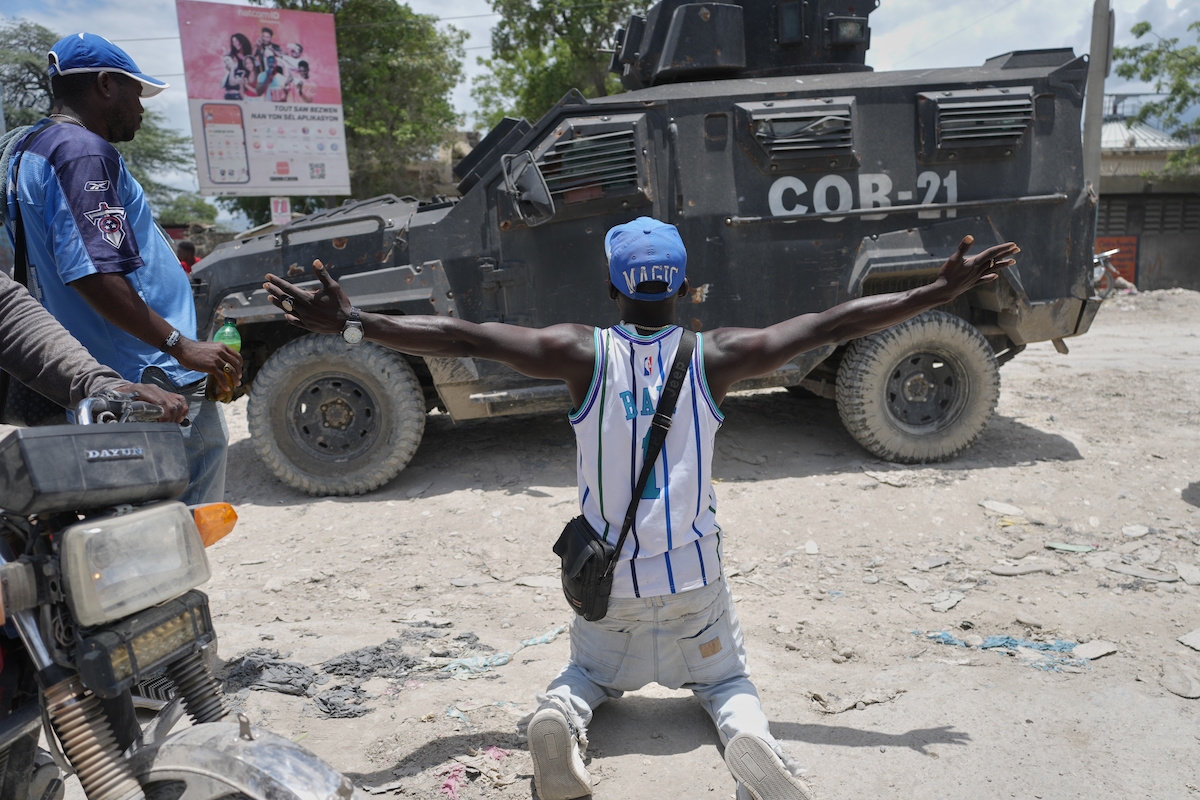
A resident of Cité Soleil kneels before a police armored vehicle and demands that the policefight the gangs that control their neighborhood, in Port-au-Prince, Haiti, May 12, 2026. (AP)
In 2025, Trump administration officials made the same dubious case about improved conditions in Haiti. Then, as now, their responses did not address persistent crime and gang issues.
Experts familiar with Haiti describe it as unsafe.
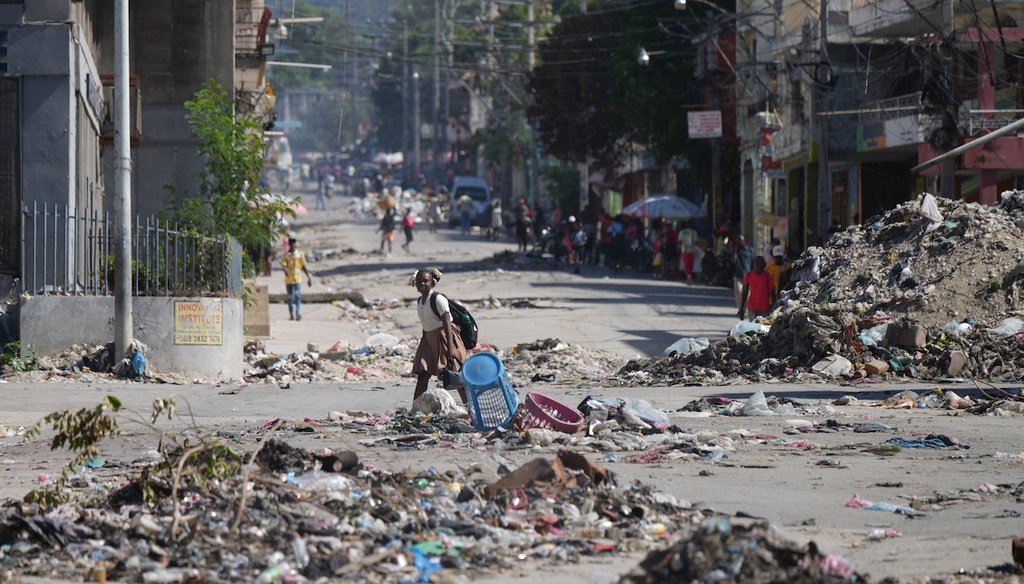
Haiti is currently experiencing a severe humanitarian and security crisis characterized by extreme gang violence, political instability and collapsed basic services, said Irwin Stotzky, a University of Miami law professor who supports TPS for Haitians. Over 6 million people — more than half the country’s population — need humanitarian aid. Armed groups control the vast majority of the capital, Port-au-Prince.
“There is no safety in Haiti,” Stotzky said. Gangs “kidnap and kill people. There is food insecurity, hardly any healthcare and no place to live. Millions are without any basics to survive.”
Murders, kidnappings and sexual assaults are rampant, William O’Neill, the United Nations’ independent expert on human rights in Haiti, recently told the Miami Herald.
“No country in the world should be deporting anyone to Haiti where safe, dignified and durable returns are simply not possible, ” O’Neill said.
Since the beginning of the year, gang violence has left more than 2,300 people dead, the United Nations said. In recent years, gang violence has contributed to 1.5 million Haitians fleeing their homes. As armed clashes continue, schools periodically close.
For Haitians with TPS, return would create additional risks, said Nathalye Cotrino, a senior Human Rights Watch researcher.
“Because they lived in the United States, criminal groups would perceive them as what Haitians in the diaspora often call ‘white Haitians’, that is, people with money, making them immediate targets for kidnapping and extortion.”
Haiti has not held elections in years

Police in an armored vehicle patrol a gang-controlled area of Port-au-Prince, Haiti, Jan. 19, 2026. (AP)
Haiti has not held elections since 2016 when President Jovenel Moïse took office. Conditions worsened after his July 2021 assassination and an August 2021 earthquake and tropical storm.
Haiti’s parliament has been inactive since 2019, and the country has had no nationally elected officials since January 2023.
Haiti has a transitional unelected government led by Prime Minister Alix Didier Fils-Aimé, Human Rights Watch said.
RELATED: MAGA-Meter: Tracking Trump’s second term promises including about immigration
RELATED: ‘They’re eating the pets:’ Trump, Vance earn PolitiFact’s Lie of the Year for claims about Haitians
[ad_2]
Source link
