
[ad_1]
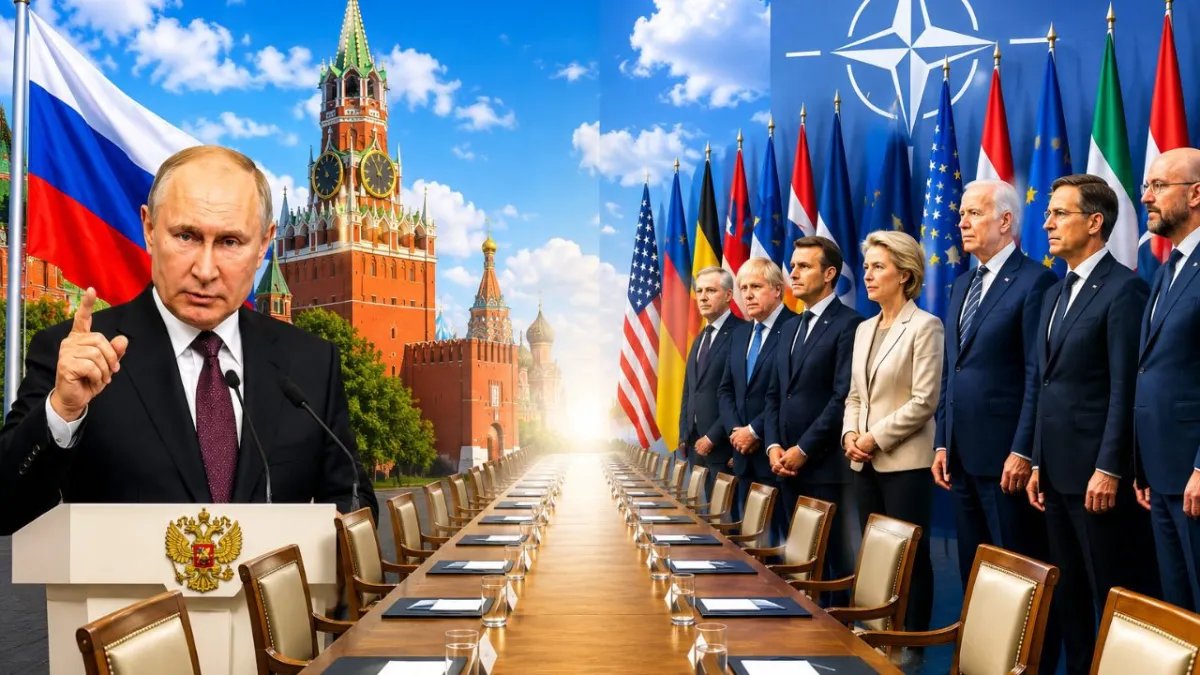
Ray McGovern and Peter Kuznick examine Europe’s accelerating military buildup, Putin’s warning that Russia is prepared for war, and why they fear diplomacy is giving way to a dangerous escalation between nuclear powers.
ScheerPost Staff
As Europe dramatically expands military spending and NATO leaders openly prepare for what they describe as a possible future conflict with Russia, questions are growing over whether the world is drifting toward a direct confrontation between nuclear powers.
On this week’s edition of The World This Week, Consortium News Editor Joe Lauria is joined by former CIA analyst Ray McGovern and historian Peter Kuznick to examine the increasingly dangerous escalation surrounding the war in Ukraine. The discussion explores Vladimir Putin’s warning that Russia is prepared for war, Europe’s accelerating militarization, the role of NATO-backed drone attacks deep inside Russian territory, and the growing risk that a single miscalculation could trigger a wider conflict.
While McGovern argues that Moscow continues to exercise restraint despite mounting provocations, Kuznick warns that political pressure, expanding military commitments, and increasingly confrontational rhetoric on all sides are creating conditions in which diplomacy is being replaced by dangerous brinkmanship. Together they examine whether Europe’s leaders are pursuing a coherent long-term strategy—or whether escalating military spending, shrinking diplomacy, and domestic political pressures are moving the world toward an outcome that no one can control.
The conversation also explores the fragile U.S.–Iran ceasefire, shifting global power dynamics, and whether recent political developments in New York signal broader changes inside the Democratic Party. Throughout the discussion, the panel returns to a central warning: in an era of nuclear weapons, great-power confrontation carries risks unlike any previous conflict, making diplomacy more urgent than ever.
Much of this discussion is vital and deserves to be widely shared, but perhaps its most important takeaway—and one that should remain our constant watchword—is Peter Kuznick’s sobering warning: “We’re planning for our own annihilation and extinction as a species.”
The greatest danger isn’t simply the war itself—it’s the gradual normalization of confrontation between nuclear powers.
McGovern argues that despite increasingly provocative developments, Putin has consistently sought to avoid a direct military clash with NATO. Drawing on decades of following Soviet and Russian leadership, he contends that Moscow understands that striking targets inside NATO countries could trigger an uncontrollable escalation with nuclear powers. Instead, he believes Russia is attempting to achieve its objectives inside Ukraine while avoiding actions that would give Western governments justification for expanding the conflict.
Kuznick agrees that Putin has generally exercised restraint but warns that restraint alone may not guarantee stability. He notes that Russian infrastructure continues to come under attack, political pressure inside Russia is growing, and influential voices within the country have begun calling for stronger retaliation against European facilities supporting Ukraine’s military operations. While he does not believe Russia seeks a wider war, he cautions that prolonged escalation increases the chances of miscalculation by all sides.
One of the central themes running throughout the discussion is the collapse of diplomacy. Both guests argue that negotiations have steadily been displaced by military planning, larger defense budgets and increasingly confrontational political rhetoric. Rather than emphasizing diplomatic solutions, many European leaders now frame the conflict as a long-term military struggle requiring sustained increases in defense spending.
The discussion also examines the broader political consequences of Europe’s military buildup. Kuznick argues that dramatically expanding military expenditures inevitably comes at the expense of domestic priorities, including housing, education, healthcare and other social programs. Echoing President Dwight Eisenhower’s famous warning about the military-industrial complex, he suggests that the diversion of public resources toward military production represents a significant political and economic transformation occurring across Europe.
Beyond Ukraine, the panel turns to the fragile ceasefire between the United States and Iran. Although open hostilities have subsided, both McGovern and Kuznick describe the agreement as unstable, pointing to continued military exchanges and unresolved disputes that could quickly reignite a broader regional conflict. The discussion places these tensions within a larger international context in which several major geopolitical flashpoints—from Eastern Europe to the Middle East—remain active simultaneously.
Throughout the conversation, Kuznick and McGovern both invoke the lessons of the Cold War. McGovern references President John F. Kennedy’s warning “To force a choice on another nuclear power between humiliation and using nuclear weapons is a colossal failure of statesmanship.”
Kuznick likewise argues that many of today’s political leaders appear increasingly willing to normalize discussions of military confrontation between nuclear-armed states in ways that would have been considered reckless only a generation ago.
The panel also examines the political dynamics inside Europe itself. Rather than portraying European governments as unified, McGovern argues that many leaders pushing for expanded militarization face declining public support while confronting growing economic pressures at home. Kuznick similarly notes that opinion polls across several countries suggest many citizens remain skeptical of continued military escalation even as governments expand defense commitments.
Despite differences over Russia’s battlefield prospects and the likely trajectory of the war, both analysts ultimately agree on one fundamental point: diplomacy has become dangerously marginalized. They warn that history demonstrates how wars often expand not because governments deliberately seek global conflict, but because repeated cycles of retaliation, political pressure and strategic miscalculation gradually narrow the space for peaceful solutions.
The discussion concludes with a sobering assessment of the international moment. As Europe rearms, NATO prepares for additional military commitments, Russia continues its campaign in Ukraine and tensions remain high across the Middle East, McGovern and Kuznick argue that preventing direct confrontation between nuclear powers should remain the overriding priority. Whether today’s leaders are willing—or able—to reverse the current trajectory through diplomacy remains one of the defining questions of the international order.
The conversation offers a detailed examination of competing interpretations of the conflict, the strategic calculations shaping decisions in Moscow and Western capitals, and the broader implications of a world increasingly organized around military competition rather than negotiation. It is a reminder that while battlefield developments dominate headlines, the greatest danger may lie in the gradual normalization of permanent confrontation between nuclear-armed states.
Editor’s Note: At a moment when the once vaunted model of responsible journalism is overwhelmingly the play thing of self-serving billionaires and their corporate scribes, alternatives of integrity are desperately needed, and ScheerPost is one of them. Please support our independent journalism by contributing to our online donation platform, Network for Good, or send a check to our new PO Box. We can’t thank you enough, and promise to keep bringing you this kind of vital news.
You can also make a donation to our PayPal or subscribe to our Patreon.
Please share this story and help us grow our network!
[ad_2]
Source link
