
[ad_1]
President Donald Trump surprised members of both political parties June 24 when he abruptly canceled an event touting the 21st Century ROAD to Housing Act, which had passed the Senate overwhelmingly — a rare bipartisan achievement on the affordability issue that is top of mind for voters.
Trump posted that he would not sign the bill until passage of the SAVE America Act, which would expand requirements for proof of citizenship to vote. Democrats have criticized the SAVE America Act, saying it would disenfranchise legitimate voters, and Senate Republican leaders have said they don’t have the votes to pass it in their chamber.
When Trump was still planning to sign the housing bill, White House Press Secretary Karoline Leavitt posted on X that the bill was “one of the most significant pieces of housing affordability legislation in American history” and an example of a Trump administration “promise made, promise kept.”
But after Trump’s switch, Sen. Tommy Tuberville, R-Ala. — one of the five senators to vote against the measure — reiterated his opposition. He said the bill would primarily fund the Department of Housing and Urban Development and benefit immigrants in the United States illegally.
“This is a bill that might touch a little bit of the middle classes, but it’s going to go to a lot of people that are here illegally to build houses for them,” Tuberville said in a June 24 interview with Fox News. (Tuberville is running for governor.)
Tuberville’s fellow Alabama senator, Republican Katie Britt, took the opposite position, saying June 25 that the legislation “appropriates zero dollars and maintains that illegal aliens are not eligible for HUD housing assistance.”
Who’s right?
In our analysis of the bill, we found nothing in the legislation that would specifically benefit people in the U.S. illegally, and interviews with housing policy experts backed that up. In addition, people in the U.S. illegally are already denied most forms of HUD housing assistance.
The legislation’s goal is to increase the housing supply and lower its cost. It’s possible people here illegally would benefit — but only because the bill affects anyone in the market for housing, regardless of legal status.
“Adding housing will always affect the entire real estate ecosystem,” said Stijn Van Nieuwerburgh, a Columbia University professor of real estate and finance. Any new housing “will lower the cost of housing for anyone else. That’s just general equilibrium in the housing market, or in any market, for that matter. You cannot suspend the laws of economics.”
Tuberville’s office did not respond to inquiries for this article.
What’s in the 21st Century ROAD to Housing Act
Provisions of the housing legislation include:
-
Expanding access to mortgages under $100,000 through a pilot program backed by the Federal Housing Administration.
-
Increasing the maximum loan limits for federal mortgage insurance programs.
-
Limiting environmental review processes to accelerate homebuilding.
-
Excluding veterans’ disability benefits from being counted as income for a veterans’ housing program.
-
Preventing large corporations and institutional investors from purchasing new single-family homes unless expressly for the rental market.
The bill doesn’t appropriate new funding, though $200 million from HUD’s existing budget would be allocated to an annual competitive grant program for local governments and tribes that “demonstrate measurable increases in housing supply.”
Phrases such as “alien,” “illegal immigrant” or “undocumented immigrant” — often used politically to refer to immigrants illegally in the U.S. — do not appear in the bill text.
Under a bill first passed in 1980, federal rental assistance programs may not be used to benefit immigrants in the U.S. illegally and people with temporary legal status.
The 21st Century ROAD to Housing Act would not change this.
How could the newly passed bill affect the housing market?
Because of the restrictions on federal housing assistance, most people in the U.S. illegally are renting through the private market. There is no federal law preventing people in the U.S. illegally from renting from private landlords, and landlords are not at legal risk when renting to someone in the U.S. illegally as long as a reasonable rent is being paid. (Providing free rent, however, could be classified as illegally “harboring” someone who lacks legal status.)
Under federal law, a landlord can take other financial factors into account when considering renting, such as the prospective renter’s ability to pay, but not reject someone who is otherwise qualified purely because of their immigration status.
For people in the U.S. illegally, “less formal housing arrangements in the private market” are common, said Warren Lowell, a Vanderbilt University professor of human and organizational development. Crowding more people per room tends to be high among this population, so I think ‘affordability’ for this demographic group tends to come by resource pooling.”
If the 21st Century ROAD to Housing Act increases affordable housing availability, people in the U.S. illegally would benefit just as any U.S. resident would.
The law, “if effective in practice, could impact both the ownership and rental markets,” said Donald Haurin, an Ohio State University emeritus professor of economics who has specialized in housing and real estate. “Price reductions should eventually spread to the rest of the private market, yielding a better opportunity for all actors.”
Lowell agreed that both low- and middle-income renters, along with first-time homeowners, should benefit from the law. “Increases in supply tend to have rippling effects across neighborhoods and income bands,” he said.
Our ruling
Tuberville said benefits of the 21st Century ROAD to Housing Act are “going to go to a lot of people that are here illegally to build houses for them.”
There is nothing in the bill that would “build houses for” people in the U.S. illegally.
The bill does not say anything about people in the U.S. illegally, and it does not change existing laws that make federal rental assistance programs unavailable to immigrants in the U.S. illegally or people with temporary legal status.
The bill’s goal is to expand the affordable housing supply. People in the U.S. illegally who are renters or homebuyers could benefit from a larger supply of homes — but so would U.S. citizens and legal permanent residents.
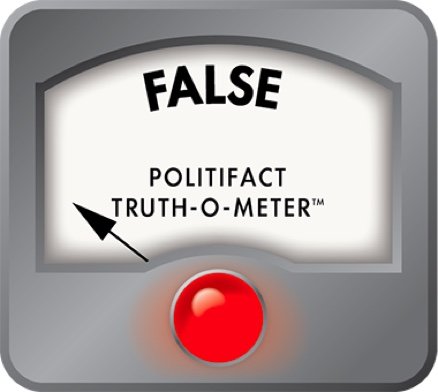
We rate the statement False.
[ad_2]
Source link
