
Understanding, at a deep level, the differences between legitimate science and pseudoscience is increasingly critical in our modern world. Science, in my opinion, is perhaps the most powerful tool humans have collectively developed for understanding the universe in which we find ourselves. (I would clarify that it is complementary with philosophy which is important to ensure that we are thinking clearly, rigorously, and consistently.) Pseudoscience pretends to be scientific but is essentially doing it wrong. There are many underlying reasons for the existence of pseudoscience – it is sometimes just poor quality science due to poor training or sloppy technique, it may result from a motivation to achieve a desired result rather than letting the empirical chips fall where they may, researchers may not appreciate their own biases, or it may be part of a dedicated campaign motivated by profit, politics, ideology, religion, culture, or just wishful thinking.
I spend a lot of time studying and writing about certain classic pseudosciences because I think they are especially instructive, and acupuncture is definitely on the short list. I just wrote about it last week, specifically about a gullible article in the NYT which has bought into the pro-acupuncture propaganda. That piece resulted in lots of feedback, some of which doubled-down or extended the pseudoscientific arguments often made for acupuncture, so I wanted to reply to some of those and further clarify my position.
One common feature of pseudoscience is the use of vague or fluctuating definitions. Science requires unambiguous definitions, which is why it so often relies on technical jargon which evolves to be incredibly precise. This is one of the things I love about science, and why I think everyone should study it to some degree, at least enough to become functionally scientifically literate. Science forces you to think clearly, precisely, and consistently. If we take a seemingly simple question, for example, such as “does acupuncture work”, we first have to operationally define “acupuncture” and also “work”. You also have to include – work for what? I am usually careful to do so when addressing this question.
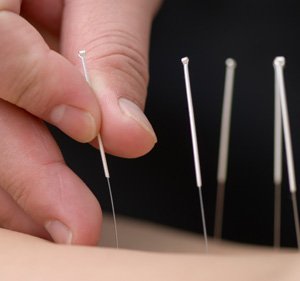
“Acupuncture”, as defined by just about every source I have ever consulted, is defined as a technique that involves sticking needles into acupuncture points. That seems to be a universal and necessary component to “acupuncture”. The points themselves often differ. There are different traditions, different locations, and different functions of the alleged points. There are other traditional elements to acupuncture, such as the existence of a distinct life force (Qi) that flows through specific channels in the body known as meridians. There is also sometimes described a “de-Qi” sensation, which is itself vaguely defines, but is claimed to indicate when a needle has been placed in the correct location to an adequate depth. Acupuncture may also include moxibustion, which is the burning of herbs on the needles, or “electroacpuncture” which involves electrically stimulating the needles after insertion.
Each of these alleged phenomena must be tested by themselves, controlling for all variables as much as possible. It is possible (speaking hypothetically), for example, that some acupuncture points exist but others do not, or that the points exist but de-Qi is not necessary. Each variable must be isolated as much as possible – the points, needle insertion, electrical stimulation, the patient interaction, etc.
Further, when medical scientists ask whether or not a treatment “works” they are usually talking about “efficacy” (and this is the technical term they will use in the literature and to other experts). Efficacy means that there is a specific beneficial effect established beyond any non-specific or placebo effects. Efficacy can generally only be well-established with double-blind placebo controlled trials. But to be fair, there is a lot of nuance here. Many interventions cannot be ethically blinded (like whether or not someone undergoes surgery), and so efficacy must be inferred from multiple different study types controlling for as many confounding variables as possible. It also helps to use objective outcome measures (such as survival). But it is virtually impossible to make efficacy claims based only on subjective outcomes of unblinded interventions. However – acupuncture can be blinded, so much of this nuance is not relevant here.
So – we can technically restate the question “does acupuncture work” as “do acupuncture points have specific efficacy?” Again, this question must be asked for each potential indication. This question has been investigated with hundreds of trials for dozens of indications, many of which are reasonably rigorous with sham acupuncture or placebo acupuncture controls and reasonable double-blinding. The totality of these studies strongly show that there is no efficacy to any acupuncture points for any indication. We can add this clinical data to what we know about scientific plausibility. It has never been established that acupuncture points exist. There is no physiological or anatomical underlying basis for their existence. There is no reason to hypothesize that they exist outside of cultural beliefs. There is no internal consistency to their number, location, or effects – which follow patterns of cultural tradition, institutional and personal preference. As a scientific concept, acupuncture points are a dead end that have been sufficiently ruled out and should be completely abandoned. We can say the same thing about Qi as a distinct life energy or force, and of meridians as channels through which Qi (or whatever) flows.
It therefore does not matter how desperately one retcons or redefines “acupuncture”. Some respondents tried to say that “Qi” really just refers to known energies, like heat and electricity. That is classic pseudoscience, and historically clear retconning, but it also doesn’t matter. They are stuck in an unscientific approach to the question “does acupuncture work”, which they think they can rescue by redefining acupuncture. Regardless of any definition for the broader concept, science does not work that way. We need to operationally define and isolate specific elements, and we can say that there is no Qi, meridians, or acupuncture points. It is also common to try to redefine “works” as including placebo effects (and then falsely touting how amazingly powerful placebo effects are). Again – this is slight-of-hand, and doesn’t matter to the real question – does sticking needles in acupuncture points have specific efficacy. The answer is clearly no, whatever your thoughts about the practical use of placebo effects in medicine (that’s a separate article).
We can also ask – does sticking needles in the skin have specific efficacy. The answer here also appears to be no – at least in properly controlled trials poking the skin without penetration was as effective as penetrating the skin to a depth typical in acupuncture treatments. In fact there is now a treatment referred to as “dry needling” which is an attempt to divorce the sticking of needles in the skin from any concept of Qi, acupuncture points, or meridians. Is there established efficacy for dry needling for any indication? No. Meta-analyses and systematic reviews show mixed but mostly negative results. It may not be possible yet to rule out a short term mild effect for pain, but that’s it (and even there, some reviews find it is worse than placebo).
But acupuncturists (including some responding to me) insist that dry needling is contained under the umbrella of “acupuncture” (while dry needlers insist it is not acupuncture). This is all a semantic game – and it doesn’t really matter from a scientific perspective. As I discussed – it doesn’t matter how you play with these definitions. Scientifically you have to state a specific, ideally operational, definition and a specific question. When we do this – none of the possible components of acupuncture seem to exist or have specific efficacy.
