
[ad_1]
Minnesota wasn’t always a fixture in the national news cycle. Now, it seems every month there is a new headline about Minnesota. This time, it involves a mob of protestors assaulting a conservative journalist. If Minnesotans want to end the trend of political violence plaguing their state, they must take a stand against incidents like these.
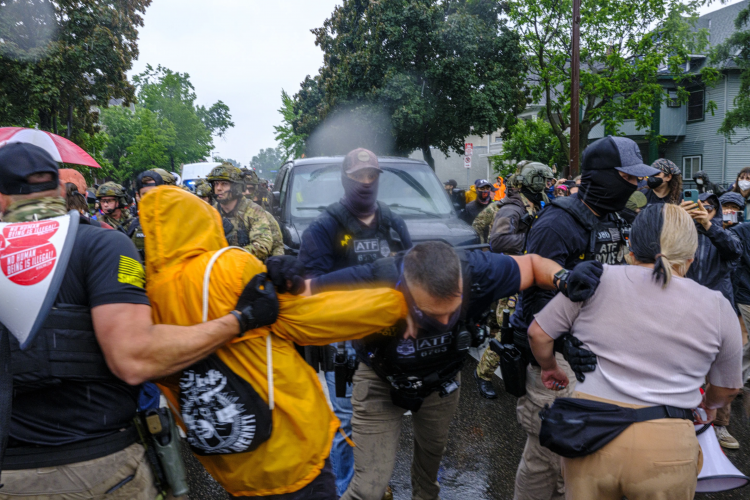
Last month, Savanah Hernandez, a journalist with TPUSA, was mobbed and assaulted while filming an anti-ICE protest in Minneapolis. Hernandez makes a living covering controversial events, so documenting this protest is nothing new for her. Things took a turn, however, when protestors assaulted Hernandez, shoving her several times, driving her to the ground.
By all accounts, it was merely Hernandez’s presence and reputation that drew the ire of the protestors. Nothing reported as of yet indicates she was the instigator of any violence. I won’t go into Ms. Hernandez’s views, because they couldn’t be less relevant to the issue at hand: There is no justification for what happened to her at that protest. Free speech and freedom of the press are foundational rights of our republic. Ms. Hernandez should not fear violence for coverage of an event that any journalist would cover. Her assailants should be held accountable to the fullest extent possible.
Unfortunately, political violence in the Land of 10,000 Lakes is nothing new. Beyond the violence of the past weekend, Minnesota has become a hotbed for this type of thing. Renee Good was tragically killed after physically obstructing ICE operations. She should still be alive today, yet this type of confrontation goes beyond typical First Amendment protests and heightens the risk of violent confrontation. The people of Minnesota have every right to voice anti-ICE opinions, but physical obstruction crosses a line. One that leads to unnecessary confrontations with law enforcement.
Yet Minnesota Gov. Tim Walz and Minneapolis Mayor Jacob Frey only make things worse through their frequent comparisons of ICE agents to Nazis and their threat to use the National Guard to interfere with federal agents.
Another example of this contempt for First Amendment freedoms came after a group of anti-ICE protestors stormed a church service they believed was led by an ICE agent. Not only did this group not tolerate disagreement, but they actively sought out people to intimidate. It’s one thing to be violent towards an attendee of a protest; it’s another to go into a church full of people who have nothing to do with the issue and impose your beliefs on them.
While the heat of this episode died down and ICE reduced its presence in the state, the assault on Ms. Hernandez suggests Minnesota’s political culture has markedly changed. Once known for its friendly “Minnesota Nice” culture, things have changed, especially in the past decade. The turning point for this change happened in the summer of 2020, when the death of George Floyd in Minneapolis sparked nationwide protests, rioting, and looting.
As a resident of the state during that time, I remember sitting in my parents’ living room, watching the city of Minneapolis in flames. How did Gov. Walz respond? Despite pleas from Mayor Frey, Walz waited to deploy the National Guard, allowing unnecessary destruction to take place. Frey asked Walz for National Guard help on Tuesday, June 2, but Walz didn’t deploy the guard until the following Friday; even then, it was only partially activated. The violence Walz permitted led to more than half a billion dollars’ worth of damage in what was the second most destructive riot in U.S. history.
This episode set the precedent that the Minnesota government would take a soft position on political violence, incentivizing people like those who attacked Hernandez to respond violently when faced with opposing views.
Thankfully, the rule of law is not dead in Minnesota. The family who assaulted Hernandez will be charged for their actions that day. To deter future incidents, the alleged assailants should be prosecuted to the fullest extent of the law.
More needs to be done to prevent future incidents like this. Although not responsible for the violence, Gov. Walz bears some of the blame for allowing this culture to fester. His term as governor is soon ending, and his successor must make clear that violence against political opponents will not be tolerated. Otherwise, incidents like this will happen more often.
Minnesota is well known for its natural beauty and friendly people. The attack on journalist Savanah Hernandez has called the latter into doubt. If Minnesotans don’t reject these incidents as antithetical to their values, violence will only increase. Minnesota must reject political violence and learn how to disagree respectfully.
[ad_2]
Source link
