
[ad_1]
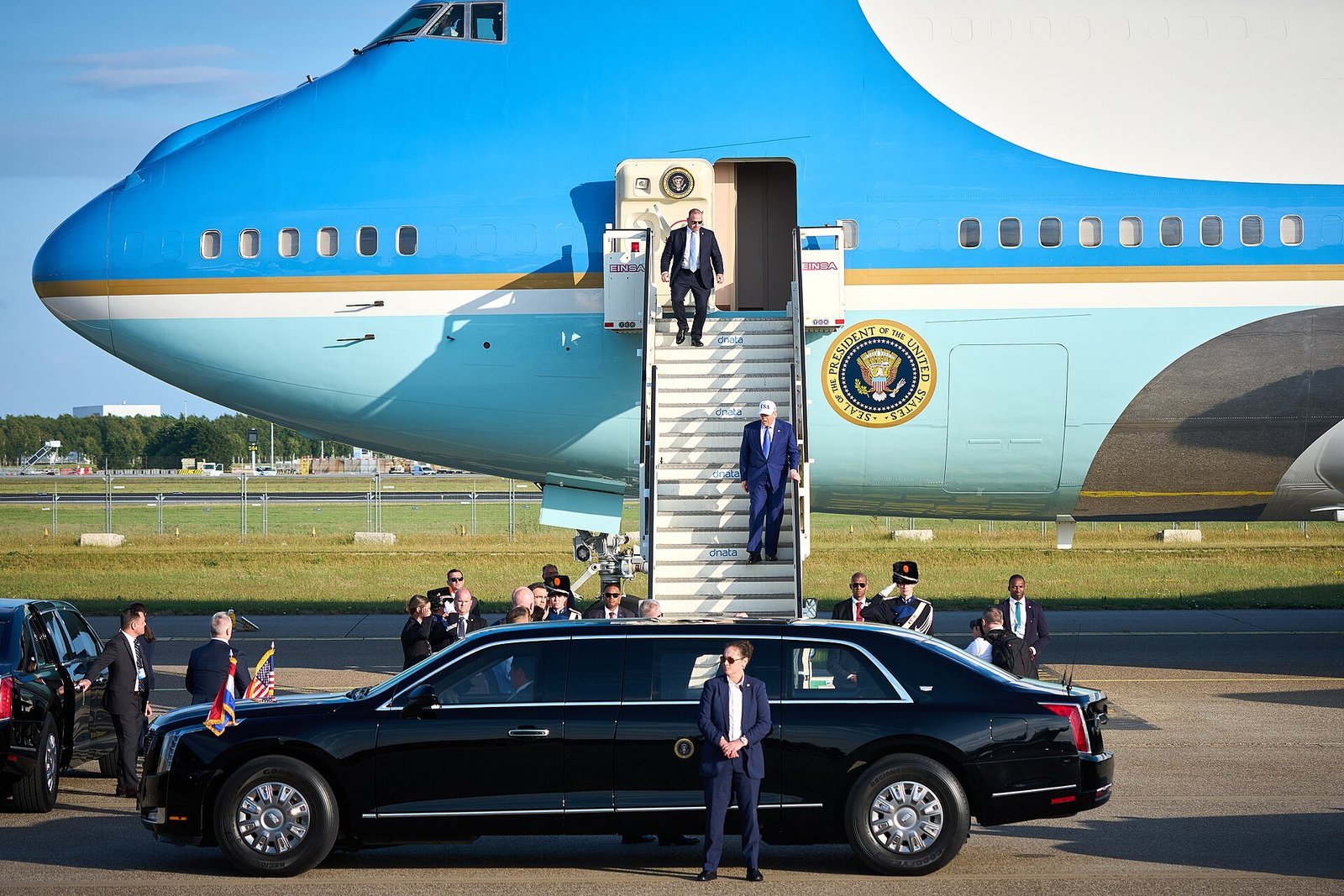
Photograph Source: Ministerie van Buitenlandse Zaken – CC BY-SA 4.0
The expression “coalition of the willing” was first coined by an American political scientist in the 1970s and used by George W. Bush during the Iraq War. It was an American attempt to circumvent the United Nations to carry out peacekeeping or stabilization missions. Now that logic is being turned on its head. Coalitions of the willing are no longer imagined as supporting U.S. action, but as a hedge against U.S. uncertainty. What began as a tool of American leadership is now being reimagined. Ad hoc coalitions are forming to distance themselves from Washington rather than follow it.
The United States under Donald Trump has become an unreliable partner; trust between Washington and its traditional allies is diminishing. Amid disputes over NATO burden-sharing and allied support in the Iran crisis—a continuation of the pattern described in Barbara Tuchman’s The March of Folly: From Troy to Vietnam—Trump dismissed America’s closest ally. Decrying Britain’s lack of support in Iran, Trump declared: “We don’t need them any longer — but we will remember.” UK Prime Minister Keir Starmer called the remarks “insulting and frankly appalling.”
Distancing the U.S. from not just the United Kingdom but also from its closest military alliance, Trump declared in a March 2026 statement “We no longer ‘need,’ or desire, the NATO countries’ assistance — WE NEVER DID!”
As allied confidence in U.S. commitments weakens, and as Trump signals that the lack of trust is mutual, governments are increasingly searching for alternatives.
Europe is beginning its preparations. Given Trump’s continuing threats to leave NATO or his refusal to affirm a commitment to Article 5 of the Washington Treaty — which holds that an attack on one member is considered an attack on all — European Union countries are exploring how to defend themselves without relying on Washington. The EU has long had a common foreign and defense framework, but it has never been fully operationalized. A European army, for example, would require all 27 member states to act in unison—something that has never happened.
European leaders are now considering how to implement a rarely used article in the EU’s Treaty of Lisbon. Article 42.7 of the Lisbon Treaty obliges member states to provide military, humanitarian and financial aid to other member countries in case of attack, a form of mutual defense commitment. The Article states: “If a Member State is the victim of armed aggression on its territory, the other Member States shall have towards it an obligation of aid and assistance by all the means in their power, in accordance with Article 51 of the United Nations Charter.” Article 42.7 was only used once by France after the November 2015 terrorist attacks in Paris.
During a recent informal meeting in Cyprus, EU leaders began exploring how to implement Article 42.7, as reported in the New York Times and The Guardian. “We agreed last night that the [European] commission will prepare a blueprint on how we will respond in case a member state triggers” the provision, explained the Cypriot President Nikos Christodoulides. The closed-door meeting was described as a “confidential exercise” by an EU official.
“The treaty is very clear about the what,” said Ursula von der Leyen, the European Commission chief. “It is not clear about what happens when, and who does what.”
What was originally written as a complement to NATO could become a template for separation from the U.S. Even if Article 42.7 is never fully operationalized, the very fact that leaders are discussing it—and commissioning a follow-up paper—signals a growing uncertainty about reliance on the United States and a search for alternatives.
The shift away from the United States may not be only military. It could also be monetary. A second possibility of a coalition of the willing without the U.S. was presented recently in Geneva by a Canadian political scientist. Professor Fen Osler Hampson of Carleton University suggested: what if a coalition of middle powers decided to push back against the U.S. not militarily, but financially? “What would happen if Canada, Germany, France, the EU, Australia, South Korea, and Japan all decided to sell their dollars?” he asked. Hampson, a frequent foreign policy advisor to the Canadian government, argued that if there were true cooperation among that coalition of the willing, “the Lilliputians would tie up Gulliver,” as happened in Jonathan Swift’s Gulliver’s Travels.
Together, these countries hold about $2.0–2.2 trillion, or roughly 27–30% of all official USD reserves worldwide—enough that coordinated action, however unlikely, would not go unnoticed in Washington. As an example, Hampson proposed that threats by Danish investors to sell U.S. bonds reduced Trump’s enthusiasm to take over Greenland.
Initiating Article 42.7 or selling U.S. dollars may seem far-fetched. After all, the United States remains the world’s dominant military and economic power. But the fact that European countries and eventually advanced middle powers are looking for exit ramps to no longer rely on the U.S. militarily and financially is significant. These are not two separate shifts; they are part of a broader pattern of allied hedging by preparing to move away from relying on a benevolent Uncle Sam.
When Trump calls NATO “obsolete,” it is not just his critique of the current burden-sharing. It signals a deeper doubt about whether American leadership still functions as the organizing foundation of the Western alliance. Maybe it’s American leadership under Trump that is obsolete.
The United States is not about to be replaced as a powerful hegemon. But for the first time in decades, its allies are seeking ways to reduce their dependence on it through pragmatic exit ramps.
[ad_2]
Source link
