
[ad_1]
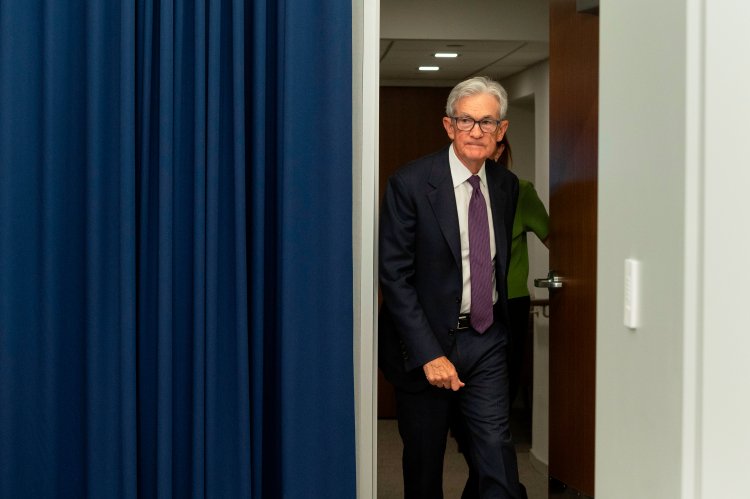
Jerome Powell is finished as Federal Reserve Board chairman, but he has time left in his term, so he is sticking around. He would be only the third chair in history to stay, and he says, “My concern is legal attacks on the Fed, which threaten our ability to conduct monetary policy without considering political factors.”
Cry me a river. So-called “Fed independence” has morphed from an arcane academic argument into dinner-table talking points. Apparently, the Fed wants to be left alone to do whatever it wants. Unfortunately, in the past 18 years, Fed policy has had more impact on the political environment than it likely ever has.
In 2008, prior to the advent of “quantitative easing,” the M2 supply (a broad measure of the total money circulating in the U.S. economy) was $7 trillion … today it is $22.7 trillion. If you have a $100 bill in your wallet, $69 of those dollars were printed in the last 18 years, the other $31 were printed in the century before. That’s a lot of new money! No wonder there are so many more billionaires. The U.S. tripled the money supply.
And when the system is flooded with that much new money, there are clear winners and losers. If you have assets – a house, investments like Baby Boomers do because they have saved for decades – you win. Yes, inflation erodes some of that value, but in the past 18 years, stocks and home prices have outperformed inflation. Owning assets protects you against inflation.
If you don’t have assets (let’s say because you are young), that inflation raises the price you pay for everything, but you don’t benefit from asset appreciation, and incomes have barely kept up. In other words you lose. No wonder Gen Z hates the Baby Boomers. No wonder inequality has skyrocketed. In fact, inequality has surged more in the past 18 years than following any policy change in the history of the United States.
The number one argument against capitalism is that it creates inequality. Inequality created by successful entrepreneurship is good inequality, signaling opportunity and new markets. But inequality caused by inflation and crazy monetary policy has nothing to do with capitalism.
Try telling that to younger Americans. All they see is inequality … so what do they do? They blame capitalism and turn toward socialism. New York City is Exhibit A. Mayor Mamdani is the poster child for upset youth in America. That’s who elected him. Around 75% of voters aged 18-29 voted for Mamdani, a self-described democratic socialist. In other words, Federal Reserve policy in the past 18 years has had an immense impact on the political environment. So, when Powell says political factors shouldn’t come into play, he is ignoring how his policies impacted politics.
That’s a big story, but there is another story as well. If, during COVID, politicians had said “Hey, we are going to borrow $5 trillion to pay people to shut down businesses and sit at home,” and had to finance that plan by selling bonds in the open market, what interest rate might they have had to pay? Given inflation was running at around 2%, and given that this was a crazy idea, my bet is that markets would have charged the Treasury between 4% and 6% interest.
But guess what? The Fed stepped in, drove short-term rates down to zero and 10-year Treasury yields to 1.5% or less. The Fed bought roughly half of all debt the Treasury issued during COVID at these low rates and the market was forced to accept them as well. In other words, the Treasury was able to finance what we now know was a very damaging set of policies at artificially low interest rates, which were engineered by the Fed.
We can ignore, but shouldn’t, the fact that the Fed, and private banks combined, are sitting on $1.5 trillion in losses on those bonds. In addition, the Fed has used its enlarged balance sheet to hire thousands of new employees that get into all kinds of mischief. And the Fed is paying private banks, including foreign banks, hundreds of billions annually to hold reserves. All of these are important issues.
But the most important issue is that the government was able to finance huge growth (and huge deficits and debt) at artificially low rates because of the Fed and its program of quantitative easing. This made it appear that government policies were more sound than they really were.
Now here we sit with a larger government than we should have because of Fed policy. We also have a turbo-charged political divide between the young and the old and between those with assets and higher incomes and those with few assets and lower incomes – because of the inequality caused by easy money.
So who violated the separation between monetary policy and politics first? It sure seems that the Fed did. Cry me a river that politicians are focused on the Fed. It’s the Fed’s fault … and unfortunately the economy is suffering.
[ad_2]
Source link
