
[ad_1]
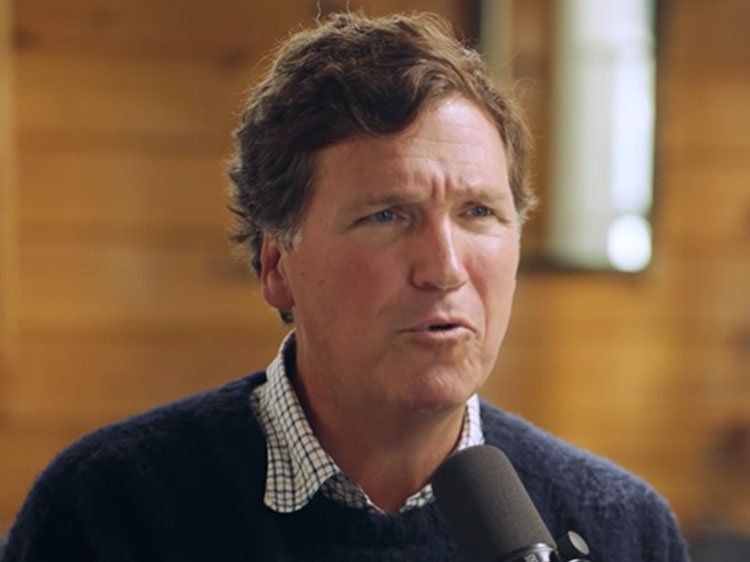
Tucker Carlson sat down for an extended, wide-ranging conversation with Lulu Garcia-Navarro
about President Trump’s decision to attack Iran and Tucker’s criticism of the war, the future of the Republican Party, and his relationship with the vice president.
TUCKER CARLSON: Well, I’ve been speaking to him about Iran for 10 years. Literally since 2016, maybe ’15, because there was enormous pressure on him, as there has been on many presidents, to regime-change Iran. We know, based on our experience with a much smaller country, Iraq, that that’s a tall order, it doesn’t necessarily lead to a place you want to go, and it’s not good for the United States. Trump knew that. And that was the main reason that I supported him during my time at Fox News and campaigned for him. It was really central to my views of Trump’s candidacy and presidency.
So when it became clear in June that we were starting down this road toward a regime change with Iran, I was baffled. I was very upset. Not because I have allegiance to Iran, but because I thought it would be terrible for the United States, as it has been, worse even than I imagined. But I could see exactly where this was going. And he was under enormous pressure to do this, as all presidents in my lifetime have been. So we talked a lot in June. He embarked on this effort to take out Iran’s nuclear program, which is really just the opening salvo in a regime-change effort. He knew that. I told him that. Charlie Kirk told him that. We did it, we got out, and then it became clear in January that we were moving toward this thing that we’re in now, and I was absolutely panicked about it.
NYT: Did he explain to you why he wanted to take the country into war? I’m just trying to understand the dynamics of that conversation.
TUCKER CARLSON: There were multiple conversations. I flew to Washington three times in the weeks before and met with him in the Oval Office alone with people filing in and out — the White House chief of staff, the secretary of state, etc. I had lunch with him on one of those occasions. And then I spoke to him by phone many times on this topic. And he would begin almost every conversation with, Do you want Iran to have a nuclear weapon? To which I said: Well, I’m sort of opposed to nuclear weapons. I don’t want nuclear weapons, I don’t want Israel to have a nuclear weapon, I don’t want anyone to have a nuclear weapon. It doesn’t seem like a good thing. But that’s not the question. The question is: What do you do about it? And that was the end of the rationale for doing this. He never seemed enthusiastic about it, ever.
I would say: Here are the potential effects of this, the geography of Iran being the most important fact of Iran. Iran is not a military power, it’s an economic power. That was obvious, because it controls the greatest span of coastline along the Persian Gulf, which is the source of a fifth of the world’s energy, all well known now, and well known to him then. I think he perfectly understood the consequences.
NYT: There were multiple conversations. I flew to Washington three times in the weeks before and met with him in the Oval Office alone with people filing in and out — the White House chief of staff, the secretary of state, etc. I had lunch with him on one of those occasions. And then I spoke to him by phone many times on this topic. And he would begin almost every conversation with, Do you want Iran to have a nuclear weapon? To which I said: Well, I’m sort of opposed to nuclear weapons. I don’t want nuclear weapons, I don’t want Israel to have a nuclear weapon, I don’t want anyone to have a nuclear weapon. It doesn’t seem like a good thing. But that’s not the question. The question is: What do you do about it? And that was the end of the rationale for doing this. He never seemed enthusiastic about it, ever.
I would say: Here are the potential effects of this, the geography of Iran being the most important fact of Iran. Iran is not a military power, it’s an economic power. That was obvious, because it controls the greatest span of coastline along the Persian Gulf, which is the source of a fifth of the world’s energy, all well known now, and well known to him then. I think he perfectly understood the consequences.
TUCKER CARLSON: No. He made no effort to convince me at all other than to say: It’s going to be all right. Everything’s going to be OK. And I just didn’t feel that way. None of this, I should say, was about Trump or my relationship with Trump or my feelings about Trump or his hair color or anything like that. I just didn’t want the United States to go to war with Iran. And my strong feeling by the end of those conversations — the last one was probably a week before the war began — was that he felt he had no choice and that he was resigned to it. He was unhappy about it. He didn’t seem enthusiastic at all. There was no effort to say, once we do this, the United States will be at peace, we’ll be safe, we will be more prosperous. There was none of that. Zero.
NYT: You speak to many people in the administration. Who was for the war, who was against it, while all this was being discussed?
TUCKER CARLSON: I’m guessing to a certain extent. I do talk to a lot of people there still, but I don’t work there, so it’s hard to really know. There are people with a long record of making bellicose noises about Iran. Specifically, the secretary of state slash national security adviser has said, for many, many years, Iran is the greatest threat we face, which is a ludicrous statement.
NYT: You’re talking about Marco Rubio?
TUCKER CARLSON: Correct. But that said, I didn’t hear a single time from anyone, including from the secretary of state himself, who I spoke to about this, any enthusiasm for doing this. My strong impression, and I could be wrong because I don’t work there, is that no one in the building was pushing for this, at least overtly. That all the pressure was coming from outside — constant calls from donors and people with influence over the president. Rupert Murdoch, Miriam Adelson, etc., and then a small constellation of, I guess they’d be called influencers, beginning with Mark Levin, but there were others, Sean Hannity, pushing the president to do this and telling him that you will be a figure out of history, you will save and redeem Israel or something. I think that was the case they were making. [Hannity and Levin deny this claim. Murdoch and Adelson did not respond to our request for comment.] I didn’t hear of anybody making the case that this would be good for the United States. I don’t think that was ever a conversation.
NYT: There’s been a lot of speculation about the president’s mind-set during this period. Part of it is about what happened after Venezuela and the successful, in their view, operation there, removing Maduro from office, and that he felt emboldened by that and felt that this was going to be similar. That he underestimated the Iranians and what they might do in response to an attack.
TUCKER CARLSON: I don’t believe that. I think the Venezuela operation allowed him to retreat into a kind of fantasy in which he told himself this is going to be easy. But I don’t think he believed that. And I should say, having spoken to him a lot in this calendar year, I detected no evidence at all of dementia, mental decline. You hear people say he’s gone soft. That was not my impression at all. Trump is not well informed on a lot of topics, is proudly ignorant on a lot of topics, but he has remarkable powers of insight into people and power dynamics. You don’t get to be president by accident. The guy’s smart in the ways that matter politically. And my strong read was that he was doing this against his will.
You know, famously, the head of the counterterrorism center, one of the top intel officials in the country, Joe Kent, resigned shortly after the war began and said exactly the same thing: I think this decision is connected to a series of seemingly disconnected events, all of which revolve around violence, and we need to find out more about how this happened. And he was dismissed and threatened with an F.B.I. investigation. And no one followed up on that. And again, I don’t know the answer. But this was not a normal decision-making process. And my strong impression was that Trump was more a hostage than a sovereign decision-maker in this.
NYT: Tell me what you’re getting at when you say the president of the United States, the most powerful country in the world, had no choice.
TUCKER CARLSON: I don’t know what I’m getting at. I’m just telling you what I observed. That’s the question. What I’m fascinated by is the lack of curiosity on display into how exactly this happened. What are the mechanisms by which a guy who’s supposedly sovereign, in charge, granted this authority by voters, tens of millions of them, can’t make a decision in the country’s interest or even in his own interest? He knew, and I know he knew because I talked to him about it directly, the potential consequences were profound and profoundly bad — the end of his presidency, to start, which I think it has proven to be. He knew that. This is my read and I could be completely wrong — I don’t know what’s in his head and I don’t want to overstate my knowledge at all. But this is my strong perception on the basis of many conversations on this topic.
He felt he had no choice and he said to me, Everything’s going to be OK. Because I was getting overwrought. Don’t do this. The people pushing you to do this hate you. They’re your enemies. This will destroy you. This will gravely harm our country. We’ve got kids. I’m hoping for grandkids. Let’s not go there. And he said, It’s going to be all right, and he said, Do you know how I know that? And I said no, and he said, Because it always is. There’s a kind of Teddy Rooseveltian optimism there, but that’s not really what it was. This is my read. That was more a justification from a man who feels he has no choice. That is my strong view. And not just my strong view, the view of others who are around him and involved in this deliberation to the extent it was a deliberation, which is not much.
NYT: Who were the other people around him who had that view?
TUCKER CARLSON: I can’t speak for the views of others, but I will just say once again that I never saw, nor did I hear about anybody who works for the Trump administration, who was enthusiastically pushing this war on Trump, being like: “You want to make this country great again? We need a regime-change effort in Iran.” Instead there were a lot of cowardly people, as there always are, and Trump engenders cowardice in the people around him through intimidation. And there is a kind of quality that he has that’s spellbinding. And I think it probably literally is a spell. And the effect is to weaken people around him and make them more compliant and more confused. And I’ve experienced this myself. You spend a day with Trump and you’re in this kind of dreamland. It’s like smoking hash or something. It’s interesting, very interesting. And there may be a supernatural component to it. I’m not a theologian, but it’s real, and anyone who’s been around him can tell you it’s true. But whatever the cause, no one around him was weighing in strongly, as far as I know, on either side, for or against. But people from the outside were strongly weighing in, calling him constantly.
NYT: I’m going to give an alternative view on what may have happened ——
TUCKER CARLSON: And you may be right, by the way, because I don’t want to overstate what I know.
NYT: We’ve seen the president in his second term be much more interested in foreign policy, as many presidents are, much more open to taking action, not only in Venezuela, but talking about Cuba, wanting the Nobel Peace Prize, wading into situations he wasn’t terribly interested in, in his first term.
TUCKER CARLSON: For sure. That’s real.
NYT: Could that not be part of this?
TUCKER CARLSON: It’s a huge part of it. There’s no question about that, and all presidents decide at some point that they’re not interested in running the United States because it’s hard, and how do you fix Baltimore and Gary, Ind.? And what do you do about homelessness in Los Angeles? These are hard questions. We can’t even make Head Start work, despite many billions and a lot of well-meaning people spending their lives on it. So these are hard problems and I think it’s a universal experience among American presidents, but also among U.S. senators, to decide: I’d rather run the world, because the details are opaque. I don’t speak these languages.
First of all, it’s a display of male power: Send the bombs in to kill the bad people. But moreover you get to feel like I did something, and that’s important and I get it. And this is, as you wisely note, a process that all presidents tend to go through. And so Venezuela, Cuba, I object to both of those efforts very strongly, but neither one, in my view, risks the future of the United States in the way that the Iran war now does. So it’s a big deal. But because it is, by the way, a contiguous neighbor of Iraq, and because Trump spent years talking about what a terrible idea the Iraq invasion was — defined his candidacy in 2016 on that point — it’s hard for me to believe that he just organically reached this place at the end of February, like, Oh, I think it’s a good idea. He did not think it was a good idea. Shutting down a fifth of the world’s oil and gas? Of all people, Trump knows that’s bad.
NYT: You said he’s a hostage just now. You told the BBC he’s a “slave” to foreign interests.
TUCKER CARLSON: Correct.
NYT: I just want you to be explicit. Trump is being held hostage by whom?
TUCKER CARLSON: By Benjamin Netanyahu and by his many advocates in the United States. And we know that not simply because Trump started the war on Feb. 28, but because he couldn’t get out of it. He declares we’re having a cease-fire. He says, We’re having a cease-fire and we’re having these talks and they’re going great, and we are going to open the strait. And Iran says, Yeah, one of our conditions is Israel’s got to pull back from southern Lebanon. You can’t use the Iran war as a pretext for stealing more land from a sovereign country that’s not your country. And it’s not just Iran who felt that way. I think the rest of the world is like, What are you doing? I thought we were fighting the great existential threat, Iran. And now you’re taking the opportunity to take Lebanon’s shore, the Litani River, and bombing downtown Beirut. What is this?
Anyway, this was all very well known. And within hours of Trump announcing this, Israel publicly, in a way that was designed to get the attention of everyone, including the Iranians, starts killing civilians in Lebanon. Now, what was the point of that? Not to secure the Israeli homeland. The point of it was to end any talk of a negotiated settlement, to keep this going until Iran was destroyed and chaotic, which is the Israeli goal. I’m not attacking Israel by saying that. Their goals are different from ours, they’re a different country.
NYT: They would argue that what they are doing is neutralizing the threat that has been persistent in Lebanon through Hezbollah.
TUCKER CARLSON: OK, but they invaded Lebanon in 1982. That was 44 years ago. They’ve had a lot of time to fix Lebanon. They killed Nasrallah, they blew up Hezbollah with explosive pagers. They’ve done a lot since Oct. 7 in Lebanon. They chose that moment to derail the negotiations. And they’ve done this repeatedly.
And so my perspective as an American is we’re the United States, we are a country of 350 million people. You are wholly dependent on us. You’re a country of nine million people with no natural resources. I’m not against you, but we’re not coequals here. But the point I’m making is Trump could not restrain Netanyahu. Netanyahu is the one person to whom Trump couldn’t say, “Hey, settle down or we’ll just defund you and your country will collapse in about 10 minutes,” which is true. Israel can’t defend itself without the United States, despite whatever propaganda you may have heard.
So again, it’s not an attack on Israel. It’s an attack on American leadership for not constraining its partner in a way that helps the United States. Trump said, I want a negotiated settlement. Israel stopped the settlement. Trump refused to even criticize Netanyahu in public. Are you joking? That’s slavery. That is total control of one man by another. And that’s between Trump and Bibi and God, as far as I’m concerned. But as an American, that is our elected president, whose job is to protect our country and our interest and our economy. And he is looking out for Israel first. That’s outrageous. And no amount of “Oh, you’re an antisemite” — which I’m not, and I’m never going to be — is going to stop me from noting that that’s outrageous. It is outrageous.
NYT: Israel has tried to exert its influence on a number of presidents. Many presidents have been asked to decapitate Iran, to do a joint military operation in the Middle East. This is the first time, really, that this has happened, where the United States and Israel are doing a joint military operation against a Muslim country. Other presidents were subjected to the same pressures, the same donors. Bibi Netanyahu has been there since the ’90s. What do you think has materially changed that made Trump more susceptible to that influence?
TUCKER CARLSON: That’s the question that I would like answered. And I don’t know the answer, as noted. One argument could be Trump is just uniquely weak. But that was not my perception. I think Trump obviously has weaknesses and a lot of his posturing is compensatory, of course. I’m not interested in psychoanalyzing Trump, but that’s clear. What was it about this moment that allowed a foreign leader to have this level of influence over an American leader? And I don’t know the answer, but again, I think it’s worth finding out. I would also note that this is not a defense of Trump. Hardly. This is the single most foolish thing any American president has ever done, in my opinion. I say that with sadness.
But many American presidents have put Israel’s interests before our own. I would say the Iraq war was a very obvious example of that. I mean, [Vice President Dick] Cheney’s office was completely controlled — and I knew almost all of them — by people who were putting Israel’s interests above America’s interests. So I think the Iraq war was, to a great extent, a product of that, and I believe that Trump felt exactly the same way, because I talked to him about it a lot. So what changed about Trump? What changed after years of telling us our leadership is weak, they act against our interests, they’re stupid, they’re foolish, they’re bought off by foreign powers and by domestic donors? That was Trump’s case. That was his whole pitch. That’s why he got elected. To switch on something this big in the space of a few months? That bears some examination. That’s all I’m saying.
NYT: In 2020, when President Trump killed Iranian Gen. Qassim Suleimani, you went on your Fox show and said: “There are an awful lot of bad people in this world. You can’t kill them all. It’s not our job.” And you asked, Why are we “jumping into another quagmire from which there is no obvious exit?” But it wasn’t until President Trump ——
TUCKER CARLSON: I was not heralded for saying that. I don’t think I’ve ever been more criticized. I’m opposed not simply to foreign interventions, as you said, most of them anyway, those not undertaken in self-defense — I’m against the whole frame. I’m against the idea that Hezbollah and Hamas are at the center of our domestic conversation. Like, they’re the big problems we face? They’re not! They are not a bigger problem than the behavior of Citibank, I’m sorry. Credit card debt is a much bigger problem than Hezbollah will ever be. So stop with the brainwashing. This is bonkers. I live here. I’m almost 57. I’ve lived here a long time. Hamas and Hezbollah, while they’re not getting my endorsement, are not relevant to the experience of most Americans. So once you start thinking like that, you’ve betrayed your country.
NYT: So it wasn’t until President Trump threatened Iran’s civilian infrastructure with a profane Truth Social post on Easter Sunday that you actually started quite explicitly speaking out against him.
TUCKER CARLSON: Yeah, you can’t attack Jesus. How’s that!
NYT: In a monologue on your show, you said, “How dare you speak that way on Easter morning to the country.” Tell me what you were responding to right then, because it really is a seminal moment for you in terms of publicly breaking with the president.
TUCKER CARLSON: I don’t do monologues. That was ad lib. I didn’t write it. I don’t have notes. It’s just like, that’s how I feel. So it’s probably not as coherent as it should be. But that was really just an emotional reaction to the experience of waking up on Easter Sunday, the holiest day on the Christian calendar, and a day of joy and hope, literally the resurrection of Jesus, and seeing Donald Trump using profanity, threatening to murder civilians. I mean, that’s a crime. That’s a moral crime. So to brag about that, and then to mock Islam? I don’t think you should mock people’s faith. I don’t care if it’s Judaism or Christianity or Islam. It’s especially galling as a Christian.
I voted for Trump in 2024 — and I never vote typically, but I voted for him this last election and campaigned for him in a bunch of cities because I felt that there was clear persecution of Christians in this country, people of faith, and it was demonstrable. And I felt Trump — and I based this on his explicit promises — would be a protector. I never thought Trump was a Christian. But I took him at his word that he would be a defender of people of faith who need to be defended. And this country exists to defend them. It’s in our charter. So anyway, I was just completely outraged by that.
NYT: Since that moment, you’ve gone even further. You recently said on your show that you’ll be “tormented” for a long time by the fact that you played a role in getting Donald Trump elected, and you said, “I’m sorry for misleading people.” That’s gotten a lot of attention, as I’m sure you know.
TUCKER CARLSON: I don’t know because I don’t Google myself, ever.
NYT: I would like to understand exactly what you mean. Can you explain?
TUCKER CARLSON: I’ll tell you what I mean. I truly believe that the base line requirement, the ticket of admission to the conversation, is admitting when you are wrong. I spent 10 years defending Trump on Fox News. I’d probably do it again, because on the issues I agree with him. I never defended a single thing I didn’t believe. But at this point, the consequences of this decision are so bad for the United States and for my family and your family that you have to say it out loud. I’m a small reason. I don’t think I moved a lot of votes, but I tried to. I told people this guy will keep us out of the next Iraq, specifically will keep us out of a regime-change war with Iran. And here we are in the middle of a regime-change war in Iran. Hundreds of Americans have been wounded, some number have been killed. They won’t tell us. That’s just the opposite of what I said would happen, so I’m sorry.
NYT: I hear you say that, but I am compelled to question it a little bit. Are you simply going public about something that you’ve felt privately for some time? Because, through the Dominion lawsuit against Fox News, some of your texts went public, and in 2021 you said, “There really isn’t an upside to Trump.” You said, “I hate him passionately.” Clearly you had some feelings of reservation about the president before this time. Without question. There’s no doubt.
So I’m just trying to understand ——
TUCKER CARLSON: You know, I have a lot of thoughts and theories about things which may or may not be rooted in reality. So I hesitate even to spring any of my theories on you because they’re probably insane. But one thing that has bothered me for many years is the fact that a lot of people in Trump’s immediate orbit have been hurt — and really hurt. Gone to prison, become unemployable, publicly shamed, have gotten cancer. And I am a believer in big-picture assessments of things. So you’re trying to think, Is Trump good or bad? He’s saying things I really agree with. But then people around him are getting hurt. Is the country actually getting better? I don’t know. It’s hard to know. Because to some extent your vision is obscured by the intensity of some of these debates. Mine was, has been, is easily obscured by that intensity.
But did I have reservations about Trump? Of course. To some extent I sublimated them or rationalized them away or focused on areas where I agreed with him. All my fault. But I told myself, and I to some extent still believe, it’s the big decisions that matter. And I knew — because I know the Democratic leadership really well, that they’re completely under the control of the same forces — that we would get a regime-change war inevitably in Iran if they were elected. And so I told myself Trump is the way to avoid the really bad thing.
NYT: There’s the political case against Trump that you make. But I do want to ask you about the “moral” case that you’ve been making as well. That’s a word that you have used. In that monologue responding to Trump’s Easter post, you said that Trump’s comments were “evil.” And I just want to understand that a little bit better. Do you think only his comments are evil, or does the evil extend to Trump himself? Is he evil?
TUCKER CARLSON: I just want to be really clear that there’s a lot of evil in me and in every person. I’ve certainly experienced it in myself and I have seen it in all people. We’re all capable of evil. So I want to pull back on the judgment and be very precise about what I was saying, which is you cannot mock other people’s gods and put yourself in their place. That is a deal-killer for me. That’s worse than the war with Iran, in my opinion.
NYT: I ask because you’ve been talking on your show about whether Trump is the Antichrist.
TUCKER CARLSON: I have not said that.
NYT: On your show, the day after Easter, you noted he did not put his hand on the Bible during his swearing-in ceremony as president, and you said, “Maybe he didn’t put his hand on the Bible because he affirmatively rejects what’s inside that book.” And then on a recent show, you went further, saying: “Here’s a leader who’s mocking the gods of his ancestors, mocking the God of gods and exalting himself above them. Could this be the Antichrist?”
TUCKER CARLSON: I actually did not say, “Could this be the Antichrist?” [He did.] I don’t know where that comes from, but I know that those words never left my lips because I’m not sure I fully understand what the Antichrist is, if there’s just one. I actually tried to understand it. I may have said some are asking that. I am not weighing in on that because I don’t understand it, just to be totally clear.
NYT: In Revelation, the Antichrist is named in different ——
TUCKER CARLSON: Not just Revelation, but throughout the New Testament, there are references, and in the Prophets as well. But no, I’m not speculating about that. I know that people are speculating about that, but I would say it’s enough to acknowledge that Trump, like many leaders through history, is putting himself above God, but even on a more terrestrial level, to send out a picture of yourself as Jesus has got to be a red line for Christians. How could it not be? It has to be, and I wish that Christians would speak up when he attacks Allah, when he mocks the faith of Muslims.
NYT: So to be clear, though, that was not what you were suggesting?
TUCKER CARLSON: If I thought Trump was the Antichrist, I would just say so. If I understood what the Antichrist is, I’d say so, and I don’t really.
NYT: You’ve been discussing it repeatedly on your show, so I’m just trying to understand why. What do you want your audience to be considering?
TUCKER CARLSON: I want my audience to see what’s happening now in terms beyond just material. Obviously, the commodity flow through the Strait of Hormuz is essential to the global economy. Got it. But I also think there is a world beyond our senses. Every culture and civilization has understood that from the beginning of time. And we’re in this weird, anomalous moment where we’ve been trained not to think that, but it’s real. And this is a realization that’s dawning on me. I wasn’t thinking like this at all until several years ago. So I don’t want to pretend that I’m a shaman or anything like that. I just want to make the point repeatedly again and again that there are unseen forces that act, that there is a spiritual realm, and we are subject to those forces for good and bad, and I don’t think that any person can deny that.
NYT: I just want to make the point that you did say, “Could this be the Antichrist?” And then you said, “Well, who knows?” You did use those words.
TUCKER CARLSON: Man, then my apologies to you, if there’s a video of me saying that. I guess what I’m expressing to you is it doesn’t reflect exactly how I feel. It suggests a precision that I haven’t arrived at, that Trump is the Antichrist. You’d have to define Antichrist, and I know that I can’t define it, and it’s not clearly defined in the New Testament or Old Testament.
NYT: So you’re open to the possibility?
TUCKER CARLSON: I think what we’re seeing is evil. Are you allowed to kill people who’ve committed no crime? No. Super simple. You’re not allowed to do that. Under no moral standard is that allowable. All of a sudden it’s allowable in Gaza, and our leaders are like, Yeah, it’s totally fine. It’s not fine. It’s repugnant to the Christian understanding of the world and the human soul. Every person has a soul. That’s the Christian view, and not just the Christian view, it’s the Islamic view, too. And it’s my view.
NYT: Your Easter episode was titled, in part, “A Warning to Christians Everywhere.” My interpretation was that you were warning other Christians not to follow a false prophet.
TUCKER CARLSON: Yes, that’s exactly what I’m warning.
NYT: That false prophet being President Trump?
TUCKER CARLSON: Yes, and Netanyahu. There are a lot of evangelical Christians who are convinced that God wants you to support Netanyahu, which I find incomprehensible.
NYT: Christian evangelicals in this country have been a hugely important part of President Trump’s coalition. Many support Israel because they believe the creation of the state of Israel fulfills biblical prophecy. They’re called Christian Zionists. I will note you have said you dislike Christian Zionists more than anybody. You’ve said they have a “brain virus.” You have apologized for those comments repeatedly.
TUCKER CARLSON: Yeah, I shouldn’t have said that.
NYT: But would you like to see those Christians stop supporting the state of Israel in the way that they do?
TUCKER CARLSON: Of course, immediately, on many different grounds. But it’s really simple. Christians can never support the murder of innocents, period. That’s just a bright red line. Find the place where Jesus is like, “These people are annoying, kill them all.” It’s not there. So where are you getting this? I’m hardly a theologian. But I’ve asked many Christian Zionist leaders who will speak to me. Now they won’t talk to me, but I certainly asked Ted Cruz this. I asked Mike Huckabee this. I tried to ask Franklin Graham. But I sincerely want to know where this is coming from. It can’t all be from the Book of Esther.
NYT: You did have this contentious interview with Huckabee — he’s the ambassador to Israel — where you talked to him about Christian Zionism for quite some time. And in that interview, you were pressing him on if the modern state of Israel as a homeland for the Jewish people today has legal or biblical legitimacy. You were questioning him on this idea and you went round and round on this for quite some time. And I was just wondering what you were trying to get at there.
TUCKER CARLSON: I was trying to get an answer, which I couldn’t get, and instead was accused of hate for trying to evoke an answer to a very simple question, and the question was, on what basis are you making this claim? People whose ancestors didn’t live here now occupy the land — that’s very common in history, by the way. I’m not even objecting to it. What I’m objecting to is the claim that it’s God’s will and that Israel, because of this, has the unique right to exist. Where does that right come from? Well, the right comes from the Bible. OK. Well, I’m not a Bible scholar, but I’ve certainly read it a lot. And I said to him, Where are the borders? Because my read of Genesis is that’s a big hunk of land. That’s the Middle East. Does Israel have a right? Because you’re referring to this text as the basis of the right to have that land. And he said, Fine with me.
So on many levels, theological and diplomatic, kind of a big thing to say. The White House was annoyed that he said it out loud. I was grateful that he did because it’s good to know what the terms are. And the second question I asked was, If Israel has a right derived from this scene in Genesis, then to whom does it apply? Who are Abraham’s heirs? And he said, Well, the Jews. And I said, OK. By the way, just to be clear, these are not conversations that I sought. I was never interested in this topic. Israel’s a country with borders and sovereignty and a seat at the U.N., and it’s a nation-state like ours, like every country.
The second you start telling me that as a Christian, I’m obligated to support the government of this country, then I have a right to ask you what you’re talking about. It’s that simple. So I flew all the way to Israel, which I didn’t want to do, and I asked him, What are you talking about, to whom does this right apply, and on what basis? Shut up, antisemite! So from my perspective, that was the most revealing conversation I’ve ever had.
NYT: Why, though, were you so interested in those questions?
TUCKER CARLSON: Because we’re now in a war, which is in the process of destroying the United States economy and getting Americans killed, because Israel pushed the United States president, who caved. And I’m not giving him a pass, but that’s just a fact. That’s what happened. Israel has that power in our Congress, not because we have so many Jews — I don’t know how many Jews live in the United States, fewer than 10 million, I think — but because we have tens of millions of evangelical Christians who unquestioningly support Israel because they believe it’s their theological duty to do so.
So on this question hangs the future of the American economy and the lives of American service members. There’s no more important question. And the effort to push me away from that question by calling me names, calling me a hater, saying I’m obsessed with Israel? I would be grateful never to think about it again. I find Israel actually geo-strategically irrelevant except to the extent that we imbue it with relevance at the behest largely of evangelical Christians. So you can see there’s a one-to-one correlation between these questions and the future of my country. Mike Huckabee and the people he represents have made it the nation’s business, at which point it is entirely fair, in fact it’s a requirement of good citizenship, to press him on, What are you talking about? He refused to answer those questions, at which point I say, as someone who’s still committed to reason, you’ve been exposed as a fraud and/or a liar.
NYT: I think one of the reasons that interaction with Mike Huckabee was particularly notable for people, and the reason you got so much pushback, is because there is an enormous sensitivity around Israel being the homeland of the Jewish people and the attempt to delegitimize that.
TUCKER CARLSON: I have enormous sensitivity about the United States being the homeland of my people and the burial place of my ancestors. I have enormous sensitivity about the future of the United States. Those are my concerns. I’m not dismissing the concerns of any other group, including Israelis or Iranians or Venezuelans or anybody else. Everybody has his or her own set of concerns, but my concerns revolve around my country. I’m not going to subordinate my concerns and the concerns of my children to other people’s hysteria, no matter what country it is.
NYT: Why do you think you get tagged so often with antisemitism?
TUCKER CARLSON: I think there are two reasons. I’m not an antisemite and I think that’s obvious. I’ve expressed this many times and I’ll do so again: I have temperamental and religious objections to antisemitism or any hate or discrimination based on bloodline. That is against Christian theology, it’s against my personal ethics, and I oppose it no matter who is suffering from it, whether it’s whites or Blacks or Jews. Nobody can be punished for his bloodline, period. I don’t believe in collective punishment, unlike the Israeli government. So that’s No. 1: I am opposed to antisemitism, and that’s a threat because I’m not approaching this as someone who wants to hurt Jews. I just don’t want the United States to be implicated in the crimes of other nations, and I’m not intimidated.
And No. 2, that is a much easier conversation than answering very simple questions. Like where does the right to exist come from? I’ve been told for many years that Israel has a unique right globally to exist. Where does that right emanate from, who granted that right, and on what grounds? And they can’t answer the questions and they don’t want to have the conversation. So just to be totally clear: Asking questions is not hate. Telling the truth is not hate. They don’t want to answer the question and they don’t want to tell the truth. And by the way, it’s not just Jews — I think I’ve been attacked more viciously by Christian Zionists than I have by Jews, just in point of fact. It’s a kind of nice universalism to it. But I’m not intimidated. I don’t know why I would be. In fact, I think it’s my obligation not to be intimidated.
NYT: Can asking questions stir up hate? Language is powerful.
TUCKER CARLSON: Well, sure, I mean, you could pose attacks in the form of questions. I’ve certainly done that a lot, for sure. But the questions themselves hang in the air. And a legitimate question deserves an answer.
NYT: The reason I want to press on this a little bit more is that there is an entire antisemitic worldview that has been based on “The Protocols of the Elders of Zion,” that there was this cabal of powerful Jews that controls the world. And that book was written in the early 20th century, but helped the Nazis, and it really has informed a lot of the views of many people today that there is this very powerful sect of Jewish people who want global war and global conflict. And there’s a real concern that the rhetoric where everything is blamed on Israel, where Israel has these supernatural powers to influence the president, to influence the previous president, George W. Bush, to enter into the Iraq war, to be involved in assassinations, etc. — that it has echoes of that. People are genuinely concerned that it opens the door to this idea that has been debunked and has been used in absolutely vicious ways to annihilate an entire people.
TUCKER CARLSON: I’m not quite sure what that means. Let me tell you my concerns. My main concern is the destruction of the United States. And that is in no way to minimize anyone else’s concerns, but I have a right to that concern and I will not have my own concerns hijacked. I will not submit to being told what my concerns should be. I’m an adult man who pays his taxes. I have a right to come up with my own hierarchy of concern. And at the very top is the destruction of my country, which I’ve lived in for 56 years. And I know that it’s not better than it was, and it’s not getting better than it was. And there are many reasons for that. One of them is this war, but there are many others.
And so people say, “Well, I’m really concerned.” Well, I am really concerned, too. I’m really concerned that the prime minister of Israel and his many cheerleaders in American media — including at The New York Times, if I can say — pushed the U.S. government into a war that hurts the United States. That’s my concern. And I would say that’s at least coequal with anyone else’s concerns. So that’s the first thing I would say. Second, as for “The Elders of Zion” or whatever, I don’t know what that is. I’ve heard references to it. It’s like czarist forgery or something.
NYT: I’m just wondering what the line is for you — I am by no means purporting to understand necessarily where it is — between criticism of the state of Israel and how that could be perceived as feeding into antisemitism.
TUCKER CARLSON: Well, it breaks my heart that it is perceived that way, and that perception is the product of a decades-long effort to conflate antisemitism with any criticism of the secular government of Israel. The I.H.R.A. definition of antisemitism lists 11 examples of antisemitism, and that has been adopted globally. Forty different governments have adopted it as their standard of what antisemitism is, and two-thirds of the examples are criticism of Israel.
I don’t get to write these standards, and I also don’t have to abide by them. And I reject as ludicrous, out of hand, the idea that the criticism of a secular government is the same as criticism of an entire ethnic group, many of whom do not support that secular government, many of whom reject that secular government, and a lot of those I know personally. So you’re just not going to get me on board with the lie that criticism of Netanyahu is hatred of all Jews, because it’s not. And I don’t care how many times someone repeats that to me. I don’t care. And by the way, I’ve lost friends over this, and I do grieve that.
NYT: Is it just Bibi that you’re against, or if there was a different government in Israel, it would be OK?
TUCKER CARLSON: I’m against anything that hurts my country. Why wouldn’t I be? I live here.
NYT: But I’m just curious. There are elections coming up, and if Bibi gets kicked out ——
TUCKER CARLSON: I took my family on vacation there. Obviously, I’m not against Israel. By the way, you can check the record. Before maybe two and a half years ago, I certainly never criticized Israel, but I rarely even mentioned Israel. I could give you a long list of the things that I love about Israel, particularly about Jerusalem, which is one of my favorite cities. Jerusalem and Beirut — greatest cities in the world. It kills me to see them at the center of all of this. I think the second that we ban criticism of a foreign country, we’re not free at that point. We’re slaves of that other country. Whatever you can’t criticize is the force in charge.
By the way, I don’t think it’s good for global Jewry to have any of this at all. If you tell 350 million Americans that it’s against the law, and it’s very close to against the law at this point, to criticize Israel, how does that help the perception? Does that feed antisemitism? I think it does. Not that it is my job to monitor or regulate this stuff, but just common sense would tell you that’s not good. If you want to make the case on behalf of anything, any idea, including ones I disagree with, make your case, tell me why it’s a good idea. And we’re falling out of that habit and instead try to hurt people who disagree with us. I will always reject that. I guess I’m the liberal.
NYT: I would say it’s not exactly against the law, but I understand your point.
TUCKER CARLSON: The second you say that criticism is the same as a threat or words or violence, then of course it’s very easy to arrest people, as they are arrested in Great Britain. They’ve had hundreds of people arrested in Great Britain for criticizing Israel. I don’t know why any liberal-minded person, and I’m in that group — you have a right to your views, I have a right to mine — would go along with this and not say: “Whoa, whoa, whoa. This is totally bonkers. This is the road to totalitarianism.” And I would say that about any topic.
NYT: We’ve talked about some fissures that have emerged among conservatives over Israel in the war, right?
TUCKER CARLSON: Fissures? Yeah, it’s totally blown up.
NYT: I want to dig into that because earlier this year, you told Megyn Kelly that there is “a huge scramble” to define what the Republican Party is after Trump, and you said, “I’m in the middle of it.” Boil down the scramble for me.
TUCKER CARLSON: Well, I lost that scramble. [Laughs]
NYT: Are there two sides? Is it driven by ideas, personalities?
TUCKER CARLSON: Look, there have been disagreements over foreign policy within the Republican Party since 2015, when Trump announced for president. [Before,] there was no disagreement at all. It was a neoconservative party completely. I was part of that for sure, and unthinkingly, and then unwillingly, but whatever. But since 2015, there’s been this kind of debate: What is the appropriate use of American power? And what is our relationship with Israel? And those have been sotto voce debates. But it’s only with this full regime-change effort against Iran that they’ve become untenable.
My own view is I’m always happy to eat with and talk with people I disagree with. Again, I guess I’m the liberal here. But there is a strong sense among the neocons who’ve completely taken over the Republican Party that anyone who disagrees cannot be allowed in the White House. I don’t make these rules. I feel sad about it for a bunch of reasons. As a political matter, the constituency for that is very small. There aren’t 150 million people in America who are really excited about the Iran war or who are ever going to be excited about that. So you’re dooming your party to irrelevance when you do that. I don’t know why they would want to.
They hate Trump. The neocons hate Trump, have always hated Trump. I had a first-row seat to this. And now they’ve destroyed him. And I told him that. I said: These are people who hated you from Day 1. They couldn’t control you. They hated you for that reason. What you said about the Iraq war inflamed them, it humiliated them, and they want to destroy you, and this war will destroy you. I said that point-blank right to him. And it’s proven true now.
NYT: And what do you mean about you being in the middle of it and losing the scramble?
TUCKER CARLSON: Charlie Kirk and I were the only people, I think, in June of 2025 to say to the president, to his face: This is a very bad idea. The people pushing this are trying to get you involved in a regime-change war. You’ve campaigned against that. Don’t do this. And then, on Sept. 10, Charlie was murdered by a lone gunman. So by the time this latest round happened in January and February, I think I was the only person who said that to Trump. We know who won by the effects. From my perspective, it was a debate between people who thought it was wise to use American power in the way we’re now using it and those who thought that it was dangerous. Trump did it. So obviously he rejected my view.
NYT: As you mentioned, you were very close to Charlie Kirk before he was killed. And he started Turning Point USA, which is this very influential group among young people on the right. And we’re now seeing some on the right who are questioning whether Israel had a hand in Charlie Kirk’s murder. And I should say the theories that Israel was linked to Charlie’s death were denied by Israel. There’s been no proof of that at all, and crucially this theory has been condemned by Erika Kirk, Charlie’s widow. Do you still have a relationship with Turning Point USA?
TUCKER CARLSON: Well, I have always loved Erika Kirk. I met her when she was dating Charlie and thought so much of her. I know a lot of people at Turning Point. I was the headliner for a bunch of different Turning Point events. I haven’t been asked to do it this year, don’t know if I will be. Never said a word against Turning Point. I would hate to see it hijacked by its donors to become an oracle of neoconservatism. I think it’d be pretty hard to do because its members are not for that, young people are not for that, people of draft age are especially not for that.
NYT: When was the last time you spoke to Erika Kirk?
TUCKER CARLSON: A couple of weeks ago by text. So my concern — and this is not about Erika Kirk or Andrew Kolvet or any of those people with whom I’ve never had a cross word and hope never to have a cross word — but my concern more broadly is about the investigation into Charlie’s murder, which was short-circuited by the F.B.I. And I’d like to know why. I don’t care to be screamed at for asking that question. It’s a legitimate question. And we know that. I know that for a bunch of reasons. But the public knows it because Joe Kent said it out loud and explained it. He was the head of the National Counterterrorism Center. He’s O.D.N.I. And he was told by the F.B.I. that he could not investigate it. And as a friend of Charlie’s, I’m not going to be intimidated into not saying the following, which is, On what grounds would you do that? I’m not saying the guy who’s been arrested didn’t pull the trigger.
NYT: He was handed over by his father.
TUCKER CARLSON: Do we know that? I don’t know what I know because there hasn’t been a trial yet. And again, it’s like so many things, and it’s not just Israel, it’s not just Charlie Kirk, it’s the existence of NATO or the way the economy is structured. Why is capital taxed at half the rate of labor? That’s a question that bothers me. In every case: Shut up, socialist, racist, conspiracy theorist. It’s like, I’m just too old for that. Why don’t you answer the question? That’s my job.
NYT: Do you think Turning Point’s influence has waned since Charlie’s death?
TUCKER CARLSON: I haven’t the faintest idea. I agree with most Americans when I say this war is a disaster, it’s impossible to see how it helps the United States. And I would like to see all self-described conservative groups pressure the president, as Charlie did, to minimize the damage. I hope Turning Point is working on that. I don’t know the answer, but I certainly hope they are. I can say confidently Charlie would be working to do that.
NYT: Obviously, Turning Point is just one organization trying to reach youth on the right, but you also have Nick Fuentes, the far-right white nationalist influencer who’s called Hitler “effing cool,” who also has a huge following among young right-leaning men. How do you see Fuentes in terms of the future of the right?
TUCKER CARLSON: It’s so hard to know. I’ll tell you my instinct on it. Most of the debates about race, ethnicity, religion, to some extent immigration, are less resonant long-term than debates about economics. I think the main frustration among young people is not just that the composition of the country is changing too fast, which it definitely is. But the main concerns are about the lack of economic opportunity for American young people, who are totally screwed at a more profound level than people acknowledge. Older people do not acknowledge that.
I had dinner the other night with a bunch of really smart kids from Stanford. And one of them said that his best friend just graduated with a degree in computer science last year and has not been able to find a job. Stanford computer science, can’t find a job. So that’s a window into the total destruction of the economic opportunity for young people, and what looks to me as a non-economist like the true hoarding of capital by a tiny group of people, a very lopsided and unfair economic system guaranteed to radicalize young people — and not just young people, but especially young people. And so I think most future conversations politically will be about economics.
NYT: So you see that as Fuentes’s power waning?
TUCKER CARLSON: For sure. I don’t know about Fuentes in particular. I wasn’t even aware of Fuentes. I’m just in a different world, right? I read The New York Times or whatever. I’m older, OK? So I’m not an expert on Fuentes’s reach or even what he’s saying day to day. I really don’t know. But he has been caricatured as a race guy, which he may be, by the way. He was mad about the Jews or Black people or whatever, but I’m just telling you I think the future, the energy, not just on the right, but I think right and left agree on this, under 30, is that young people have been shafted by older people, particularly by the baby boomers, people born between ’46 and ’64. And I think they’re right about that. I do think that’s the most selfish generation, most loathsome, mediocre generation this country ever produced. Not all of them, but in general, I would say. Their behavior has been shameful and selfish. And I hear young people talk not about “I’m mad at the Jews.” I hear people say things like “Only baby boomers would have a second home in Isle of Palms, S.C., but not help their kids buy homes.” That’s what I hear. I hear people who understand that their lives will bear no resemblance to the lives of their parents and grandparents and they’re really upset about it.
Meanwhile, there are all these people making billions on clearly fraudulent enterprises. Crypto-related enterprises and other enterprises that are not adding to the sum total of prosperity in this country and not making the country better. So that’s where I think the radicalism is going to start. And the murder of that health care executive in New York, the health insurer guy? I’m against all murder, just to be totally clear. I was surprised but not really shocked by the positive reaction. All these normal-looking people on the internet are like, “I am glad they killed him.” They don’t even know his name. That reflects this revolutionary frustration. And I do think it’s revolutionary.
I think one of the reasons that Trump is apparently going to make weed legal is just so we can lower testosterone levels even more, make people more passive. Have some more benzos, it’s fine. Because it’s not fine, is the truth. So again, long-winded answer to a short question, but the future that I imagine is not a future in which we’re yelling at each other about race. It’s a future in which people are legitimately revolutionary, maybe even violent, on the basis of thwarted economic opportunity.
NYT: Fuentes wants America to be a white Christian nation among other things.
TUCKER CARLSON: Well, he’s very good at offending The New York Times, but I think the real issues are not about Fuentes or even about race. Immigration has a direct effect on economics, and so the overwhelming majority of newly created jobs in the past five years have gone to the foreign-born. That’s not an attack on the foreign-born, to say that’s not really the job of the U.S. government to provide economic opportunity to the world. The job is to protect its own people.
NYT: I can tell you don’t want to talk about Fuentes.
TUCKER CARLSON: Well, I don’t have a lot to say. I just think, like, OK, he said naughty things.
NYT: Well, you caused a big uproar when you had him on your show.
TUCKER CARLSON: I didn’t cause anything. People got hysterical. How can you talk to this man? I’ve interviewed Ted Cruz, who’s calling for the murder of innocents. I don’t think Fuentes is doing that.
NYT: But that conversation [with Fuentes] was pretty friendly.
TUCKER CARLSON: People say that. I mean, whatever. I’m naughty for talking to Fuentes.
NYT: But you’ve been doing this for decades. I have watched you and your shows for a very long time, and you obviously have a very savvy understanding of how to approach your interviews and how they’re going to land.
TUCKER CARLSON: I don’t know about that. I don’t think I’m that savvy. Maybe I’m underselling myself.
NYT: Why did you want to handle it the way that you did? You started with talking about his background and where he grew up. It’s a different kind of interview than the one with Ambassador Huckabee.
TUCKER CARLSON: I’ve known Huckabee for over 30 years. He’s been a public figure for over 30 years.
NYT: But one was prosecutorial, you were building a case. The other one was friendly.
TUCKER CARLSON: If I agreed with everything Fuentes said, I would just say so. The effort to divine my motives, when I state my motives clearly. I think I’m telling the truth.
NYT: But as you have acknowledged in this interview, you use questions sometimes as a form of attack.
TUCKER CARLSON: If I could just state my motives, and you can either believe me or not, and I’ve done this many times but I’ll do it once more and say I’d never heard of Fuentes. I first heard him because he was attacking me and my family, which enraged me. I did fall for the bait and so then I thought, Well, this guy, I keep hearing he’s very influential. Let’s have him on, hear what he has to say. So I did that. On the question of hating Jews because they’re Jews, I’m opposed. I told him that to his face.
Lots of people decided that I should have taken a different tone. Do your own interview with Fuentes if you want. That’s OK with me. But I guess what I’ve come to believe is that I didn’t feel it was a significant interview, except to the extent it was used to try and make me into a Nazi, which again I’m not — I would admit it. But what I think is interesting is the kind of moral scheme that that interview revealed, which not surprisingly is childish and kind of repulsive. And by “moral scheme” I mean like what the people in charge, including in journalism, think is right and wrong. So I think anyone who calls for the murder of innocents or justifies them is the lowest possible person. There’s nothing worse than that, than killing kids. And you take someone like Randy Fine ——
NYT: The representative from Florida.
TUCKER CARLSON: Or Ted Cruz or Mike Huckabee. I don’t know Fine, but I know the other two very well and have for many years, and both of them have been like, We should go kill people and their kids, and then make excuses for that. There’s nothing worse than that. The only controversial part of those interviews, from the perspective of others in journalism, is that I was too mean, I was too tough. I was tough on Mike Huckabee, who’s a sitting U.S. ambassador, or Ted Cruz.
NYT: I don’t think that was the concern.
TUCKER CARLSON: But the point is, who do you think is more morally repulsive: Ted Cruz or Nick Fuentes?
NYT: Who do you think is more morally repulsive?
TUCKER CARLSON: Ted Cruz! Ted Cruz is a sitting U.S. senator who has called for the killing of people who did nothing wrong, whole populations, who advocated for this war. Nick Fuentes is a kid. He’s like 26 or 27. He has no power except his words. Here you have a public official who we pay, who has actual power, who’s voting for things, who’s making policy decisions. And those decisions would include, in fact they are focused on, the murder of people who did nothing wrong. And yet no one thinks it’s a big deal. If there’s tape of Nick Fuentes saying we should kill people because we hate their parents or it’s OK to kill children, I would love to see the tape because that’s disgusting. And that’s basically what the entire U.S. Senate does every single day and no one notices. Nick Fuentes said something naughty that I disagreed with. He made fun of things that I don’t think I would ever make fun of.
NYT: He’s a white nationalist who has denied the Holocaust.
TUCKER CARLSON: OK, but is that worse than killing kids?
NYT: You know, I was just in Germany recently. And it was such a good reminder that the Holocaust didn’t start with the gassing of Jews. It started with the dehumanization of Jews. It was language that was used.
TUCKER CARLSON: I couldn’t agree more, and that’s why when you have a U.S. senator, a member of Congress, a U.S. ambassador, waving away civilian deaths as if they don’t matter, that’s the language of genocide, which results — and this is the lesson of the Holocaust — in genocide itself. And it has. So the lesson for me really watching all of this is that this can happen in civilized countries. In all human beings, there is the capacity to ignore the evil right in front of you. And my point is it’s happening right now, and my job, to the extent I have one, I just want to remind people that we’re all capable of that, including me, and that we are watching it right now. And if you think that Nick Fuentes is a greater threat to other human beings than Ted Cruz, I would love to know how.
NYT: I can imagine people hearing this and thinking you are soft-pedaling Nick Fuentes, apologizing for Nick Fuentes.
TUCKER CARLSON: I’m hardly soft-pedaling Nick Fuentes. I’m trying to awaken people to the killing of innocents in our midst, which we are not only encouraged to ignore, but really told to ignore on pain of being denounced. And I’m just saying no, I’m not doing that. And Ted Cruz and Mike Huckabee are two of the main people making this moment possible, and President Trump. But Nick Fuentes is the problem? OK. It’s not a defense of Nick Fuentes. It’s merely like a reality check for the rest of us. What are we doing? [After this interview, we asked Carlson to clarify his claims that Cruz and Huckabee had supported the murder of children and other innocent civilians. His representative responded with an email that just said, “Gaza.” When asked for comment, Huckabee wrote, “No sane person advocates for the murder of children or civilians,” and called the allegation “sick and evil.” And Cruz wrote that we should spend our time “actually covering people who still matter.”]
NYT: We began this conversation by discussing your rupture with President Trump. And I’d like to ask about your relationship with the vice president, because you were one of the people credited with getting him into that role. You were close to him. You advocated for him. Are you still close to Vance, considering your rupture with the president?
TUCKER CARLSON: I will always love JD Vance as a man. I think — and I’m making this judgment on the basis of his public statements over many years — I think he’s in a tough spot. He’s on the record repeatedly saying this is exactly the thing that this administration would avoid doing, and now they’ve done it.
NYT: President Trump was also on the record saying similarly.
TUCKER CARLSON: Exactly, and by the way, I wouldn’t characterize it as a “rupture” with Trump. He betrayed his promises to me and everybody else, and I acknowledged that in public. So it doesn’t make me the person who breached the contract. He’s the one who breached the contract.
.
[ad_2]
Source link
