
[ad_1]
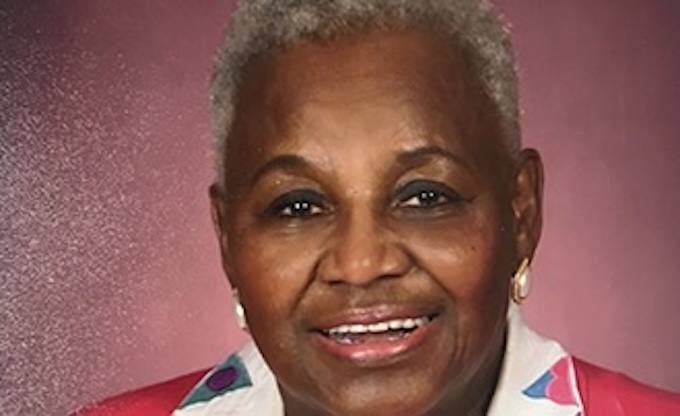
Fay Williams.
A Recollection of Fay Williams in Indianapolis in 1974 and Some Lessons She Taught
2026 is the sixty-second year since Civil Rights Summer, that remarkable upsurge of practical action intended to break the grip of the political oligarchy that had ruled the states of the old Confederacy through terror and violence since the end of Reconstruction. Its objective in 1964 was to empower the African American community in the South by reinvigorating the right to vote. Many people braved brutal reactionary violence in 1964 and 1965 to restore voting as the most basic American right. Their political achievement –the Voting Rights Act of 1965 – placed the full weight of the federal government behind enforcement of universal voting rights for the first time in American history. The systematic violence and the obvious chicanery of the poll taxes, literacy tests, local government gerrymanders and other overtly discriminatory devices were to be ended. The principle of representative democracy that expresses the will of all the people, freely casting their votes to choose their leaders, would be vindicated. Or so we hoped.
But the old oligarchs and their new friends in the Nixon/Mitchell-led Republican Party were not done. If the crude devices of whip, rope and gun could no longer be used to suppress the vote, more gentile and sophisticated “color-blind” techniques might still serve their turn. Within a few years, Republicans were working out strategies and tactics to suppress African-American votes and secure or swing political control where those votes might affect contested outcomes. The techniques revolved around subtle, and not-so-subtle manipulation of voter eligibility requirements and documentation – including but not limited to voter registration – and aggressive selective official and unofficial enforcement/subversion of the details of administration of the vote before and on election day. The objective was to create a climate of fear, confusion and uncertainty that would indirectly and practically suppress the minority electorate by undermining morale and sapping the will. One of the early architects was William Hubbs Rehnquist, in the late 1960’s a private attorney in Arizona, Republican activist and Barry Goldwater confidante. Those efforts, abetted by a Supreme Court shaped over the years by Rehnquist and his disciples, continue to this day. This recollection of fifty-two years ago describes one early successful effort to counteract sophisticated Republican subversion of the right to vote. It contains lessons for our moment today, when the strategy of voter suppression and manipulation of election outcomes is central to Republican efforts to cling to power everywhere in our country.
+++
Fay Williams is a lawyer in Indianapolis who has had a distinguished career as an attorney, an organizer and activist.[1] She grew up on the Texas Gulf Coast, where one of her relatives was a union organizer and participant in the famous voting rights case Smith v. Allwright[2] that ended the all-white Democratic primary in Texas. In the early 1970s, she worked on the McGovern reform rules for the Democratic presidential nominating process and on the McGovern campaign for the 1972 Democratic nomination for President. She also worked closely with the national League of Women Voters, where she co-authored (with Armand Derfner) a pioneering study describing administrative obstacles to voting, the subtle ways that election administration practices could be turned against Americans trying to exercise their right to vote. As both an organizer and a legal expert in election administration, she was ideally suited to oppose the incipient Republican strategies for voter suppression.
In the early 1970s, Indianapolis was a highly segregated Northern city in a state that was fiercely contested between Democrats and Republicans. In 1968 and 1972, Republicans had swept the presidential and gubernatorial elections. Both Indiana US Senators were liberal anti-Viet Nam War Democrats (Vance Hartke and Birch Bayh), elected by small majorities. The 1970 US Senate election between Hartke (Democratic winner) and Richard Roudebush (Republican loser) was the closest in history up to that point.[3] The 1974 US Senate election pitting Bayh against Richard Lugar, Nixon’s favorite mayor and a man with his eye on the Presidency, was going to be the decisive struggle that would assure Republican dominance in Indiana for the next generation. It would also be a proving ground for voter suppression techniques.
The Indiana Republicans had developed a sophisticated technique to suppress the Black vote in Indianapolis (Marion County), which was widely viewed as critical to their success in 1972, following the defeat in 1970. The centerpiece was a postcard mailed to each voter at the voting address shown on voter registration records. Any undelivered and/or returned postcard would be used to support a challenge to the voter’s eligibility, based on failure to meet the residence requirement. The challenge could be entered either prior to election day (purge or cancellation of registration by the County Clerk) or at the polling place as an in-person confrontation of the voter.
The Republican approach to enforcement relied on recruiting and training private lawyers who would aggressively challenge voters’ eligibility at inner-city (largely African-American) polling places (not eligible; not registered; not documented; not the true identity of the person offering to vote, etc.). The aggressive demeanor and professional attire, supplemented by strategically located police cars in ghetto neighborhoods, were designed to intimidate both the voters standing in line and the precinct poll workers responsible for signing in voters and operating the lever voting machines.
Fay Williams’ countermove was first and foremost an organizer’s response: empower the Black community to resist subversion of their rights and to vindicate those rights by using them. Beginning in early 1973, she created partnerships among the local League of Women Voters activists, the local Urban League, Black churches and labor unions to recruit and train poll workers and poll watchers[4] for every precinct, to stand up to the intimidators by mastering the election techniques and issues. Through this tactic of community engagement and skill development she both created confidence that Black voters could stand up to intimidation and created an interest in the election because so many recognizable neighborhood people would be in the polling place.
She also took a hard-edged legal approach. She recruited leftish law students like me with a simple appeal: people died for the right to vote; don’t tarnish their memory with your indifference. The students created a comprehensive election procedure digest and training manual, and they participated in the training workshops during 1973 and 1974. They also tracked and researched potential challenges to the postcard purge procedure under both state and federal law. In a decisive showdown shortly before the election, Williams persuaded the Marion County Election Board, dominated by Republicans determined to prevent thousands of Black voters from voting based on the returned postcards, to place the challenged voter registration cards in special files that would be distributed to the precincts. A voter appearing and offering to vote could prove identity, residence and eligibility and then vote on the spot at the precinct, rather than facing the discouraging task of travelling downtown to establish eligibility. This small detail saved thousands of votes.
It worked. Empowered by the months of organizing and the presence of the trained poll workers, the Black community in Indianapolis turned out and voted in unprecedented numbers. Birch Bayh defeated Dick Lugar. The Democrats swept Marion County local offices. The Republicans were temporarily foiled.
+++
There are lessons to be learned for today’s battles over voting rights, when the Republicans are again engaged in massive efforts to suppress minority voters, including by threatening to impose onerous procedures affecting both eligibility to vote and casting the ballot through “nationalization” of elections. The most important lesson is the crucial element of community engagement and empowerment – retaining community control of the voting machinery. The persistence of voters on election day in the face of long lines and restricted opportunities to actually cast a vote in elections around the country reflects fierce and constructive resistance to repression. But waiting for election day or the few frantic weeks of campaign GOTV before E-Day may be insufficient to overcome the logistical and psychological barriers erected by sophisticated voter suppression techniques.
The tactic of helping voters “plan” their vote pursued by some grass-roots organizers is one constructive example. Another opportunity is recruitment and training of poll workers and election administration staff from the local community. Local election officials are always looking for motivated poll workers; creating a pipeline for election workers from community to polling place and ballot processing sites that includes recruitment and training in state- and local-specific processes and procedures is a project that can both protect the vote and inspire the vote.
We need to change the direction of institutional pressure toward providing administrative opportunities for voting rather than erecting administrative obstacles to voting. This means paying attention to political culture and election administration from the voters’ perspective, from a community perspective. A purely technocratic approach without the community organizing element of empowerment through training, skill development and local control of the machinery may create new obstacles. Exclusive reliance on technocratic approaches – vote-by-mail, for example – without also engaging and taking control of the election machinery may perpetuate a passive approach to the right to vote: voting is something done to you rather than by you.
Paying attention to the mechanics of universal suffrage means primarily working through empowered communities and political parties, not solely or primarily through candidate campaigns, which depend on the performance of reduced voter universes identified through data mining. Voter registration drives based on our organizations – churches, unions, workplaces, clubs – rather than emphasizing passive form-based procedures or paid bounty-hunters, is an affirmative direction. Moderating the trend toward voter isolation – voting by mail, for example – and making elections community-wide events, not furtive duck-ins for doing our democratic duty, is another affirmative direction. Election administration budgets and outreach to effect universal suffrage should be priority items for us, not afterthoughts in state and local fiscal deliberations.
A constructive example is the years-long effort in Yolo County, California by Jesse Salinas, the County Clerk/Registrar of Voters to conduct outreach and voter engagement in the local high schools as part of civic education.
Certainly, the ground today is very different from it was in 1974, since the oligarchs have shown more determination, vision, patience and strategic thinking to roll back voting rights than we have to effectuate them. Rehnquist’s disciple John Roberts and his minions have secured a majority on the US Supreme Court and have weakened the legal underpinnings of voting rights in significant ways. The Reagan years and the dark alliance between law enforcement and crack dealers that led to mass incarceration have resulted in significant long-term disenfranchisement that no longer relies on subtle trickery. Some of this damage is self-inflicted – craven behavior in the confirmation of Clarence Thomas and Democratic conniving in punitive sentencing practices and mass incarceration are two examples. Recent efforts to undo some damage by the Obama Justice Department in promoting sentencing reform and voting rights enforcement were promising but late and so far ineffectual.
Fay Williams’s community engagement and empowerment approach from 1974 in Indianapolis shows another way.
Notes.
[1] She has advised many national and international organizations on issues of women’s empowerment and leadership development. She founded or co-founded local chapters of the Urban League, Coalition of 100 Black Women. Her life-long friend Julia Carson served as a state legislator, Center Township Trustee (Marion County Indiana), and then as US representative in Congress until dying in office in 2007, to be succeeded by her grandson Andre Carson who still serves.
[2] Smith v. Allwright, 321 US 649 (1944)
[3] The SCOTUS decision in Roudebush v. Hartke, 405 US 15 (1972) reflected the outcome of an early Republican attempt to use post-election procedures to change the outcome of an election for Congress. It would not be the last.
[4] In Indiana in 1974 the political parties each designated three poll workers (clerk, sheriff and judge), with the majority party in the county (the party holding the County Clerk office) also designating an election inspector with over-all power to manage the polling place. Each party could also designate a poll watcher and a challenger. The polling place would thus be crowded with people authorized to be present and visibly working the process to enable the vote to be cast and counted, or suppressed/rejected.
[ad_2]
Source link
