
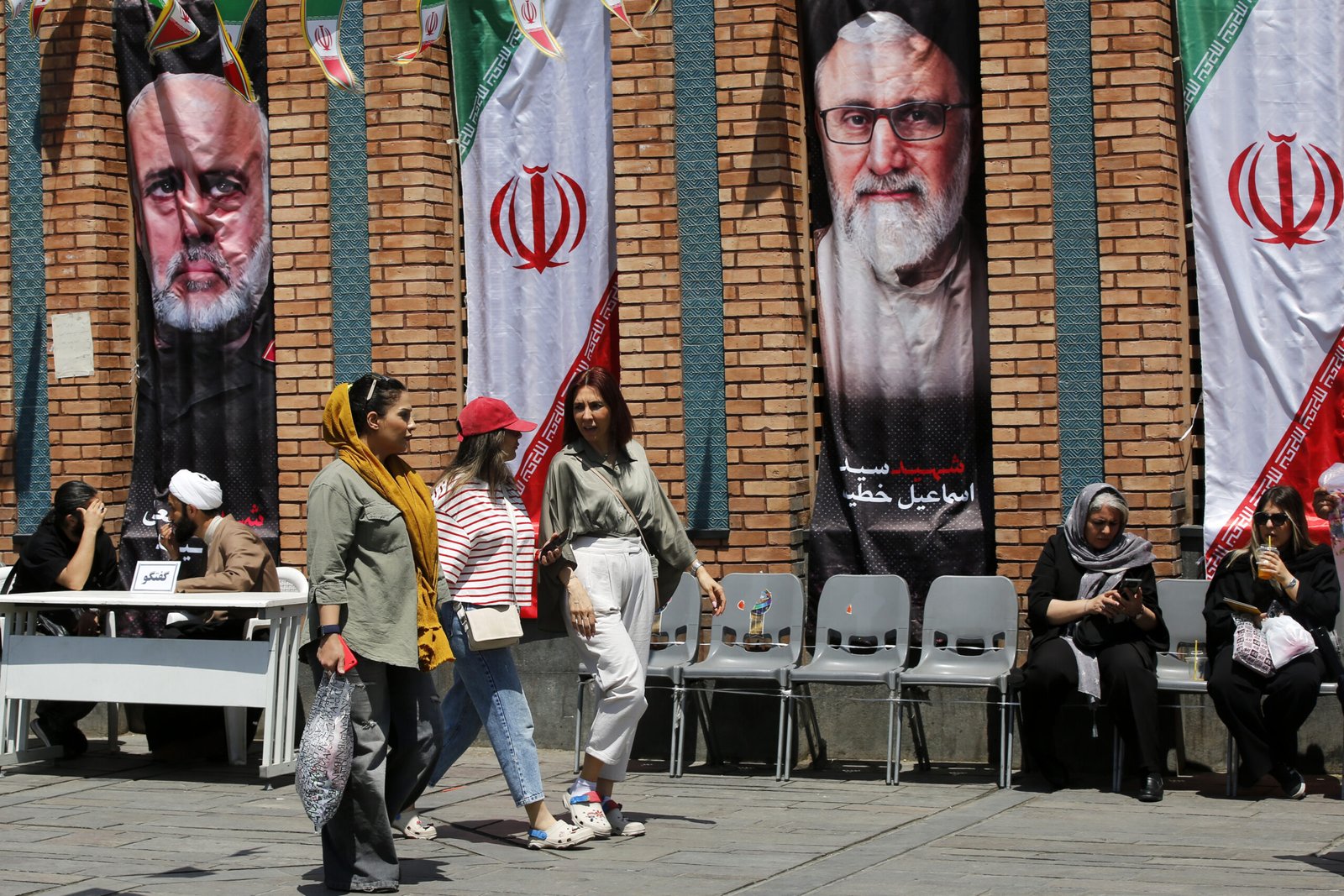
As Iranians marked the failure of the U.S. military to defeat their country and indeed celebrated a perceived victory, Iran’s parliamentary speaker and head of the negotiating team, Mohammad Ghalibaf, insisted that “we are not stronger than the United States in military power.” Ghalibaf suggested Iran shouldn’t expect to “destroy” the enemy, but instead should translate its battlefield gains into diplomatic leverage.
U.S. officials have shown less humility. President Donald Trump has repeatedly said the U.S. military has “beaten and completely decimated Iran” and that the war was a “total and complete victory.” Secretary of Defense Pete Hegseth said the U.S. had “decimated Iran’s military and rendered it combat-ineffective for years to come.”
Though Iran has been hammered, Ghalibaf may be right to think the Islamic Republic has won diplomatic leverage—and the proud people of Iran whom he chided may be closer to the truth than the boastful Americans. The most obvious source of newfound diplomatic leverage for Iran is its effective control of the Strait of Hormuz, but battlefield outcomes have also made Tehran think it has the advantage in negotiations.
To be sure, the U.S. hit Iranian missile stockpile after missile stockpile and launcher after launcher. But some of the missile launchers the Americans hit were dummy decoys, and an untold number of launchers and missiles remain safely hidden deep underground. Many that the U.S. struck were repaired and reactivated within hours. Even Hegseth now admits that Iran is “digging out” its struck missiles and launchers.
Despite Hegseth’s earlier claim that Iran’s ballistic missile program has been “functionally destroyed” in Operation Epic Fury, U.S. intelligence and the military assess that Iran still has at least 60 percent of its missile launchers and nearly half of its ballistic missiles. Moreover, it has retained 40 percent of its notorious attack drones. One likely reason that Trump pushed for a ceasefire on April 8 and then extended it 13 days later is that the U.S. had unexpectedly failed to demolish Iran’s retaliatory capabilities.
But Iran’s retention of its strike capabilities is only one half of the story. The other half is that the U.S. may have burned through nearly the same percentage of its missiles as the percentage of Iranian missiles it had managed to destroy.
According to a report by the Center for Strategic Strategies and International Studies (CSIS), in the 39 days of fighting before the ceasefire, the U.S. military expended 45–60 percent of its Patriot interceptors, 50–80 percent of its THAAD interceptors, at least 30 percent of its Tomahawk cruise missiles, 25 percent of JASSM cruise missiles, and potentially its entire inventory of Precision Strike Missiles.
These numbers are “based on incomplete data and estimates” and should be taken with caution, noted Jennifer Kavanagh, a military analyst at Defense Priorities, in an interview with The American Conservative. But they do reflect that the U.S. “has burned through a lot of its munitions stockpile,” she said.
The CSIS report says that, “under any plausible scenario,” the U.S. “has enough missiles to continue fighting this war.” The reason why: Though critical munitions have been depleted, there is still a large inventory of cheaper munitions. Kavanagh explained that the most “exquisite weapons” that are being depleted “will be less in demand if the war resumes, given the degradation of Iran’s military capabilities.”
However, the real concern, Kavanagh explained, “is for future crises and the U.S. ability to respond in case there are threats that (unlike Iran) really do affect U.S. interests.” Internal Department of Defense estimates tell the story of inventories so depleted that the White House should think twice about restarting the war on Iran, even if the U.S. could technically sustain that war for a long while.
The munitions used so far will take years to replenish, leaving the U.S. inadequately prepared for any conflict with a real competitor like China, the CSIS report observes. The Pentagon has already had to transfer missiles and Patriot and THAAD interceptors from Europe and Asia to the Middle East, weakening its position in the strategic competition with Beijing. Restarting the war could lead to acute shortages of critical munitions and the depletion of cheaper weapons.
In addition to the security problem, there is the budgetary problem: Thirty-nine days of war cost between $25 billion and $35 billion in operational costs, according to the American Enterprise Institute.
All of this expense has bought the U.S. little in terms of accomplishing its goals. Iran’s stockpile of ballistic missiles has not been eliminated as promised by the Pentagon. The Iranian military is still able to inflict damage and make a war against it expensive and painful. In addition to the damage on public record, including to radar systems and aircraft, as well as the rendering of many U.S. bases in the region “uninhabitable,” recent reporting suggests that Iran has inflicted far more damage on U.S. bases in the Gulf than has been revealed to the public.
Despite repeated claims by Trump and Hegseth that there is a new regime in Tehran—as if saying it can make it so—there has been no regime change. If anything, the regime has been hardened.
Subscribe Today
Get daily emails in your inbox
Moreover, Iran’s ability to activate its forward deterrent network, or “proxies,” has not been disabled. Lebanese Hezbollah, Iraqi militias, and Yemen’s Houthis all entered the war and contributed to Iran’s defense.
Most importantly, all the threats and all the bombs have not forced Iran to surrender its right under the Nuclear Non-Proliferation Treaty to a civilian nuclear enrichment program. The preservation of that program remains a red line for Iran.
The White House may have concluded that U.S. threats at the negotiating table will work better than missiles on the battlefield. Yet Ghalibaf and Iran’s Foreign Minister, Abbas Araghchi, both recently suggested that Trump pushed for a ceasefire because the U.S. has failed to achieve its goals on the battlefield, giving a still very capable Iran bargaining leverage. Washington may yet find that its coercive diplomacy isn’t any more effective than its military campaign.
