
[ad_1]
This week, several House Republicans reignited a yearslong debate over a law that federally mandates cars to have impaired driving technology, raising concerns about the expanding surveillance state.
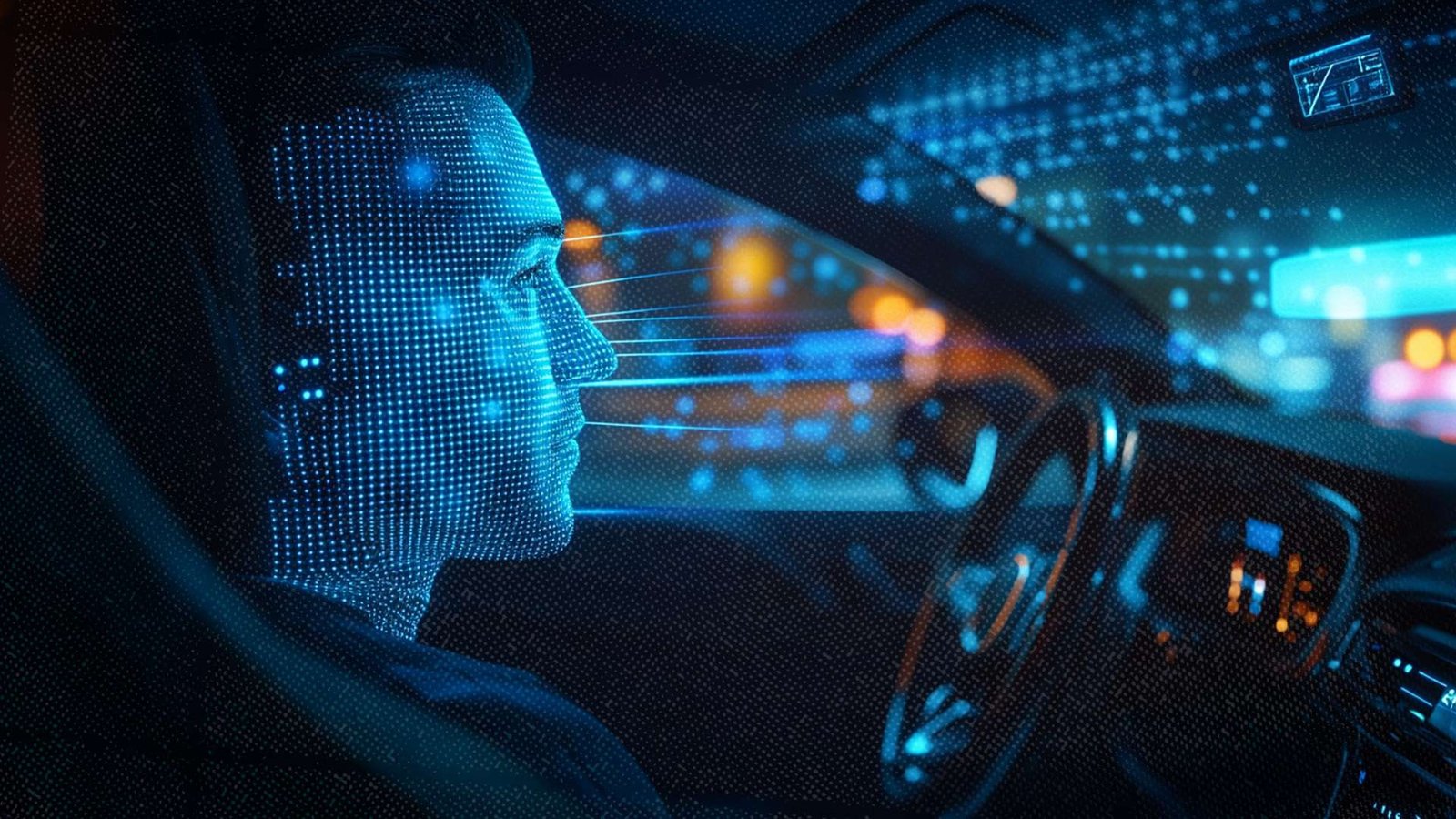
The controversy over “kill switch” technology began in 2021, when Congress passed the HALT Drunk Driving Act as part of the 2021 bipartisan infrastructure law. The provision requires that “advanced drunk and impaired driving prevention technology”—which the bill defined as a system that can “passively monitor the performance of a driver of a motor vehicle to accurately identify whether that driver may be impaired” and “prevent or limit motor vehicle operation if an impairment is detected”—be installed in new cars. Such systems could involve driver eye tracking, a feature already built into some cars.
The law does not use the term kill switch, but that’s no reason to dismiss the mandate’s critics as overly paranoid loons.
“The law’s language could not be more clear,” Jon Miltimore, then a researcher for the Foundation for Economic Education, wrote in 2023. “New motor vehicles must have a computer system to ‘monitor’ drivers, and the system must be able to prevent vehicle operation if it detects impairment.”
Lawmakers who are rightly worried about the mandate’s infringement on privacy have tried to stop the act’s implementation. In January, Reps. Thomas Massie (R–Ky.), Scott Perry (R–Pa.), and Chip Roy (R–Texas) offered an amendment to the Consolidated Appropriations Act to defund the mandate.
Massie told the House floor, “The car itself will monitor your driving, and if the car thinks that you’re not doing a good job driving, it will disable itself.” He added, “So the car dashboard becomes your judge, your jury, and your executioner.”
That amendment failed in a 164–268 vote, with 57 Republicans voting against it.
Mothers Against Drunk Driving, which helped draft the law, says, “The only purpose of the anti-drunk driving technology is to prevent deaths and injuries caused by drunk driving,” and the organization does “NOT support a system that collects, stores, or sells driver data.”
Robert Strassburger, the president of the Automotive Coalition for Traffic Safety, which is partnering with the government to make the system, told the Associated Press in 2022 that the data would “never leave the vehicle” and that the term kill switch was hyperbolic. But the technology would still either warn impaired drivers or prevent them from moving their vehicles.
Even if the mandate does not invite more surveillance into the driver’s seat, Massie has argued that there are less invasive ways to prevent tragedies, including installing ignition interlock devices in the vehicles of convicted drunk drivers. This kill switch technology, he told the House floor in January, is “not going to fix the drunk driving problem.”
Luckily for those concerned about the ever-expanding surveillance state, the measure’s implementation has been delayed after the National Highway Traffic Safety Administration (NHTSA) missed its 2024 deadline to finalize the rule. The measure would likely not take effect until 2027 “at the earliest,” reports The Dallas Express. This week, Roy, the Texas representative, took advantage of the delayed implementation by introducing an amendment to a controversial foreign surveillance act that would repeal the driving tech mandate.
Despite advocates saying the technology won’t be shared with the government, this mandate would likely force manufacturers to add another piece of invasive tracking software to new cars, which are already surveillance hubs on wheels. Many new cars are equipped with cameras, trackers, and sensors that wirelessly transmit data to car manufacturers and insurance companies. And even if the mandatory kill switch technology does not share data with third parties or the government, the requirement forces companies to include a feature that their customers may not want. Some shoppers may opt for more safety tech in their cars, but not every driver wants tech to take the wheel.
[ad_2]
Source link
