
[ad_1]
Leaders of the People’s Republic of China (PRC) have cleverly exploited U.S. policy blunders throughout the international system for at least the past three decades to enhance Beijing’s influence and erode Washington’s. The Trump administration’s mishandling of relations with Iran affords China a new opportunity, and it may prove to be the most significant one yet.
Indeed, the question arises whether Xi Jinping’s government is moving beyond passively taking advantage of chronic U.S. ineptitude in the Muslim world and is now actively using Iran and its Shia allies as proxies to create major strategic and economic headaches for the United States. There are indications that the answer is yes.
Granted, Beijing’s apparent strategy is not yet as blatant as NATO’s exploitation of Ukraine as a military proxy to harass and weaken Russia. Washington and its European allies have poured more than $200 billion in financial assistance to Ukraine since Moscow, in February 2022, launched a war that continues today. In late April 2026, the European Union signed off on a new $105 billion “loan” to Kiev. The United States and other alliance members also continue to shower Ukraine with increasingly sophisticated and lethal weapons. Perhaps most crucially, the NATO powers have provided intelligence information (including targeting data for attacks) to Ukrainian forces.
However, while PRC’s tilt toward Iran is not nearly as blatant and massive, it’s not trivial either. Until recently, Beijing’s assistance to Iran had seemed to be relatively reactive and indirect, rather than proactive and high-profile. Indeed, Beijing has absorbed some valuable lessons and derived significant benefits from simply observing Tehran’s war effort. That point is especially true in the areas of military hardware and military strategy. For example, PRC experts have learned that Iran’s relatively low cost, low tech 358 missile is adept at taking out important U.S. military assets, each worth millions of dollars. Indeed, the estimated cost of the 358 is one-tenth that of comparable conventional air defense munitions.
The PRC has worked to shape the international diplomatic environment to benefit Tehran and disadvantage Washington. For example, Xi’s government not only has offered to play a role as mediator to dampen the fighting, but it has also pressed its close ally Pakistan to lead mediation efforts. At first glance, such a move might not seem to be pro-Iranian, since Pakistan is a prominent Sunni power, and the longstanding Sunni–Shia split in Islam would limit any diplomatic benefits to Tehran. However, the long-term impact of a Pakistani–Chinese mediation role in the Iran war would be to strengthen Beijing’s presence and influence throughout the region.
Indeed, Beijing is positioning itself to be a world leader in calling for restraint and peace. That benign reputation is seen globally in sharp contrast to Washington’s growing image as a disruptive, coercive, and destabilizing power. Iran is a larger and more capable adversary than Washington has faced in its previous regime-change wars, increasing the risk to the United States that the fighting may not end quickly and America’s image will continue to deteriorate. Washington and its client, Israel, have already generated significantly greater opposition from major neutral powers and even many U.S. allies than has occurred before.
PRC leaders pointedly declined President Trump’s request to join the U.S. campaign to blockade Iran’s ports. As the blockade began, the head of China’s navy stated that Chinese civilian cargo ships would continue to traverse the Strait of Hormuz, irrespective of the U.S. Navy’s presence there. Instead of opposing Iran, Chinese ships have received quiet authorization from Tehran to transit the strait, possibly in exchange for modest fees. That approach amounts to a de facto policy of undermining Washington’s blockade and pursuing a mutually beneficial relationship with Iran with respect to commerce through the strait.
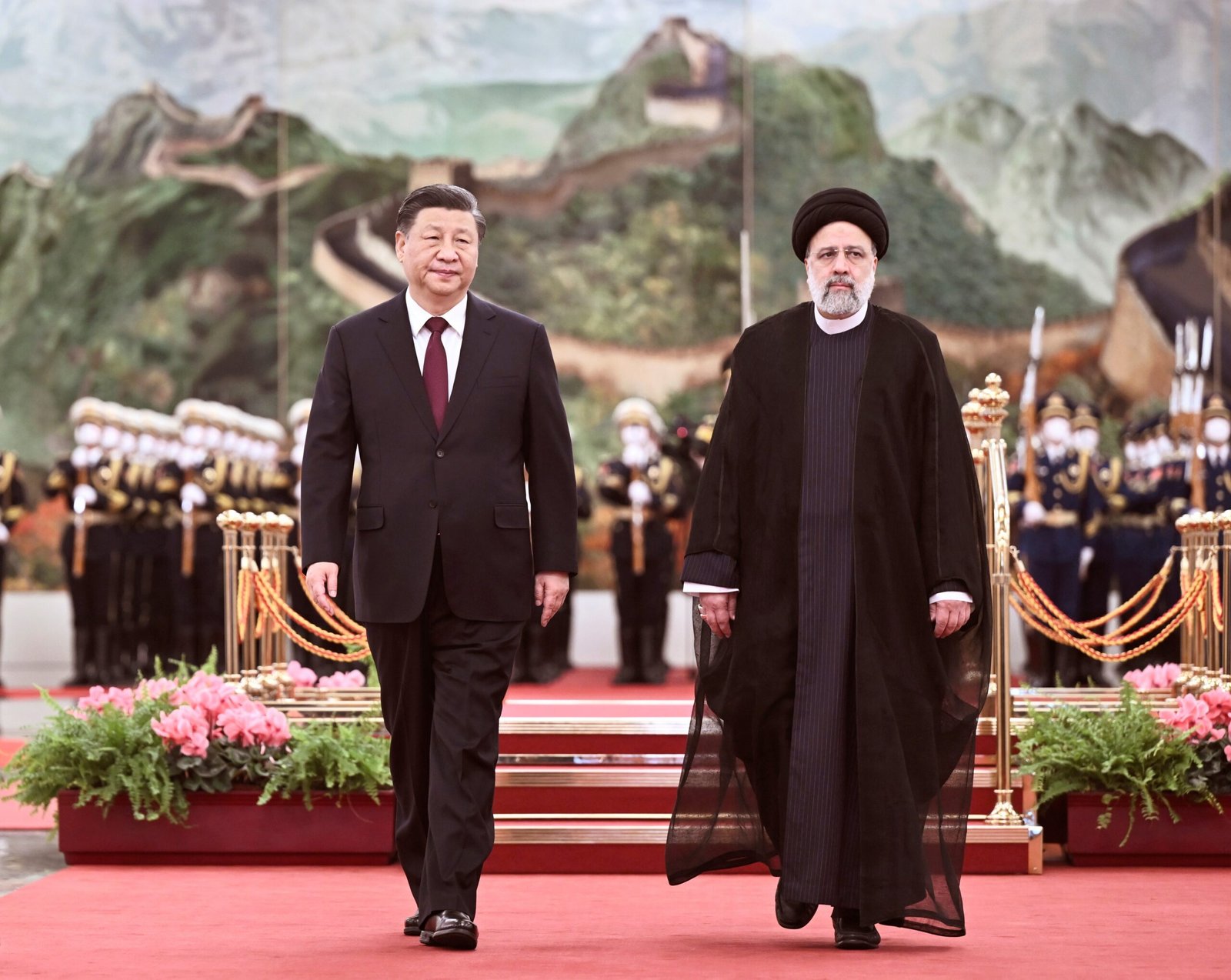
Beijing’s relationship with Iran is more nuanced and complex than one between patron and client. It appears to be getting closer, though, and Chinese leaders now seem willing to escalate their support for Tehran, including military aid. Tom Tugendhat, a member of the British parliament and a distinguished fellow at the conservative Hudson Institute in the United States, observes that
Subscribe Today
Get daily emails in your inbox
China, according to multiple reports, has provided Iran with satellite imagery, components and intelligence needed to attack infrastructure and shipping as well as U.S. targets in Gulf countries. Each part of the logistics chain has helped Iran destroy refineries and docks and even kill civilians.
If those reports of extensive Chinese involvement are true, the PRC’s posture would indeed begin to resemble NATO’s role in Ukraine. Such lethal assistance to Tehran also would make Washington’s latest military crusade become even more perilous than it is now. Even without going that far, Beijing’s covert assistance to Iran can exacerbate the U.S. military’s woes in the Strait of Hormuz, elsewhere in the Persian Gulf, and throughout the Middle East. Tehran’s attacks on Washington’s longtime Arab allies have created serious turmoil, even if the PRC is officially sitting on the sidelines.
China has been a strategic, diplomatic, and economic beneficiary of the previous U.S. wars in the Muslim world. PRC leaders likely had to shake their heads in disbelief when the United States wasted trillions of dollars, sacrificed thousands of American lives, and made millions of new enemies among Islamic populations by waging its military crusades in Iraq, Afghanistan, Syria, and elsewhere. With the war against Iran, the Trump administration is making the same blunder as its predecessors—and China is again poised to be the main beneficiary. And this time, Beijing doesn’t seem satisfied to sit back and passively enjoy its geostrategic good fortune.
[ad_2]
Source link
