
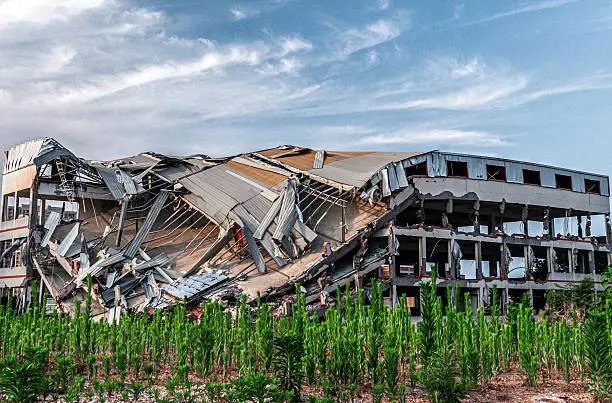
There is something increasingly difficult to ignore about the global economic climate of 2026, and it isn’t something that appears in headlines or official summaries. On paper, the system still functions. Growth has not disappeared, markets have not fully collapsed, and institutions continue to operate with a sense of normalcy. Yet beneath this apparent stability, a different pattern is emerging—one that is far less visible, but far more consequential. According to recent macroeconomic assessments, global growth remains modest, hovering just above three percent, a figure that would typically signal resilience. However, what makes this moment unusual is not the number itself, but the language surrounding it. Increasingly, reports from major financial institutions emphasize “downside risk,” “structural instability,” and “geoeconomic fragmentation,” terms that rarely appear together unless something deeper is beginning to shift (International Monetary Fund, 2026; OECD Interim Outlook, 2026). These are not warnings of immediate collapse, but they are not neutral observations either. Historically, such language tends to surface during transitional periods—moments when systems are no longer behaving in predictable ways.
The modern global economy was built on assumptions that are now quietly being tested. Continuous growth, stable supply chains, accessible energy, and coordinated policy responses formed the backbone of economic stability over the past several decades. In 2026, each of these pillars shows signs of strain. Energy markets remain sensitive to geopolitical tension, particularly in regions where conflict continues to disrupt production and distribution. At the same time, inflation—once expected to normalize—has proven far more persistent than anticipated, forcing central banks into a position where stimulating growth becomes increasingly difficult without triggering further instability (European Central Bank Briefing, 2026). This creates a condition that some analysts have begun to describe, cautiously and often off record, as a form of controlled deterioration—a state in which the system does not collapse, but gradually loses efficiency, resilience, and coherence over time (H. L. Brenner, Institute for Systemic Risk, 2025).
What makes this process particularly difficult to detect is its incremental nature. There is no singular event that signals its beginning. Instead, it manifests through subtle adjustments across multiple sectors. Higher education, for instance, has entered a phase that increasingly resembles contraction rather than growth. For decades, the expansion of universities was sustained by rising tuition and the widespread availability of credit. That model relied heavily on confidence—confidence that the long-term return on education would justify its cost. In an environment of economic uncertainty, that confidence begins to erode. Enrollment patterns shift, financial pressure builds, and institutions that once appeared stable begin to quietly restructure or, in some cases, disappear entirely (Keller & Strauss, Journal of Educational Economics, 2025). This is not a sudden collapse, but a gradual thinning—one that may only become fully visible in hindsight.

A similar pattern can be observed within agricultural systems, though it is often overlooked due to the assumption that food production is inherently resilient. In reality, modern agriculture operates within a highly optimized framework that depends on consistent access to inputs such as fertilizers, fuel, machinery, and global logistics networks. These inputs are not optional; they are essential to maintaining current levels of productivity. When economic conditions tighten, even slightly, the ability of producers to maintain these inputs becomes compromised. The result is not immediate scarcity, but a gradual decline in efficiency. Yields begin to fluctuate, costs increase, and the margin for error narrows. Over time, this creates pressure that extends beyond individual producers and begins to affect the broader system. Food availability may remain sufficient in aggregate terms, but distribution becomes uneven, prices become volatile, and vulnerabilities become more pronounced (Anderson et al., Global Food Systems Review, 2026).

What connects these developments is not simply economic pressure, but behavioral response. Economic systems are, at their core, reflections of human expectations. When those expectations shift, the system itself begins to change. One of the more subtle indicators emerging in 2026 is a gradual decline in public confidence—not necessarily in a dramatic or measurable way, but in patterns of behavior. Individuals become more cautious in their spending, more selective in their movements, and less trusting of institutional reliability. These shifts are not driven by a single event, but by a growing perception that stability is no longer guaranteed. Research into economic psychology has long suggested that such perception-based changes can have cascading effects, influencing everything from consumption patterns to social cohesion (R. D. Halvorsen, Behavioral Economics Quarterly, 2024).
As these behavioral adjustments take hold, they begin to interact with existing structural weaknesses, creating feedback loops that are difficult to interrupt. Reduced spending leads to slower economic activity, which in turn reinforces uncertainty. Lower investment results in reduced output, which contributes to price instability. These dynamics are not new, but what distinguishes the current environment is the limited capacity for intervention. High levels of public and private debt constrain policy options, while persistent inflation limits the ability of central banks to stimulate growth without unintended consequences. This combination reduces the system’s ability to absorb shocks, increasing the likelihood that smaller disruptions may have disproportionately large effects (Global Risk Consortium, 2026).
Looking ahead toward 2030, the challenge becomes one of interpretation rather than prediction. There is no official model that forecasts systemic collapse within this timeframe, yet there is a convergence of indicators suggesting that significant structural adjustments are likely. Some analysts have pointed to the intersection of technological disruption, particularly in the labor market, with existing economic pressures as a potential catalyst for broader transformation. The rapid integration of artificial intelligence into key industries introduces a variable that is both economically significant and difficult to model accurately. While productivity gains are expected, the distribution of those gains remains uncertain, raising questions about employment stability and income distribution in the years ahead (Chen & Alvarez, Future Labor Dynamics Report, 2026).
At the same time, less formal narratives have begun to emerge—interpretations that exist outside traditional economic frameworks but reflect a growing sense of unease. These narratives often describe the current period as a transition phase, a kind of prelude to a larger systemic reset. While such language may lack empirical precision, it serves a psychological function, providing a framework through which uncertainty can be understood. Historically, periods of prolonged instability have often been accompanied by the resurgence of such interpretive models, as individuals seek patterns in environments that no longer appear predictable.
What is particularly striking about the present moment is not the presence of any single risk factor, but the alignment of multiple pressures across different domains. Economic, geopolitical, technological, and social variables are all interacting simultaneously, creating a level of complexity that challenges traditional analysis. In such environments, outcomes are rarely linear. Small changes can produce disproportionate effects, and systems that appear stable can shift rapidly once certain thresholds are crossed.
None of this implies inevitability. Systems are capable of adaptation, and history provides numerous examples of recovery and transformation. However, it does suggest that the current trajectory is not one of simple continuity. The assumption that existing structures will persist unchanged is increasingly difficult to support. Instead, what emerges from the data, the trends, and the underlying patterns is a picture of gradual transformation—one that may not be immediately visible, but is nonetheless underway.
The difficulty lies in recognizing such transformation while it is still in progress. By the time it becomes obvious, it is no longer unfolding—it has already occurred.
[ad_2]
Source link
