
[ad_1]
In one of the scariest moments in modern history, we're doing our best at ScheerPost to pierce the fog of lies that conceal it but we need some help to pay our writers and staff. Please consider a tax-deductible donation.
Joshua Scheer
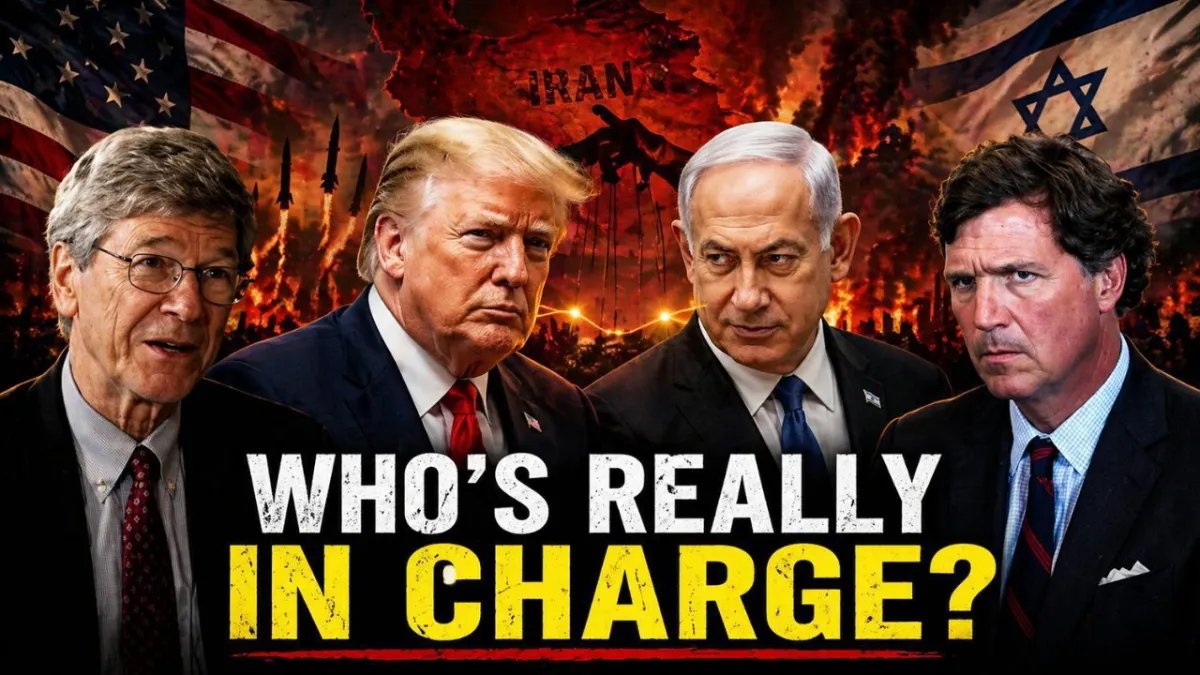
Jeffrey Sachs doesn’t raise his voice — he doesn’t have to. In this wide‑ranging conversation with Tucker Carlson, Sachs lays out a devastating, historically grounded indictment of U.S. foreign policy, the manufactured “Iran threat,” and the decades‑long fusion of American empire with Israel’s regional ambitions. What emerges is not a hot take but a cold, clinical autopsy of a war machine that has slipped beyond democratic control.
From the 1953 coup to the present blockade of the Strait of Hormuz, Sachs traces how Washington’s obsession with dominance — and Israel’s pursuit of permanent military supremacy — has pushed the world to the brink of a conflict that could collapse the global economy in weeks. He dismantles the nuclear‑weapons narrative, exposes the bipartisan addiction to sanctions and covert warfare, and warns that the U.S. is now trapped in a crisis of its own making.
This is one of Sachs’ clearest, most unflinching interviews to date — a map of how we got here, and a warning about what comes next if the “grown‑ups” don’t seize the wheel.
Jeffrey Sachs Warns: The U.S.–Israel War Path Toward Iran Is Leading the World Into Economic and Political Collapse
Jeffrey Sachs has spent decades advising governments, studying development, and watching empires rise and fall. In his latest interview, he delivers a stark message: the United States and Israel are steering the world toward a catastrophic confrontation with Iran — and the window for avoiding disaster is closing fast.
A Global Crisis Triggered by a Manufactured One
Sachs argues that the current crisis is not an accident but the predictable outcome of decades of U.S. interference in Iran, beginning with the 1953 CIA‑MI6 coup that toppled Iran’s elected prime minister. That single act — the theft of Iran’s sovereignty and its oil — set the stage for 70 years of hostility, sanctions, proxy wars, and regime‑change fantasies.
According to Sachs, the present escalation is driven less by Iranian behavior than by Washington’s refusal to accept that Iran slipped out of U.S. control in 1979. The “Iran menace,” he says, is a propaganda construct — a way to justify endless pressure on a country that has not invaded another nation in more than a century.
The Strait of Hormuz: A Choke Point for the World Economy
Sachs warns that the closure of the Strait of Hormuz — a direct consequence of the spiraling conflict — has already triggered a global economic emergency. Oil, gas, fertilizers, petrochemicals, and metals flow through this narrow waterway. With it blocked, the world economy is “reeling,” and the clock is ticking.
The off‑ramp exists, Sachs insists: de‑escalation, diplomacy, and reopening the strait. But it requires political maturity — something he argues is in short supply in both Washington and Jerusalem.
Israel’s Parallel Agenda: Regional Dominance at Any Cost
Sachs draws a sharp distinction between U.S. and Israeli motives. For Washington, Iran represents a rebellion against American empire. For Israel, Iran is the last major obstacle to full military dominance across the Middle East and North Africa.
He argues that Israel’s political leadership — backed by a powerful U.S. lobby — has long sought to neutralize Iran not because of nuclear fears, but because Iran resists Israeli hegemony. This, Sachs says, is the real engine behind the push for confrontation.
The Nuclear Lie
One of Sachs’ most forceful points is his dismantling of the nuclear narrative. U.S. intelligence agencies have repeatedly stated that Iran is not pursuing a nuclear weapon. Iran has sought international monitoring and compliance frameworks — including the JCPOA — only to see the U.S. sabotage its own agreements under pressure from domestic political forces aligned with Israel.
Calling the nuclear rhetoric “Orwellian,” Sachs argues that the real goal is regime change, not nonproliferation.
A War That Would Reshape the World in Weeks
Sachs warns that a U.S.–Israel attack on Iran would not be a limited strike. It would trigger a regional war, destroy infrastructure across the Gulf, and plunge the global economy into chaos. Within weeks, he says, the world would look “profoundly damaged,” with the risk of escalation into a global conflict.
This is not hyperbole, Sachs insists — it is the logical outcome of the current trajectory.
The Real Question: Who Is Steering U.S. Policy?
Throughout the interview, Sachs returns to a central theme: the absence of democratic control over U.S. foreign policy. Decisions of war and peace are being shaped by lobbies, political vanity, and imperial reflexes — not by the interests of the American public.
The result is a government that no longer serves its citizens, a political class insulated from consequences, and a foreign policy apparatus that treats global stability as collateral damage.
A Final Warning
Sachs’ message is clear: the U.S. and Israel are playing with forces they cannot control. The world is at a fork in the road — diplomacy or disaster — and the people making the decisions are the least equipped to choose wisely.
For Americans, the stakes are not abstract. Sachs argues that the economic, political, and moral costs of this conflict will fall squarely on the public, not on the leaders who helped create it.
Editor’s Note: At a moment when the once vaunted model of responsible journalism is overwhelmingly the play thing of self-serving billionaires and their corporate scribes, alternatives of integrity are desperately needed, and ScheerPost is one of them. Please support our independent journalism by contributing to our online donation platform, Network for Good, or send a check to our new PO Box. We can’t thank you enough, and promise to keep bringing you this kind of vital news.
You can also make a donation to our PayPal or subscribe to our Patreon.
Please share this story and help us grow our network!
[ad_2]
Source link
