
[ad_1]
Photograph Source: FontShop from USA – CC BY 2.0
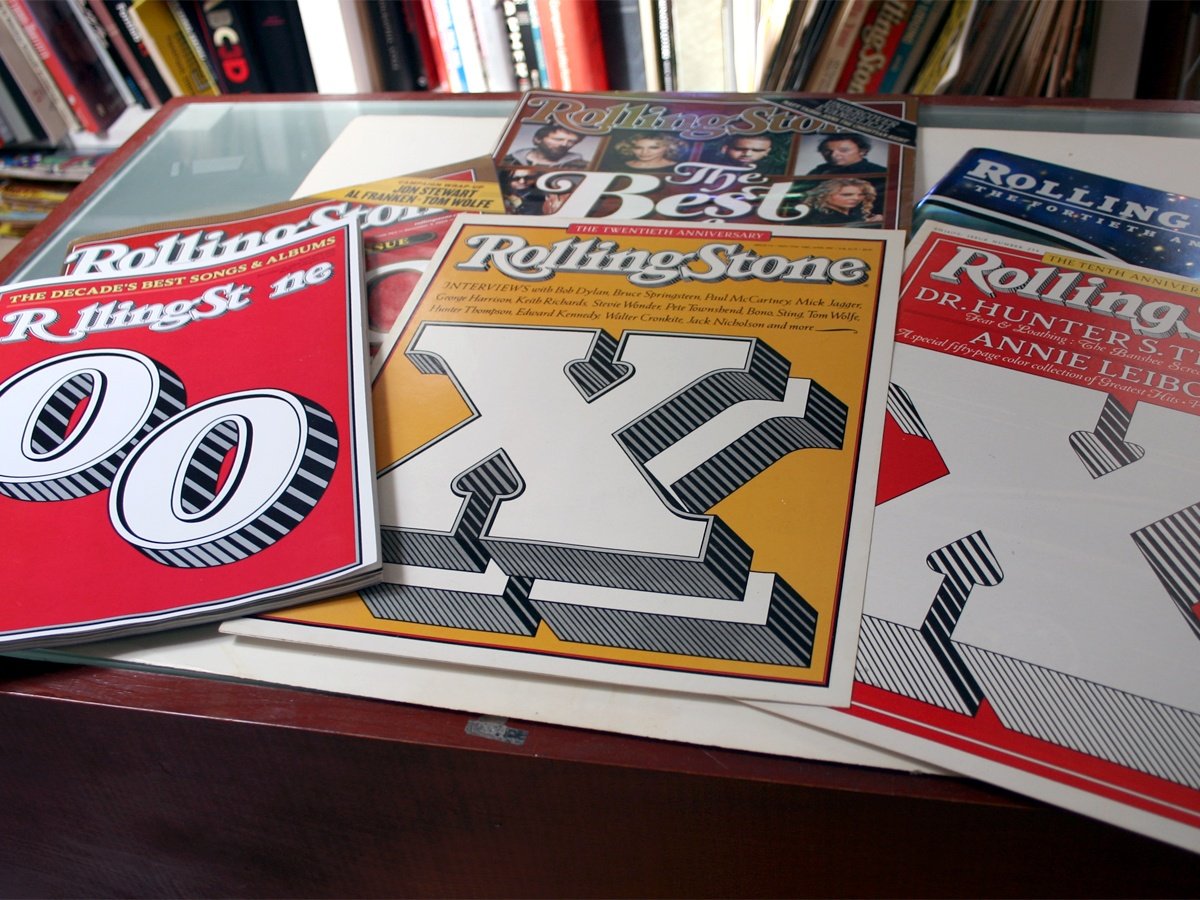
Many US residents around my age, especially men, have a story regarding the first time they read Rolling Stone magazine. Mine goes something like this. The first time I read the magazine from cover-to-cover was its issue devoted to the Woodstock festival that was published in the fall of 1969. Rolling Stone was hard to find in the redneck suburban town I lived in at the time; only underground newspapers from DC were rarer. It was only through some new friends at the Catholic high school I was a freshman at that year that I was able to get a copy of the paper; friends who lived in suburbs that bordered Washington DC where the record stores and head shops were more plentiful. I became a committed reader a few months later, when my family moved to Frankfurt, Germany as a result of my military father’s deployment there. The base library subscribed to the magazine and it was one of the most popular journals on its shelves. I eventually made friends with a GI who worked the circulation desk and he would hold the latest issue for me every other week. The mail delivered it to the library on Thursday and I made it a point to go there as soon as my classes ended on those days. Over time, he and I would discuss the stories in the latest issue. In fact, it was that library clerk who insisted I start my reading in Fall of 1970 with an article titled “The Battle of Aspen” and written by a journalist who would take the magazine well beyond the alternative music weekly it was at the time. That journalist was named Hunter S. Thompson and his work for Rolling Stone magazine remains some of the best writing to ever appear in a US magazine even today; cynical, idealistic, comic, feral and truthful beyond the facts. Indeed, his article, later a book, titled Fear and Loathing in Las Vegas: A Savage Journey to the Heart of the American Dream, is considered a classic of American literature.
Peter Richardson was another Rolling Stone reader. His new book on the magazine, titled Brand New Beat: The Wild Rise of Rolling Stone Magazine, is the best book on the magazine’s first decade and its place in US popular culture. It also serves as another history of the counterculture—the phenomenon that essentially reshaped American life. Richardson’s previous works include a critical biography of Hunter S. Thompson and a history of another great magazine from the 1960s and 1970s called Ramparts. (Ramparts was another journal I read faithfully from 1969 until it folded in 1977. Given that its editorial stance was anti-imperialist and leftist, it was not available at the base library.) Indeed, Richardson begins his discussion of Rolling Stone by looking into its roots in Ramparts, Scanlan’s Monthly and even the San Francisco Chronicle.
Brand New Beat, which obviously borrows its title from the song first popularized by Martha and the Vandellas called “Dancin’ in the Streets,” spends the bulk of its pages discussing the first several years of Rolling Stone and more or less ends when its founder and editor Jann Wenner moves the operation to New York’s Manhattan. As a longtime reader of the magazine, let me state that the move to the East Coast changed the magazine. Although it had been turning into another record industry promotion vehicle before the move, my memory remembers that moving to the East Coast removed a fair amount of the San Francisco hipness from the magazine’s pages. New York hipness was a different vibe, more Bauhaus than art deco, if you will.
Speaking of Wenner, one cannot write about Rolling Stone without spending too much time on him, his ego, his greed and his certain kind of genius. Born into a well-off family, Wenner’s class background is present in the creation of his magazine. Never a fan of the Sixties underground press, he freely and unashamedly borrowed its illustrative style and its cultural focus. However, Rolling Stone was never a radical newspaper in the sense that undergrounds like Boston’s Old Mole, DC’s Quicksilver Times, The Berkeley Tribe and numerous other such weeklies were. Richardson’s evocation of Wenner is honest and respectful, but does not let him off the hook for his sexism, often autocratic managerial approach and egocentrism. At the same time, it’s clear that Richardson accurately perceives that Rolling Stone would never have existed without Jann Wenner and his early drive to create a journal for the new subculture being born in the San Francisco Bay Area’s Haight Ashbury.
Besides Wenner and Thompson, there were other writers and photographers crucial to the magazine and its unique identity. Among them were music critic Ralph J. Gleason, critics Greil Marcus, Lester Bangs, and Jon Landau, literary critic Jonathan Cott, writers Ben Fong-Torres and Cameron Crowe, photographers Baron Volman and Annie Leibowitz. Richardson critically notes the paucity of women writers on the staff, which leads to a discussion of Rolling Stone’s readership; mostly white, mostly male and mostly middle class. In other words, the people who bought most of the rock records and rock concert tickets being sold at the time. Consequently, there were very few African-American writers, either. Some writers, like Joe Eszterhas (whose 1972 article “Charlie Simpson’s Apocalypse” was expanded into a Pulitzer Prize winning book in 1973) and Cameron Crowe went on to become important writers in Hollywood.
With his book Brand New Beat, Richardson continues his examinations of journalistic outliers of the Long Sixties that became standards that most others could only hope to imitate. This history of the first decade (or so) of Rolling Stone magazine confirms that there was never a journal like it before and there is unlikely to be another one after it. The hopes and dreams of a few individuals encouraged and prodded by the editor and publisher Jann Wenner are presented, discussed and disseminated in these pages. So are the venalities, egotistical quarrels, and miscalculations of the editor and his staff. It’s a tale of ambition driven by a desire to publish and even create news about a culture that was as fresh and as potentially flawed as the magazine itself. In other words, it’s an almost perfect account of Rolling Stone the magazine.
[ad_2]
Source link
