
This interesting case was reported in the literature in 2007. For some reason it was then widely published in the mainstream media in 2015. Now it is making the rounds again on social media to support a false narrative about brain function. The story is of a 20 year old German woman who suffered a traumatic brain injury in a car accident. Over the next several months she started to slowly lose her vision – which is an important detail, it was not a sudden loss as a result of the physical trauma. After evaluation she was diagnosed with psychogenic blindness, meaning that it was not due to any physical damage to her visual system but was rather due to psychological stress. This patient also has what is now called dissociative disorder, or multiple personality, with 10 distinct personalities.
What makes the case even more interesting is that, with therapy, some of her personalities regained vision while others did not. Eventually eight of her ten personalities regained vision. This presented a rare, perhaps unique, opportunity to study the underlying neuroanatomical correlates of psychogenic blindness – what is happening in the brain when someone loses the ability for conscious sight despite their visual system working?
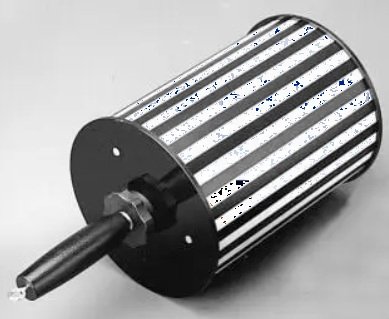
Psychogenic or functional neurological disorders are a complex and poorly understood phenomenon in which emotional stress and trauma presents as physical neurological symptoms. Common presentations include paralysis, language difficulty, sensory loss, and blindness. The diagnosis is mostly one of exclusion, which means sufficient examination and study is done to rule out any demonstrable damage, lesion, or other physical cause. This does not mean the patient is faking (technically called malingering) – that is a distinct condition that can usually be distinguished from a functional disorder. Usually patients with a functional disorder are very distressed by their symptoms and want further examination to find out what is wrong. In addition to simply ruling out physical causes, the diagnosis of a functional disorder can be supported by some positive evidence from the neurological exam. With psychogenic blindness, for example, patients will have normal pupillary responses (assuming no separate baseline deficit), and will have a normal reaction to optokinetic testing. This involves moving vertical black and white stripes horizontally across their vision. This will cause an involuntary response of tracking the stripes with eye movements. If this happens then we know that visual information is getting in and making its way to the visual cortex.
With functional neurological disorders what we do not know is what specific pathways in the brain are causing the symptoms. The hypothesis is that higher brain functions are somehow interfering with or inhibiting more basic functions. Those higher brain functions, the ones responsible for our subjective awareness and consciousness, are extremely complex. There is a lot of emergent behavior there, where we experience the net effect of many processes in the brain. Also, the more we investigate brain function with the latest tools the more we are discovering that communication in the brain does not just flow from basic inputs (like vision) to the higher conscious centers of the brain, but also back down, meaning that our higher brain centers can influence the basic processing of information. When you think you hear something, your brain makes it sound more like what you think you are hearing. When you see a shape that your brain matches to a giraffe, your cortex then sends signals back down the chain to construct the image to make it look even more like a giraffe. This is critical for pulling signals out of noise and for our ability to make sense of all the information coming it, but it also tends to generate illusions.
We also have to note that there is a lot of neurodiversity when it comes to brain anatomy and function – some people literally have pathways in their brain that most other people do not, or the relative robustness of specific pathways may differ wildly. Some people, therefore, may simply have neurological abilities that others lack. This case is very unusual – the person in question is neurologically capable of having a dramatic functional disorder, which may not be true of everyone. She also has dissociative disorder, which again is extremely rare. It would not be reasonable to assume she is neurotypical, and that we can extrapolate from her to the general population.
With those caveats in mind, the doctors studying her did something interesting – they performed a visual evoked potential (VEP) on her while she was exhibiting a personality that was blind and again while she was exhibiting a personality that could see. What a rare opportunity to compare the two states. The VEP essentially is a test in which a flash of light is given to the patient while electrodes record the response from her visual cortex. There is typically a delay of about 100 ms. If this is significantly slow or absent that could indicate a lesion in the visual pathway. This was a common test to evaluate patients with MS, for example, but is less common now due to more advanced MRI scans and other methods. They found that the VEP was present and normal while she expressed a personality that could see, but was absent when she had a personality with persistent psychogenic blindness. That is a rather incredible result, indicating that there is some process in her brain that is actually suppressing her visual system. To be clear, there is no conscious way to do this (again, at least not known, but I guess this could be the way in which she is very neuroatypical). So it seems that her psychogenic blindness was do to a reversible inhibition of her visual pathway, in a way that would block the VEP.
This was exactly what the researchers were looking for, trying to determine at which neurological level the psychogenic blindness originates, at least in this subject. This also means that VEPs cannot be used to reliably distinguish organic blindness from psychogenic blindness. I really want to know what her optokinetic testing found, but could not find this information in the report. However – a 2001 study of 72 subjects with psychogenic blindness found that every one had normal VEPs. VEPs are still used to assess these patients – a normal VEP does suggest a nonorganic cause of blindness, however it is recognized that an abnormal VEP does not rule out a psychogenic cause.
As interesting as all this is, this case is being used by some promoters of a particular type of dualism, specifically the notion that the brain is a receiver or filter for an external consciousness. The case is being misinterpreted as meaning that “experience determines neurological function” rather than the other way around. This, of course, is not true, for the reasons I outlined above. Experience is in the brain, and this just represents the brain affecting itself. I always find it sad and frustrating when truly interesting science is missed because it is being misused to promote pseudoscience or magic.
